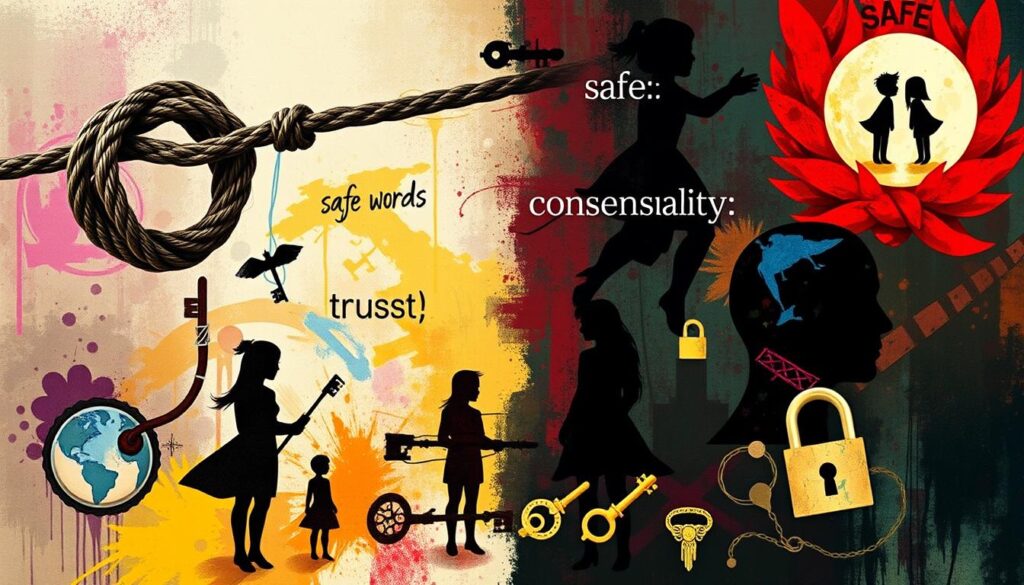
BDSM culture has evolved, challenging many misconceptions about its nature. Individuals in BDSM are often successful professionals with diverse backgrounds. They typically maintain healthy relationships, contrary to popular belief1.
The BDSM community represents a world of consensual interactions. Many practitioners identify as switches, showing fluid dynamics in BDSM relationships1. Research indicates these individuals often display remarkable psychological resilience2.
BDSM isn’t about violence or abuse. It’s about trust, communication, and mutual pleasure. The community stresses safety protocols and consensual interactions2.
These practices prioritize emotional and physical well-being. Understanding BDSM requires looking beyond stereotypes and recognizing its complexity.
Key Takeaways
- BDSM is a consensual practice based on trust and communication
- Practitioners come from diverse professional and personal backgrounds
- Safety and mutual respect are paramount in BDSM culture
- BDSM involves complex psychological and emotional dynamics
- Misconceptions often overshadow the reality of BDSM practices
Myth
BDSM culture often faces misunderstandings and stigma. These prevent people from grasping its true nature. Many have misconceptions about BDSM, creating barriers to understanding this diverse community3.
Let’s explore some key insights about BDSM misconceptions:
- The BDSM community is incredibly diverse, spanning different races, sexual orientations, ages, and backgrounds3
- Participation in BDSM practices is more common than many people realize4
- Healthy kinky relationships prioritize clear communication and consent3
BDSM practitioners come from all walks of life. A 2015 survey revealed interesting stats about BDSM participation:
| BDSM Practice | Percentage of Participants |
|---|---|
| Spanking | 30% |
| Dominant/Submissive Role-Playing | 22% |
| Restraint | 20% |
| Flogging | 13% |
These numbers challenge the notion that BDSM is a rare or extreme practice. Research shows many participants experience deep emotional connections through consensual practices4.
Understanding comes from knowledge, not judgment.
Challenging BDSM stigma can foster a more inclusive view. It helps us better understand human sexuality and relationship dynamics.
1: BDSM is Abusive or Violent
Safe BDSM practices hinge on consent, not abuse. Kink involves physical interactions like slapping, but always with clear agreement. The key is mutual consent and safety protocols5.
Ethical BDSM allows participants to withdraw consent anytime. This crucial boundary separates consensual play from abuse5. BDSM role-play is like acting or gaming, exploring dynamics without real-world impact5.
People engage in BDSM for personal growth, experimentation, or enjoyment5. Kink advocates note that these practices can help survivors reclaim their personal agency5.
Key Takeaways
- Consent is the cornerstone of safe BDSM practices
- Physical interactions are mutually agreed upon
- Participants can withdraw consent at any time
- BDSM is not inherently abusive when practiced ethically
- Power dynamics serve various personal and emotional purposes
Myth
BDSM relationships aren’t just about sex. They involve complex emotional and psychological interactions. These practices go beyond physical intimacy, offering diverse experiences for participants6.
People explore BDSM for various reasons. Personal growth, emotional connections, and psychological exploration are common motivations7. Over 65% of women have fantasized about power dynamics in BDSM7.
- Emotional vulnerability and connection are key elements
- Power exchange can be a form of psychological exploration
- Sexual gratification is not the sole motivation
Even asexual individuals participate in BDSM, challenging the idea it’s purely sexual. Dominant and submissive roles aren’t gender-specific. This allows for flexible and personal expressions of interaction6.
“BDSM is about creating vulnerability and emotional connection” – Head Mistress at La Domaine Esemar6
BDSM is complex and multifaceted. The community’s motto is “safe, sane, and consensual”. This emphasizes mutual respect, communication, and personal exploration6.
| Motivation | Percentage of Interest |
|---|---|
| Women fantasizing about being dominated | 65% |
| Women fantasizing about dominating | 47% |
| Women fantasizing about being tied up | 52% |
BDSM is a rich form of human interaction. It extends far beyond sexual stereotypes. Understanding this can change your perspective on these practices6.
2: Only Certain People Engage in BDSM
The BDSM community is far more diverse than you might think. It includes people of various ages, races, sexual orientations, and professions8.
BDSM is more common than most people realize. A 2014 study found that 36% of Americans try bondage or blindfolds during sex8.
Many BDSM practitioners are successful professionals with advanced degrees. They have families and thriving careers. Their lives outside the bedroom are typically ordinary9.
The BDSM community welcomes all kinds of people. It includes those who enjoy light spanking and dedicated leather enthusiasts8. Your involvement depends on personal exploration and consent, not on fitting a specific “type”.
Key Takeaways
- BDSM participants come from diverse backgrounds
- Over one-third of Americans explore bondage practices
- BDSM practitioners are often successful professionals
- The community values inclusivity and personal expression
- Kinky practices are more common than most realize
Myth
A common BDSM myth links everyday personalities to specific roles. However, BDSM relationships are far more complex than this simple idea suggests. Real-life dynamics don’t always match bedroom preferences.
“Switches” challenge BDSM role stereotypes. They enjoy both dominant and submissive roles, depending on various factors. Your BDSM role doesn’t necessarily reflect your behavior outside the bedroom.
- Dominant personalities might prefer submissive roles
- Quiet individuals could embrace powerful dominant positions
- Sexual dynamics are fluid and personal
Many BDSM fans value the psychological complexity of their interactions. A deeper look at BDSM shows roles are about consensual power exchange10. They’re not tied to fixed personality traits.
“BDSM roles are an exploration of intimacy, not a reflection of everyday identity.”
This insight helps clear up confusion about BDSM relationships. It shows how people express their sexuality in diverse ways. BDSM allows for unique personal dynamics3.
3: BDSM is Dangerous or Unsafe
Safe BDSM hinges on ethical principles. The community values consent, communication, and respect above all else11. Your safety relies on clear boundaries and understanding each other’s needs12.
BDSM enthusiasts emphasize safety talks and explicit consent before any action11. Contrary to popular belief, BDSM isn’t inherently violent or abusive. Many find it a healthy outlet for desires and emotions13.
Professional BDSM groups use terms like “safe, sane, and consensual” (SSC) and “Risk-Aware Consensual Kink” (RACK)12. These guidelines ensure participant well-being remains a top priority. They create a safer, more respectful experience for everyone involved.
Key Takeaways
- BDSM prioritizes explicit consent and communication
- Safety is paramount in ethical BDSM practices
- Practitioners use structured guidelines to ensure participant well-being
- BDSM is not inherently dangerous when done responsibly
- Open dialogue is critical for safe BDSM interactions
Myth
BDSM culture isn’t just about fancy gear and intense scenarios. It’s more varied and accessible than you might think. The truth often differs from what’s shown in media.
BDSM includes a wide range of activities. These can be gentle power plays or more intense interactions. Many use everyday items creatively, showing that fancy equipment isn’t needed.
- Activities can include mild role-playing
- Power exchange doesn’t require expensive tools
- Consent and communication are key elements
The BDSM community often holds munches. These are social gatherings focused on connection and learning, not sex. Such events show that kinky practices go beyond sexual encounters.
These gatherings stress trust, personal growth, and mutual understanding. They’re a key part of the BDSM community’s culture.
BDSM is about consensual exploration, not just physical activities.
Learning about BDSM culture can be eye-opening. Experts say BDSM is diverse and inclusive. It’s a space where people explore their limits safely and with respect14.
4: BDSM is a Sign of Psychological Issues
BDSM practitioners often show robust psychological well-being. A Netherlands study found they had better mental health than non-practitioners15. This challenges common misconceptions about BDSM and mental health.
Societal stigma can skew perceptions of BDSM relationships. An Australian survey found BDSM practitioners weren’t more prone to sexual issues or anxiety15. They also weren’t more likely to have experienced past trauma.
Research supports positive psychological aspects of BDSM. The Canadian Journal of Human Sexuality reported enhanced psychological release for practitioners15. They also experienced personal growth through their chosen sexual practices.
A study by Northern Illinois and Pisa Universities had interesting findings. Couples practicing BDSM activities reported greater emotional closeness afterward15. This supports the positive impact of BDSM on relationships.
BDSM is a consensual practice between adults. It can provide emotional and psychological benefits. It’s not a sign of mental health problems.
BDSM is a diverse form of sexual expression. It reflects individual preferences and emotional connections. Understanding BDSM requires moving beyond outdated stereotypes.
FAQ
Is BDSM Always Abusive?
No, healthy BDSM isn’t abusive. It’s based on consent, clear communication, and set boundaries. BDSM involves agreed-upon power exchange with rules and limits. Safety, respect, and ongoing talks ensure ethical, consensual activities.
Is BDSM Only About Sex?
Not at all. BDSM can be sexual, but many enjoy it for non-sexual reasons. These include personal growth, emotional bonding, or exploring power dynamics. Even some asexual individuals participate, showing it’s not just about sex.
Who Practices BDSM?
The BDSM community is diverse. It includes people of various ages, races, orientations, and backgrounds. Studies show 20-30% of people have tried BDSM. Many practitioners lead normal lives with successful careers and families.
Do BDSM Roles Always Match Personality?
No, everyday personality doesn’t always dictate BDSM roles. Many are “switches” who enjoy both dominant and submissive roles. Their preferences may change based on mood, partner, or situation.
Is BDSM Dangerous?
Responsible BDSM practitioners prioritize safety through education and communication. Many activities don’t need special equipment. The community stresses consent, safe words, and understanding limits before starting.
Does BDSM Require Expensive Equipment?
Not at all. BDSM includes many activities using simple, everyday items. The focus is on trust, communication, and personal exploration. Elaborate or costly equipment isn’t necessary.
Is BDSM a Sign of Psychological Problems?
Research suggests the opposite. BDSM practitioners often score higher on psychological well-being measures. It’s a consensual adult activity, not a sign of mental issues or past trauma.
How Common is BDSM?
It’s more common than many think. A Durex study found 37% of UK people tried bondage. Recent studies suggest 20-30% of people have engaged in BDSM practices.
Can Asexual People Participate in BDSM?
Absolutely. BDSM isn’t always sexual. It can involve power exchange, trust-building, and emotional connection. Many asexuals enjoy BDSM practices that don’t focus on sex.
How Do People Learn About Safe BDSM Practices?
The BDSM community offers many learning resources. These include workshops, social events called “munches”, and online forums. Community groups focus on safety, consent, and ethical practices. Continuous learning and open communication are key.
Source Links
- The truth about BDSM – https://www.independent.co.uk/life-style/love-sex/common-bdsm-myths-it-s-not-a-new-fad-it-s-not-violent-and-not-everyone-who-partakes-is-psychologically-maladjusted-a6702396.html
- Dispelling Common Misinformation About BDSM – Thomas Rea Therapy – https://reatherapy.com/dispelling-common-misinformation-about-bdsm/
- Beyond 50 Shades: The Reality Behind 3 Myths About BDSM – Everyday Feminism – https://everydayfeminism.com/2015/01/myths-about-bdsm/
- Top 5 BDSM and Kink Myths to Debunk – https://www.psychologytoday.com/intl/blog/sex-esteem/202403/top-5-bdsm-and-kink-myths-to-debunk
- Playing With Power: The Essential Differences Between Kink and Abuse – https://butchanarchy.medium.com/playing-with-power-the-essential-differences-between-kink-and-abuse-34168db74d56
- 7 Myths About BDSM, Because You Totally Don’t Have To Wear Leather – https://www.bustle.com/articles/107663-7-myths-about-bdsm-because-you-totally-dont-have-to-wear-leather
- 9 Things Everyone Gets Wrong About BDSM – https://www.self.com/story/bdsm-facts
- 10 BDSM Myths You Probably Believe – Debunked | Kinkly – Straight up Sex Talk With a Twist – https://blog.kinkly.com/beating-the-lies-the-10-biggest-bdsm-myths-debunked/
- Unshackling BDSM Myths – AWOL – https://awolau.org/2359/print/culture/unshackling-bdsm-myths/
- Busting the Myth of BDSM – https://bellas.us/bdsm/busting-the-myths-bdsm/
- 5 Major Myths About BDSM – https://www.womenshealthmag.com/sex-and-love/a19931599/bdsm-myths/
- Common but harmful misconceptions and myths about BDSM – https://adulttoymegastore.co.nz/heat/sex-tips/2023/07/05/common-but-harmful-misconceptions-and-myths-about-bdsm/?srsltid=AfmBOop8NhjjIuD9dpuIy5-35xLjvYIOE5VAD796pxeHRML2Qw47VPM-
- BDSM Myths Debunked | Lilithfoxx -Board-certified Sexologist – https://blog.lilithfoxx.com/bdsm-myths-debunked/
- BDSM – Top 5 myths! – https://uk.vushstimulation.com/blogs/vush-blog/bdsm-top-5-myths-busted?srsltid=AfmBOooc96KMv7hFoi9CLLrqiSaK8kwuyN3fo2GqbEHmXOKeJzL3LUcm
- 5 BDSM Myths Your Average Health Professional Actually BELIEVES – https://www.yourtango.com/experts/miya-yamanouchi/5-bdsm-myths-your-average-health-professional-actually-believes