
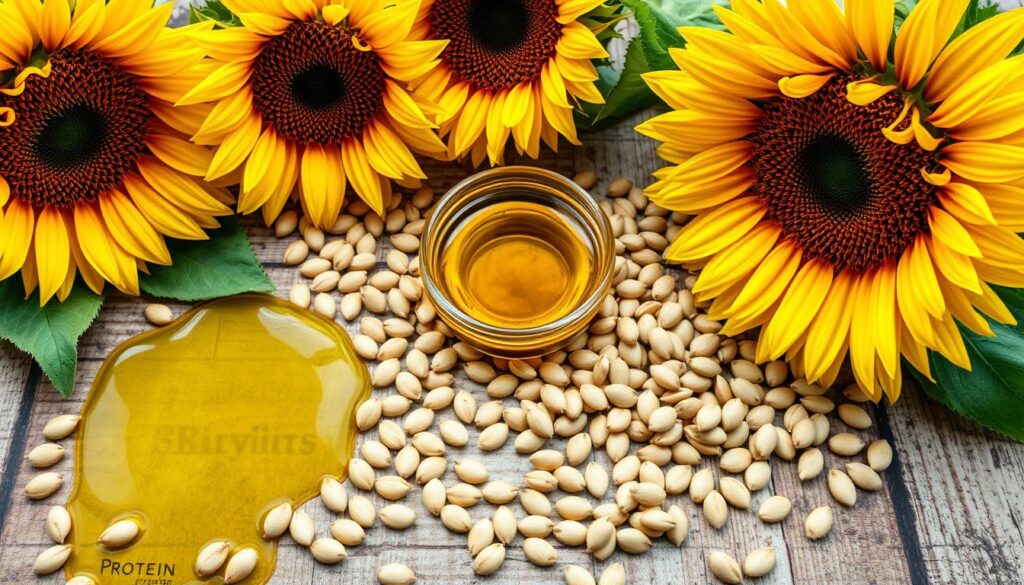
Sunflower seeds are tiny nutritional powerhouses. They’re perfect for trail mix, baking, or snacking. These kernels from the Helianthus annuus plant offer a mild, nutty flavor1.
These seeds pack a punch of essential nutrients. One ounce contains 165 calories, 14.1 grams of fat, and 5.5 grams of protein. It also provides 6.8 grams of carbs1.
Sunflower seeds are rich in vitamin E. Just one ounce delivers about 49% of the Daily Value1.
These seeds support heart health and may reduce inflammation. Studies show they might lower C-reactive protein levels by 32%. This could help reduce risks of heart disease and type 2 diabetes1.
Key Takeaways
- Sunflower seeds are nutrient-dense healthy snacks
- Rich in vitamins and minerals
- May support heart and metabolic health
- Versatile for cooking and direct consumption
- Excellent source of plant-based nutrition
Understanding Sunflower Seeds and Their Nutritional Profile
Sunflower seeds are tiny powerhouses of nutrition. They can transform your snacks into nutrient-dense meals. These remarkable superfoods support overall wellness with their incredible benefits.
Organic sunflower seeds are an exceptional addition to your diet. They offer a remarkable nutrition boost beyond simple snacking. Roasted sunflower seeds can significantly enhance your meal plan.
Nutritional Breakdown of Sunflower Seeds
A quarter cup of sunflower seeds packs an impressive nutritional punch. Here’s what you’ll find in each serving:
- Calories: 207 per serving2
- Protein: 5.8 grams2
- Fat: 19 grams (predominantly healthy fats)3
- Fiber: 3.9 grams2
Vitamin and Mineral Powerhouse
Bulk sunflower seeds are rich in micronutrients. They provide significant amounts of essential vitamins and minerals:
“Sunflower seeds are nature’s multivitamin, packed with nutrients in a tiny package.”
Sunflower seeds are incredibly versatile in recipes. You can sprinkle them on salads or blend them into smoothies. They also make a tasty standalone snack3.
These seeds have a low glycemic index. This makes them great for keeping blood sugar steady2. Their high fiber content helps digestion and keeps you feeling full longer.
Health Benefits of Sunflower Seeds
Sunflower seeds are tiny nutritional powerhouses. They offer incredible health advantages that can boost your daily nutrition. These seeds are more than just snacks – they’re wellness superheroes4.
Let’s dive into the amazing benefits of sunflower seeds. These little gems can truly transform your diet.
- Inflammation Reduction: Eating sunflower seeds five times weekly can help lower inflammation levels45
- Heart Health Support: These seeds may decrease risks of cardiovascular disease45
- Nutrient-Dense Snacking: Perfect for those seeking healthy snacks with robust nutritional profiles6
Nutritional Powerhouse Breakdown
| Nutrient | Amount per 1 oz Serving | Daily Value % |
|---|---|---|
| Calories | 165 | N/A |
| Protein | 5.5g | 11% |
| Vitamin E | 7.5mg | 49% |
| Zinc | 1.5mg | 14% |
Buying sunflower seeds is an investment in your health. They offer unique benefits for both men and women. These seeds support muscle building and reproductive health5.
“Sunflower seeds are nature’s multivitamin, delivering powerful nutrition in a small package.”
Here’s a pro tip: Choose unsalted varieties for maximum benefits. Limit your intake to about a quarter cup to control sodium consumption5. Your body will love this smart, nutritious choice!
Conclusion
Sunflower seeds are a nutritional powerhouse that can boost your diet. These tiny seeds offer versatility and deliciousness for wellness seekers. With 25g of protein per 100g serving, organic sunflower seeds are great for plant-based eaters7.
Balance your intake when using sunflower seed recipes. A one-ounce serving has 163 calories, making them nutrient-dense yet calorie-conscious7. Nutrition experts suggest eating these seeds in moderation for maximum health benefits8.
Sunflower seeds can be both tasty and health-promoting. They offer benefits like supporting heart health and potentially reducing inflammation8. You can sprinkle them on salads, blend them into smoothies, or enjoy them as a snack.
Listen to your body and talk to healthcare professionals about dietary concerns. Sunflower seeds are more than just a snack. They’re an investment in your overall well-being8.
FAQ
What are sunflower seeds?
Sunflower seeds are fruits from the sunflower plant. They have a mild, nutty flavor and are usually roasted. These seeds come from large flower heads, often over 12 inches wide.
You can find them in trail mix, bread, and nutrition bars. They’re also great as a snack on their own.
What nutritional benefits do sunflower seeds offer?
Sunflower seeds are packed with essential nutrients. They’re high in vitamin E and selenium, which protect your body’s cells.
One ounce has about 165 calories, 14.1 grams of fat, and 5.5 grams of protein. They’re rich in vitamin E, copper, and selenium.
How can sunflower seeds benefit my health?
Sunflower seeds may lower blood pressure, cholesterol, and blood sugar. They have anti-inflammatory properties and could reduce heart disease risk.
These seeds support thyroid health and may prevent muscle cramps. Their unsaturated fatty acids and bioactive peptides contribute to heart health.
How can I incorporate sunflower seeds into my diet?
Add sunflower seeds to salads, baked goods, or trail mix. You can also enjoy them as a snack.
They work well in sweet and savory recipes. Choose unsalted or low-sodium varieties for the best health benefits.
Are there different types of sunflower seeds?
There are two main sunflower crops: one for edible seeds and another for oil. Edible seeds come raw, roasted, shelled, or unshelled.
You can find them as snacks, in trail mixes, or in foods like bread and bars.
How should I store sunflower seeds?
Store sunflower seeds in an airtight container in a cool, dry place. For bulk purchases, keep them in the fridge or freezer.
This extends their shelf life and prevents them from going bad. Always check for moisture or odd smells before eating.
Can sunflower seeds help with weight management?
Sunflower seeds are nutrient-dense but high in calories. Eat them in moderation as part of a balanced diet.
Their protein and healthy fats can help you feel full. Be careful with portion sizes to avoid overeating these tasty seeds.
Source Links
- Sunflower Seeds: Nutrition, Benefits, and How to Eat – https://www.healthline.com/nutrition/sunflower-seeds
- Sunflower Seed Nutrition Facts and Health Benefits – https://www.verywellfit.com/calories-in-sunflower-seeds-and-their-health-benefits-4119941
- Sunflower Seeds (Helianthus Annuus) and Health Benefits: A Review – https://www.lidsen.com/journals/rpn/rpn-03-03-010
- Health Benefits of Sunflower Seeds – https://www.webmd.com/diet/health-benefits-sunflower-seeds
- Sunflower Seeds: Benefits of Eating Them Without Salt – https://www.verywellhealth.com/sunflower-seeds-7972233
- 4 Amazing Health Benefits of Sunflower Seeds – https://www.eatingwell.com/article/2059940/sunflower-seeds-nutrition/
- Everything You Need to Know About Sunflower Seeds – https://ayoubs.ca/blogs/news/sunflower-seeds?srsltid=AfmBOoob3hyHUAgYe84hNZuQOn82J8x5hY9Pe0te_Zbqqq6QU-4ZAwwo
- Are sunflower seeds good for you? – https://www.medicalnewstoday.com/articles/sunflower-seeds

