
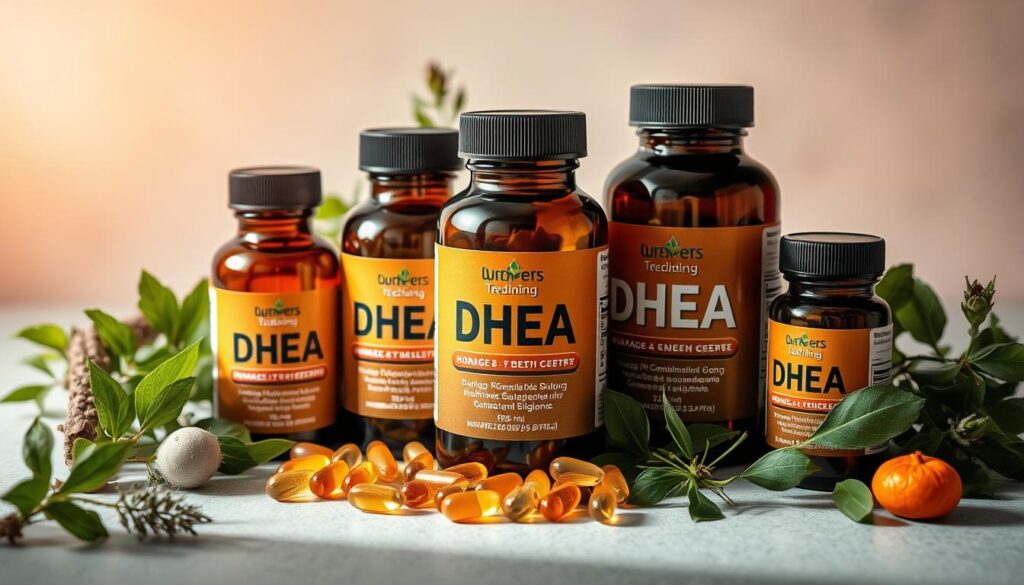
DHEA is an adrenal hormone crucial for your body’s hormonal balance. This anti-aging supplement has gained attention for its potential health benefits. DHEA is naturally produced in the adrenal glands.
It serves as a precursor to essential sex hormones. DHEA levels peak in early adulthood and decline with age. Understanding this hormone helps in deciding if DHEA supplementation is right for you1.
Many claim DHEA improves sex drive, builds muscle, and fights aging. However, scientific evidence is mixed. Athletes often use DHEA supplements to enhance performance.
Yet, research shows limited concrete benefits1. Your body naturally produces DHEA in the adrenal glands. It serves as a precursor to essential sex hormones2.
Key Takeaways
- DHEA is a natural hormone that declines with age
- Supplements may offer potential health benefits
- Scientific evidence remains inconclusive
- Quality and effectiveness of supplements vary
- Consult healthcare professionals before starting DHEA
Understanding DHEA and Its Natural Role in the Body
DHEA is a fascinating natural steroid crucial for hormonal balance. This remarkable compound acts as an essential endocrine booster. It impacts multiple aspects of human health as a key hormonal precursor3.
What Is Dehydroepiandrosterone?
Dehydroepiandrosterone is a steroid hormone made by your adrenal glands. It’s the most abundant circulating steroid hormone in humans. DHEA acts as a precursor to testosterone and estrogen3.
Your body uses DHEA to create other important hormones. These hormones regulate various physiological processes.
How DHEA Production Changes with Age
DHEA levels aren’t constant throughout life. They typically peak during your mid-20s. After that, they gradually decline as you age.
This natural reduction can impact several health markers:
- Decreased muscle mass
- Reduced sexual function
- Lower energy levels
- Potential cognitive changes
The Science Behind Hormonal Precursors
DHEA functions as a critical hormonal precursor. It supports multiple bodily systems. Recent studies show potential benefits, especially for older adults3:
- Improves physical and psychological well-being
- Supports cardiovascular health
- Potentially reduces inflammation
- May enhance sexual satisfaction
Understanding your body’s natural hormone production can help you make informed decisions about supplementation and overall health.
DHEA offers promising health benefits, but individual responses can vary. Consult a healthcare professional about DHEA supplementation. They can help determine if it’s right for your specific needs4.
Key Health Benefits of DHEA Supplements
DHEA supplements can boost your vitality and support overall wellness. As a natural hormone precursor, DHEA helps maintain your body’s hormonal balance5.
These supplements offer potential benefits for bone health, emotional well-being, and sexual function. They may also improve skin health in older adults.
- Bone Health: Particularly beneficial for older women, DHEA may help preserve bone density when taken consistently for 1-2 years56.
- Emotional Well-being: Some studies suggest potential improvements in mild to moderate depression76.
- Sexual Function: Potential enhancements in sexual interest, fertility, and libido76.
- Skin Health: Possible improvements in skin hydration and firmness for elderly adults.
“DHEA supplements can be a powerful cortisol balancer, helping you manage stress more effectively.”
Your body’s natural DHEA production peaks around age 20. It then declines by about 10 percent each decade5.
By your 70s or 80s, DHEA levels may drop to just 10-20 percent of their peak5.
| Benefit Category | Potential Impact |
|---|---|
| Hormonal Balance | Supports natural hormone production |
| Immune Function | May improve overall immune response7 |
| Quality of Life | Especially beneficial for those with adrenal insufficiency6 |
DHEA supplements show promise, but caution is needed. Always talk to your doctor before starting any new supplement.
Your individual health needs and potential interactions should always be carefully considered.
DHEA Safety and Potential Side Effects
DHEA supplements can greatly impact your body’s hormone balance. Understanding their safety profile is key for making smart health choices. Careful thought is needed before using these supplements.
Common Side Effects to Watch For
DHEA supplements may cause several side effects. It’s important to be aware of these potential reactions.
- Oily skin and acne8
- Increased hair growth in unexpected areas9
- Mood changes and potential hormone disruptions10
- Potential cholesterol level modifications10
Drug Interactions and Contraindications
Some health conditions and medications don’t mix well with DHEA supplements. Avoid these supplements if you have:
Recommended Dosage Guidelines
Using the right amount of DHEA is crucial for safety. Experts suggest these guidelines:
- 25-50 mg daily is considered safe8
- Short-term use (up to one year) is typically recommended10
- Consult healthcare providers before starting supplementation10
Always prioritize professional medical advice when considering DHEA supplements for your hormone balance.
Note: Individual responses to DHEA can vary, so monitoring your body’s reaction is crucial.
Conclusion
DHEA benefits require careful research and professional guidance. Hormonal health is complex, and DHEA shows promise. Research reveals intriguing insights about its role. DHEAS levels peak in early adulthood and decline by 10% each decade11.
DHEA’s effectiveness varies across individuals. Age, sex, and overall health influence its impact11. Some studies show benefits for elderly women with bone density issues12.
Women may respond differently than men. Research indicates decreased fat body mass and increased total body mass in women12.
Consult your healthcare provider before starting DHEA supplements. Over-the-counter products can have inconsistent DHEA amounts11. Your metabolic profile determines potential benefits and risks13.
DHEA supplements offer possibilities for hormonal health. They’re not a universal solution. Medical supervision and a personalized approach are crucial for informed decisions.
FAQ
What exactly is DHEA?
DHEA is a hormone made by your adrenal glands. It helps create male and female sex hormones. DHEA production peaks in your mid-20s and then slowly declines with age.
At what age does DHEA production start to decline?
DHEA levels begin to drop after your mid-20s. By 40, your levels can fall significantly. At 70-80, DHEA production might be only 10-20% of peak levels.
What potential benefits do DHEA supplements offer?
DHEA supplements may improve bone density, especially in older women. They might ease mild to moderate depression and enhance skin hydration.
These supplements could also support sexual function. For those with adrenal insufficiency, DHEA may improve quality of life.
Are there any common side effects of DHEA?
Yes, some side effects include oily skin, acne, hair loss, and stomach upset. Blood pressure changes may occur. Women might experience facial hair growth or voice deepening.
Men may have different hormonal responses to DHEA supplements.
How much DHEA should I take daily?
The typical dose ranges from 25-50 mg per day. Taking 50 mg daily is considered safe for up to one year.
A 25 mg daily dose is safe for up to two years. Always consult your doctor before starting any new supplement.
Can DHEA help with weight loss?
Regular DHEA supplements don’t significantly affect fat loss. However, 7-Keto DHEA might support metabolism and weight management.
Results aren’t conclusive, so don’t rely on it as a primary weight loss method.
Who should avoid taking DHEA supplements?
People with hormone-sensitive cancers should avoid DHEA. Pregnant or breastfeeding women shouldn’t take it. Those with high cholesterol or heart disease should also steer clear.
Avoid DHEA without medical advice if you’re on antipsychotics, estrogen, or SSRIs.
Are DHEA supplements scientifically proven?
Scientific evidence on DHEA is mixed. Some studies show promising results for specific conditions. However, it doesn’t significantly affect the aging process.
More research is needed to fully understand DHEA’s long-term effects and benefits.
Source Links
- DHEA Supplements: Uses and Side Effects – https://www.webmd.com/diet/dhea-supplements
- DHEA – https://www.mayoclinic.org/drugs-supplements-dhea/art-20364199
- Dehydroepiandrosterone (DHEA): hypes and hopes – PubMed – https://pubmed.ncbi.nlm.nih.gov/25022952/
- No title found – https://www.urmc.rochester.edu/encyclopedia/content?contenttypeid=167&contentid=dhea
- DHEA for Men: Purported Benefits, Downsides, Recommendations – https://www.healthline.com/health/dhea-for-men
- What is DHEA & what are the benefits? — Denver Holistic Medicine – http://denverholisticmedicine.com/blog/2019/7/29/dhea-what-is-it-amp-the-benefits
- Dehydroepiandrosterone sulfate and longevity: New clues for an old friend – https://pmc.ncbi.nlm.nih.gov/articles/PMC37415/
- DHEA Supplements: Benefits, Uses, Side Effects and Dosage – https://www.healthline.com/nutrition/dhea-supplements
- Dehydroepiandrosterone (DHEA): Uses, side effects, and interactions – https://www.medicalnewstoday.com/articles/308684
- DHEA Supplements Might Improve Skin Aging, Fertility, and More—But Are They Right For You? – https://www.health.com/dhea-supplement-8423179
- Olech11_05 – https://www.ccjm.org/content/ccjom/72/11/965.full.pdf
- The effect of six months treatment with a 100 mg daily dose of dehydroepiandrosterone (DHEA) on circulating sex steroids, body composition and muscle strength in age-advanced men and women – PubMed – https://pubmed.ncbi.nlm.nih.gov/9876338/
- DHEA as a Biomarker of Stress: A Systematic Review and Meta-Analysis – https://pmc.ncbi.nlm.nih.gov/articles/PMC8290065/

