
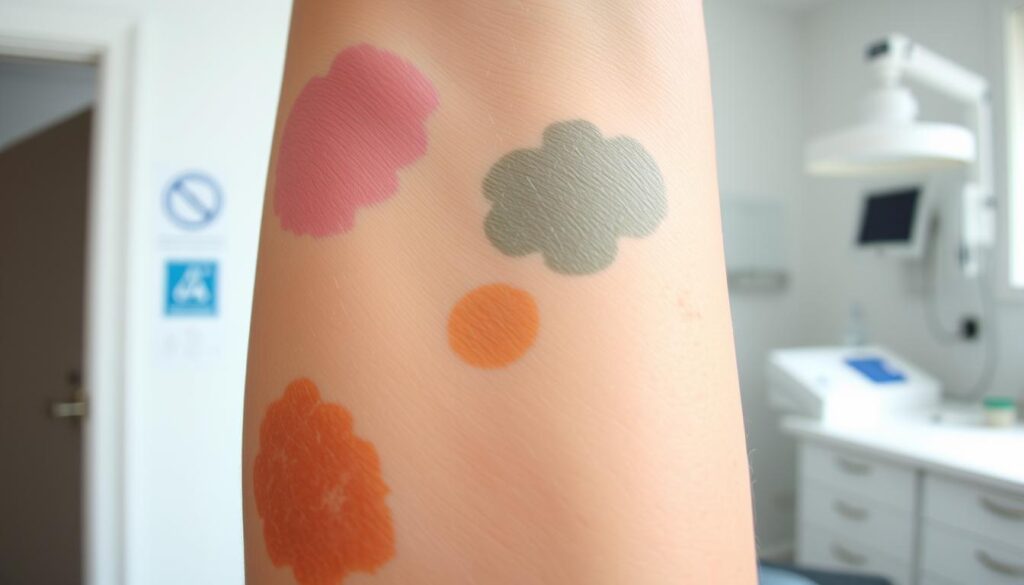
Skin discoloration can worry many people. It shows up as lighter, darker, or different-colored patches on your skin. Knowing what causes these changes is key to finding the right treatment12.
Birthmarks are common, affecting 4-6% of newborns1. Some babies have salmon patches or stork bites on their bodies. These marks can be red, pink, blue, or gray2.
Your skin’s look depends on genes, health, and environment. Sun damage, hormones, or health issues can cause hyperpigmentation. Some changes are temporary, while others last longer2.
Key Takeaways
- Skin discoloration can result from multiple factors
- Some birthmarks are present from birth
- Melanin plays a crucial role in skin pigmentation
- Different skin conditions can cause color variations
- Professional medical evaluation is recommended for persistent changes
Understanding Common Types of Skin Discoloration
Skin pigment changes can appear in various forms. They affect how your skin looks and feels. Patchy skin and uneven tone are common concerns many people face.
Understanding different types of discoloration can help identify underlying issues. This knowledge aids in addressing potential problems effectively.
Your skin’s appearance can change due to multiple factors. These include genetic predispositions, environmental influences, and health conditions3. These variations can manifest in several distinctive ways.
Birthmarks and Congenital Marks
Birthmarks are unique skin features present from birth. They come in different varieties:
- Vascular birthmarks (red or pink)
- Pigmented birthmarks (brown or black)
- Salmon patches
- Port wine stains
Pigmentation Disorders
Skin pigment changes can result from various disorders affecting melanin production. Some notable conditions include:
- Vitiligo – an autoimmune condition affecting roughly one in 100 people4
- Melasma – tan or brown patches worsened by sunlight3
- Post-inflammatory hyperpigmentation
About 15% to 25% of people with vitiligo may experience additional autoimmune disorders4. Uneven skin tone can develop from factors like sun exposure and hormonal changes.
Aging also plays a role in skin tone changes3. These factors can lead to noticeable differences in skin appearance.
Infection-Related Discoloration
Certain infections can cause patchy skin and discoloration. These changes may be temporary or permanent:
- Fungal infections like ringworm
- Bacterial skin conditions
- Viral skin disorders
Understanding your skin’s unique characteristics is the first step toward effective management and treatment.
Common areas prone to skin discoloration include the neck and hands. The stomach and area around the mouth are also often affected3.
Consulting with a dermatologist can help you understand your skin concerns. They can provide guidance on addressing your specific skin issues effectively.
Identifying Medical Conditions That Cause Discolored Skin Patches
Discolored skin patches can signal underlying medical conditions. These patches vary in appearance and may hint at different health issues. Proper diagnosis and treatment rely on understanding these skin changes.
Several medical conditions can cause skin discoloration. These include autoimmune disorders, pigment loss diseases, and endocrine problems.
- Autoimmune disorders like lupus can cause distinctive butterfly-shaped rashes on the cheeks5
- Vitiligo leads to patchy loss of skin color, particularly on hands, face, and body openings6
- Endocrine diseases such as diabetes can result in significant skin changes
Skin conditions causing noticeable discoloration include:
- Pigmentation disorders affecting skin tone7
- Inflammatory skin diseases causing dark or light patches
- Potential precancerous skin lesions
“Early recognition of skin changes can be critical for timely medical intervention.”
Your risk of skin discoloration depends on various factors. These include genetic predisposition, environmental exposure, and underlying health conditions. People with darker skin may notice more obvious pigmentation changes5.
Unusual or persistent skin spots require attention. It’s best to see a dermatologist for accurate diagnosis and treatment.
Effective Treatment Options for Skin Discoloration
Skin discoloration needs a tailored approach for each specific condition. Various treatments can help manage pigmentation issues caused by sun damage or hormonal changes8.
Different options can improve your skin’s appearance. Finding the right solution is key to addressing your unique concerns.
Medical Interventions and Professional Treatments
Professional treatments offer targeted solutions for stubborn pigmentation problems. Dermatologists may suggest several options to address your concerns.
- Laser therapy for precise pigment reduction8
- Chemical peels to remove damaged skin layers
- Prescription medications to manage underlying conditions
Topical Solutions and Creams
Many hyperpigmentation solutions start with targeted topical treatments. Effective creams often contain specific ingredients to combat discoloration.
- Hydroquinone for lightening dark spots
- Retinoids to promote cell turnover
- Vitamin C for brightening the skin9
Consistent application is key to seeing significant improvements in skin tone.
Prevention and Sun Protection Methods
Protecting your skin helps prevent further discoloration. Dermatologists recommend daily sun protection to reduce pigmentation risks8.
| Protection Method | Effectiveness |
|---|---|
| Broad-spectrum SPF 50+ | High |
| Protective clothing | Moderate to High |
| Avoiding midday sun | High |
Remember, early intervention and consistent care can significantly improve your skin’s appearance and health.
Conclusion
Skin discoloration requires a proactive approach to health. Your skin reflects your overall wellness, with various factors affecting its appearance. Genetic and environmental impacts can signal important health information1011.
Regular dermatologist visits are key for monitoring skin changes. Professional checks help catch potential issues early. This is crucial when you notice unusual pigmentation or texture changes12.
Different skin tones may show varied discoloration patterns. Expert evaluation is vital for all skin types11.
Skin protection goes beyond cosmetic concerns. Using sunscreen, eating well, and knowing your genetic risks can boost skin health. Check out this skin health research for more info.
Stay informed and take action to manage skin discoloration effectively. Your skin’s long-term health depends on your proactive care101112.
FAQ
What are discolored skin patches?
Discolored skin patches are areas that look different from your normal skin tone. They can be lighter, darker, or have various colors. These patches may stem from birthmarks, skin disorders, infections, or medical conditions.
What are the most common types of skin discoloration?
Common types include birthmarks, both vascular and pigmented. Pigmentation disorders like melasma and vitiligo are also frequent. Skin rashes such as rosacea and eczema can cause discoloration too.
Infection-related discolorations like tinea versicolor and ringworm are also common. These conditions can affect skin color in various ways.
When should I be concerned about skin discoloration?
Seek medical advice if you notice new or changing moles. Persistent skin patches or sudden color changes are also worth checking. Be alert if discoloration comes with pain, itching, or rapid growth.
Some skin changes can signal serious conditions like skin cancer. They may also point to underlying medical issues that need attention.
How can I prevent skin discoloration?
Use broad-spectrum sunscreen daily and avoid midday sun exposure. Wear protective clothing and maintain a healthy skincare routine. Managing underlying health conditions is also crucial.
Regular skin checks with a dermatologist can help catch issues early. These steps can significantly reduce your risk of skin discoloration.
What treatment options are available for skin discoloration?
Treatment depends on the cause. Options include topical creams, chemical peels, and laser treatments. Addressing medical conditions and using specific medications can help too.
In some cases, cosmetic interventions might be necessary. Always consult a professional to find the best treatment for your condition.
Can skin discoloration be a sign of a serious medical condition?
Yes, skin discoloration can indicate serious conditions like lupus or diabetes. It might also signal cyanosis or various autoimmune diseases. Changes in skin color can reveal underlying health issues.
It’s crucial to monitor and discuss any significant changes with a healthcare professional. Early detection can lead to better outcomes.
Are all skin discolorations permanent?
Not all skin discolorations last forever. Some birthmarks fade over time naturally. Certain pigmentation issues can be treated or managed effectively with proper care.
The permanence depends on the underlying cause and your overall health. The specific type of skin discoloration also plays a role in its duration.
Source Links
- Discolored skin patches: Pictures, causes, and when to see a doctor – https://www.medicalnewstoday.com/articles/322599
- Skin Discoloration: Causes, Pictures, and Treatment – https://www.healthline.com/health/discolored-skin-patches
- Skin Discoloration Types and Treatment – Beverly Wilshire Aesthetics – https://www.bwaesthetics.com/skin-discoloration-types-and-treatment/
- A visual guide to 6 conditions that cause skin discoloration | NIH MedlinePlus Magazine – https://magazine.medlineplus.gov/article/a-visual-guide-to-6-conditions-that-cause-skin-discoloration
- Skin Disorders: Pictures, Causes, Symptoms, and Treatment – https://www.healthline.com/health/skin-disorders
- Vitiligo: Explore treatments for this challenging skin-pigment condition-Vitiligo – Symptoms & causes – Mayo Clinic – https://www.mayoclinic.org/diseases-conditions/vitiligo/symptoms-causes/syc-20355912
- Pigmentation Disorders: Diagnosis and Management – https://www.aafp.org/pubs/afp/issues/2017/1215/p797.html
- Skin Discoloration Causes and Treatments – https://www.verywellhealth.com/skin-discoloration-5097074
- Skin Discoloration: Symptoms and Treatment | Center for Surgical Dermatology – https://www.centerforsurgicaldermatology.com/conditions/skin-discoloration
- Skin Pigmentation Disorders | Hyperpigmentation | MedlinePlus – https://medlineplus.gov/skinpigmentationdisorders.html
- Causes, Symptoms, and Diagnosis of Pigment and Brown Spots – https://availaesthetics.com/pigment-and-brown-spots-symptoms-and-diagnosis/
- What Is Skin Discoloration & What Causes It? – https://www.neostrata.com/blogs/learn-about-skincare/what-is-skin-discoloration-what-causes-it

