
Magnesium powers hundreds of essential bodily functions, making it crucial for your health. Many people don’t get enough of this vital mineral through their daily diet1. About 60% of U.S. adults lack adequate magnesium intake1.
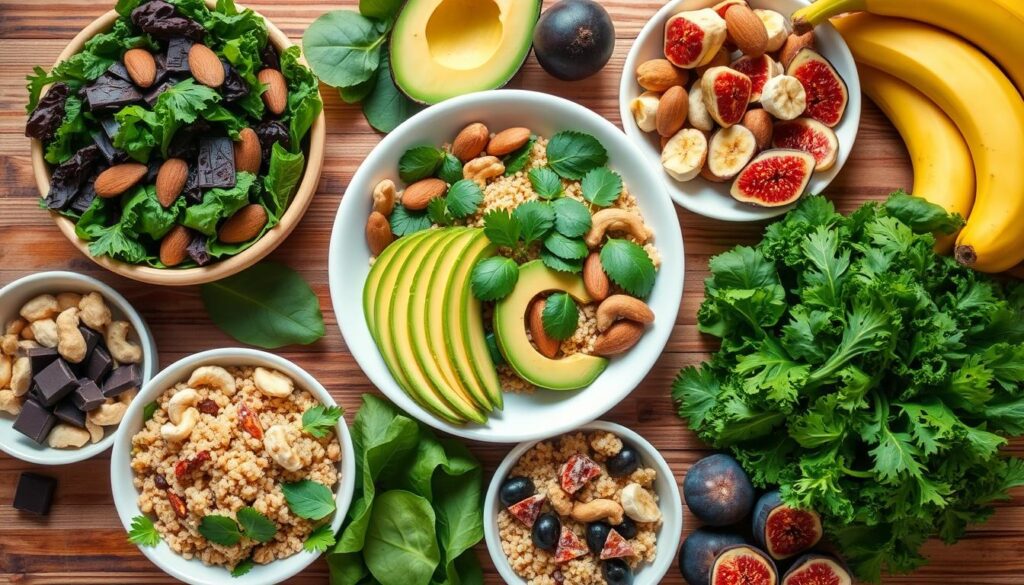
Your body needs magnesium for muscle function and energy production. Nuts, seeds, whole grains, and leafy veggies are top magnesium sources. Pumpkin seeds are a standout, offering 168 mg in just one ounce2.
Dark chocolate is a tasty way to boost your magnesium. It contains about 65 mg per serving2. Eating various magnesium-rich foods helps meet your daily needs.
Cashews, black beans, and avocados are great options too. An ounce of cashews has 83 mg of magnesium2. A cup of black beans provides 120 mg2.
One medium avocado adds 58 mg to your daily intake2. These foods make it easier to get enough magnesium in your diet.
Key Takeaways
- Magnesium is essential for hundreds of bodily functions
- Most Americans do not consume enough magnesium daily
- Nuts, seeds, and dark chocolate are excellent magnesium sources
- Variety in diet helps meet magnesium requirements
- Pumpkin seeds are a top magnesium-rich food
Understanding Magnesium’s Role in Your Body
Magnesium is vital for your overall health. This mineral supports many bodily functions, making it key for a high magnesium diet3.
Essential Functions of Magnesium
Your body needs magnesium for critical processes. Here are the main functions of this mineral:
- Supports muscle and nerve function
- Regulates heartbeat and blood pressure
- Strengthens bone structure
- Boosts immune system performance
An adult body has about 25 grams of magnesium. Half is in bones, and the rest in soft tissues3.
Your body absorbs 30-40% of dietary magnesium3.
Daily Recommended Intake
Magnesium needs vary by age and gender. Adults need 310-420 mg daily4. Here are specific recommendations:
- Men (19-51+ years): 400-420 mg daily5
- Women (19-51+ years): 310-320 mg daily5
- Pregnant women: 350-360 mg daily4
“Most Americans consume less magnesium than recommended amounts from food and beverages.”
Surveys show 48% of Americans eat less magnesium than needed3. This shows why adding magnesium-rich foods to your diet is crucial.
Magnesium deficiency risks include alcohol abuse, older age, and certain health conditions. Symptoms may include fatigue, muscle cramps, and weakness4.
Foods High in Magnesium
Many tasty foods can help you meet your daily magnesium needs. Your body needs this vital nutrient. Let’s look at the best natural sources of magnesium.
Seeds and nuts are excellent magnesium sources. Here are some great options:
- Pumpkin seeds: 156 mg per 30g serving6
- Almonds: 80 mg per 30g serving6
- Cashews: 74 mg per 30g serving6
- Chia seeds: 111 mg per 30g serving6
Leafy greens and vegetables are also rich in magnesium. Spinach is a top choice, with 78 mg per 1/2 cup when boiled6.
Other great veggie options include:
- Broccoli
- Swiss chard
- Okra
“Variety is key in a magnesium-rich diet. Mix and match these foods to keep your meals exciting and nutritious!” – Nutrition Experts
More magnesium-packed foods to consider:
- Avocados: 58 mg per fruit7
- Brown rice: 42 mg per 1/2 cup6
- Fatty fish like salmon and mackerel
- Whole grains
- Bananas
Daily magnesium needs differ for everyone. Women 19 and older need 310 milligrams daily. Men require 400-420 milligrams7.
By eating these foods, you’ll easily meet your magnesium goals. Enjoy a variety of these options for a balanced diet.
Maximizing Magnesium Absorption Through Smart Food Combinations
Smart meal planning can unlock magnesium’s full potential. Your food choices impact how your body processes this vital mineral8. By knowing nutrient interactions, you can boost your magnesium intake and overall health.
Food pairings are key to enhancing magnesium absorption. Here are some powerful combinations to try:
- Pair magnesium-rich foods with vitamin D sources to improve absorption9
- Include vitamin B6-rich foods to enhance magnesium uptake
- Avoid consuming high zinc amounts simultaneously, as they may interfere with absorption
Cooking methods affect magnesium availability. Boiling spinach, for example, can increase its magnesium content. Use diverse preparation techniques to maximize nutrient absorption10.
“The key to optimal nutrition is understanding how different nutrients work together.” – Nutrition Expert
Some health conditions may benefit more from strategic magnesium intake. People with type 2 diabetes often have lower magnesium levels. They could improve insulin sensitivity through targeted food choices10.
Balanced meals ensure steady magnesium absorption throughout the day. Include various magnesium sources like leafy greens, nuts, and whole grains. This approach supports your body’s nutritional needs effectively.
Conclusion
Magnesium is vital for your health. An average adult has 25 grams of magnesium in their body. Many Americans don’t get enough of this essential mineral in their diet.
Dietary magnesium can change your nutrition approach. Nuts, seeds, whole grains, and leafy greens are rich in magnesium. This mineral supports heart health and may lower type 2 diabetes risk.
Whole foods are the best source of magnesium. Supplements exist, but natural sources are more effective. Low magnesium can cause health problems like muscle cramps and fatigue.
Talk to a doctor about your magnesium levels. They can advise if you need supplements. Your health depends on getting enough of this crucial mineral1112.
FAQ
What is magnesium and why is it important?
Magnesium is a vital mineral that plays a role in hundreds of bodily reactions. It supports nerve and muscle function, regulates heartbeat, and strengthens bones. This essential nutrient also boosts your immune system and maintains overall health.
How much magnesium do I need daily?
Adults need 310-420 milligrams of magnesium daily, depending on age and gender. Many Americans don’t meet this requirement. It’s crucial to include magnesium-rich foods in your diet to reach these levels.
What are the best food sources of magnesium?
Dark chocolate, avocados, and nuts are excellent sources of magnesium. Legumes, seeds, and whole grains also pack a magnesium punch. Fatty fish, leafy greens, bananas, and yogurt round out the list of magnesium-rich foods.
What are the symptoms of magnesium deficiency?
Nausea, weakness, muscle cramps, and numbness can signal magnesium deficiency. If you notice these symptoms, consider boosting your magnesium intake. Adding more magnesium-rich foods to your diet may help alleviate these issues.
How can I improve magnesium absorption?
Pair magnesium-rich foods with vitamin D sources to enhance absorption. Include vitamin B6-rich foods in your diet as well. Be mindful of zinc intake, as it can interfere with magnesium absorption.
Some cooking methods, like boiling spinach, can increase magnesium availability. Experiment with different preparation techniques to maximize nutrient absorption.
Are magnesium supplements necessary?
Whole food sources of magnesium are generally safer and more beneficial than supplements. Foods provide additional nutrients alongside magnesium. This balanced approach is the best way to meet your magnesium needs.
Can cooking affect magnesium content in foods?
Cooking methods can indeed impact magnesium content in foods. Boiling spinach, for example, can increase its magnesium availability. Use various cooking techniques to preserve nutrients and maximize magnesium content in your meals.
What health conditions are related to magnesium intake?
Magnesium supports heart health, bone strength, and muscle and nerve function. It also bolsters your immune system. Low magnesium levels may increase the risk of various health issues.
Source Links
- 10 Magnesium-Rich Foods You Should Eat for Better Health – https://www.verywellhealth.com/foods-high-in-magnesium-7970911
- 10 Magnesium-Rich Foods That Are Super Healthy – https://www.healthline.com/nutrition/10-foods-high-in-magnesium
- Office of Dietary Supplements – Magnesium – https://ods.od.nih.gov/factsheets/Magnesium-HealthProfessional/
- Magnesium – https://nutritionsource.hsph.harvard.edu/magnesium/
- Office of Dietary Supplements – Magnesium – https://ods.od.nih.gov/factsheets/Magnesium-Consumer/
- Foods high in magnesium – https://www.healthdirect.gov.au/foods-high-in-magnesium
- Magnesium-Rich Foods, Drinks & Supplements That Are Healthy – https://www.webmd.com/diet/magnesium-and-your-health
- 7 foods nutritionists say you should eat together – https://www.nbcnews.com/better/health/7-food-pairings-will-increase-nutrient-absorption-ncna889181
- Foodsmart Nutrition & Dietitian Advice Blog | Healthy Habits – https://foodsmart.com/blog/maximizing-the-nutrients-in-your-food
- Magnesium Information | Mount Sinai – https://www.mountsinai.org/health-library/supplement/magnesium
- Magnesium: Health benefits, deficiency, sources, and risks – https://www.medicalnewstoday.com/articles/286839
- The Best Magnesium-Rich Foods to Improve Sleep and Boost Your Muscles – https://www.self.com/story/foods-high-in-magnesium

