
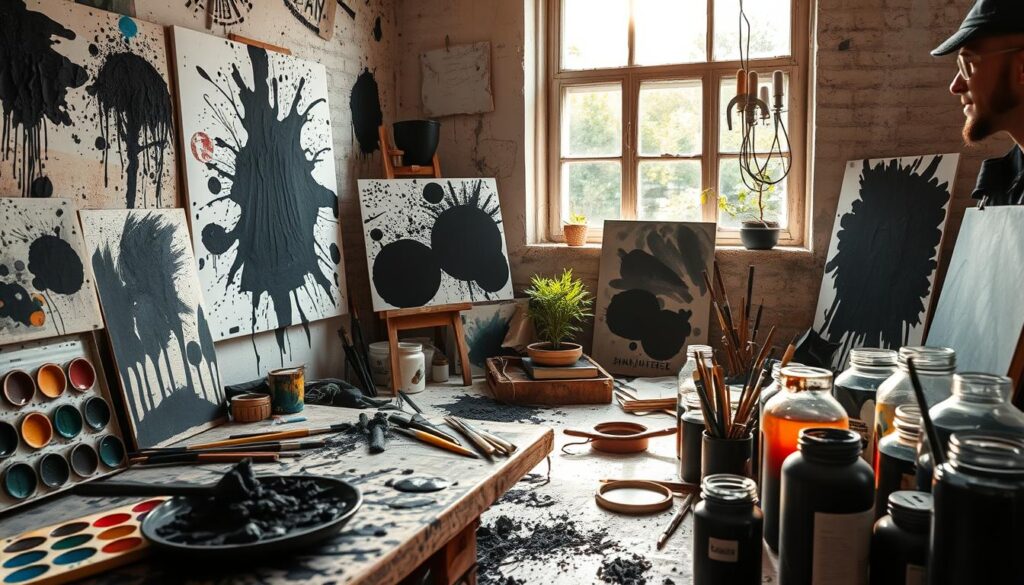
Ready to dive into the world of black creation? It’s a vital skill for artists, designers, and DIY fans. Black isn’t simple; it’s a complex visual phenomenon that can transform your projects1.
There are many ways to produce this dark hue. Carbon black pigments absorb 99.98% of light, perfect for deep, rich blacks1. Mixing your own black gives you control over color depth and tone.
Creating black involves color theory and pigment experiments. Many pro painters prefer blending primary colors or using special pigment mixes1.
Key Takeaways
- Black is technically the absence of light, not a traditional color
- Multiple methods exist to create black pigments
- Carbon-based pigments provide the deepest black tones
- Artists can mix their own black for unique color variations
- Understanding color absorption is key to creating true black
Understanding the Basics of Color Mixing
Color theory opens up a world of creativity. Learn to make black shades with precision and flair. Mixing colors is an art that lets you craft black tones for any mood.
The color wheel is key to mixing colors well. It shows how colors relate to each other. By mixing primary and secondary colors, you can create amazing black variations.
Primary Color Combinations
Mixing primary colors creates interesting results. Equal amounts of red, blue, and yellow make a muddy brown. The secret is patience.
Add small amounts of each color slowly. The mix will get darker and turn into black2.
Advanced Color Mixing Techniques
- Complementary color mixing can create stunning black shades3:
- Red and green
- Blue and orange
- Purple and yellow
- Specific color combinations for unique black tones:
- Blue and brown
- Phthalo Green and Naphthol Red
- Cadmium Yellow with violet
Color Mixing Pro Tips
| Color Combination | Black Tone Characteristic |
|---|---|
| Aureolin Yellow + Rose Madder + Cobalt Blue | Soft, muted black |
| Ultramarine Blue (50% proportion) | Deep, rich black |
| Prussian Blue + Brown | Dark, intense black |
“Color is my daylong obsession, joy, and torment.” – Claude Monet
Creating black is more than mixing dark colors. It’s about understanding color theory and exploring different combinations.
Experiment to find your unique approach. Develop black shades that match your artistic vision2.
Materials Needed to Create Black
Creating the perfect black requires careful selection of materials and understanding color mixing techniques. Knowing how to form a black color palette can transform your creative projects. This skill is valuable for artists and design enthusiasts alike4.
To produce a dark hue, you need to understand the essential components. These components are crucial for black creation5.
Paints and Dyes for Black Making
Selecting the right paints is crucial for achieving a rich black. Artists often mix colors instead of using manufactured black pigments6.
Here are some recommended paint combinations:
- Ultramarine Blue and Transparent Oxide Red
- Pthalo Turquoise and Napthol Crimson
- Alizarin Crimson for deeper warm tones
Natural Ingredients for Homemade Black
Natural ingredients can help you create unique black shades. Experiment with:
- Charcoal powder
- Burnt sienna
- Ground coffee
- Squid ink
Tools You’ll Need for Mixing
| Tool | Purpose |
|---|---|
| Palette | Color mixing surface |
| Palette Knife | Blending colors |
| Color Wheel | Understanding color relationships |
Artists suggest using specialized tools like TourBox for precise color mixing. These tools can help achieve the desired black shade4.
“The key to creating perfect black is understanding color theory and experimenting with different combinations.”
Step-by-Step Instructions for Making Black
Creating black shades requires understanding color mixing techniques. The process involves strategic color combinations and precise measurements7. Crafting the perfect black is more complex than simply blending random colors together.
Mixing Paint to Achieve the Perfect Black
Begin by combining equal parts of red, blue, and yellow. This mixture initially creates a muddy brown before transforming into black7.
Digital designers often use Photoshop for precise color adjustments. These tools help fine-tune black shades to perfection7.
Creating Black Using Natural Ingredients
Natural coloring methods use ingredients like black charcoal and squid ink. These work well to generate black shades8.
Gel-based food colors are effective for crafting black tones. A small amount produces intense results8. Allow your color mixture to set for 10-15 minutes for the best outcome8.
Tips and Tricks for Consistency in Color
Experiment with different color ratios when making black. Mix colors gradually and be patient with the process.
Store your black dye in a clean, sealed container. This helps maintain its quality for future use8.
Color experts recommend using specialized tools like TourBox. These tools allow for precise color manipulation7.
FAQ
Is black technically a color?
Black isn’t a color, but the absence of light. It’s crucial in color theory. You can create it by mixing primary colors equally.
What primary colors can I use to create black?
Mix equal parts of red, blue, and yellow to make black. For a richer black, use Crimson Red, Hansa Yellow, and Pthalo Blue.
Can I create black using complementary colors?
Yes, mix complementary colors like red and green to produce black. The colors and proportions affect the final shade. You can create warmer or cooler black tones this way.
What tools do I need to mix black paint?
You’ll need a palette, mixing tray, and palette knife or paintbrush. Digital artists can use software like Photoshop to adjust colors.
How can I adjust the tone of my mixed black?
Add more blue for a cooler black or red for warmth. Try different color combos and ratios. Mix thoroughly and add colors slowly for consistency.
Are there natural ingredients I can use to create black?
You can use various natural ingredients to make black dyes. The combinations depend on available materials. Feel free to experiment with different natural sources.
Why do artists prefer mixing their own black?
Mixing black gives more control over hue and tone. It creates a natural, multihued feel in paintings. This practice helps artists improve their color-mixing skills.
Can I use digital tools to create black?
Yes! Digital art software lets you adjust color settings. Tools like TourBox can boost efficiency in color adjustment tasks.
Source Links
- Chromatic black is not a single pigment but a combination of multiple pigments. – https://www.naturalpigments.com/artist-materials/chromatic-blacks?srsltid=AfmBOoqql6cxryNlPfvyAKkzQUHftC1ygruM807_hUUgiprzaZqKJTOG
- A Comprehensive Guide to Color Mixing – https://www.tourboxtech.com/en/news/what-colors-make-black.html?srsltid=AfmBOoq-9YkFYTZb7OodpZtS8mtombdADtdyxF-JUahoIT3VjN_dKRS4
- How to Make Black by Mixing Colors: 5 Easy Methods – https://www.wikihow.com/Make-Black
- A Comprehensive Guide to Color Mixing – https://www.tourboxtech.com/en/news/what-colors-make-black.html?srsltid=AfmBOoqdWCDqpe9CfmCbvipEzy2NiEze1vs5wStR6d28XapX_7XsAteO
- What Colors You Can Use To Make Black – Blue Beach House Art – https://bluebeachhouseart.com/what-colors-make-black/
- How to Make the Color Black Without Black Paint – https://mysketchjournal.com/how-to-make-the-color-black-without-black-paint/
- A Comprehensive Guide to Color Mixing – https://www.tourboxtech.com/en/news/what-colors-make-black.html?srsltid=AfmBOooc6FOCLX4rJDDW6vCEPqEj_iSJPSSopGr9O7c059ik54Mfupsj
- How to make Black Food Coloring (+VIDEO) | MasalaHerb.com – https://www.masalaherb.com/black-food-coloring/

