
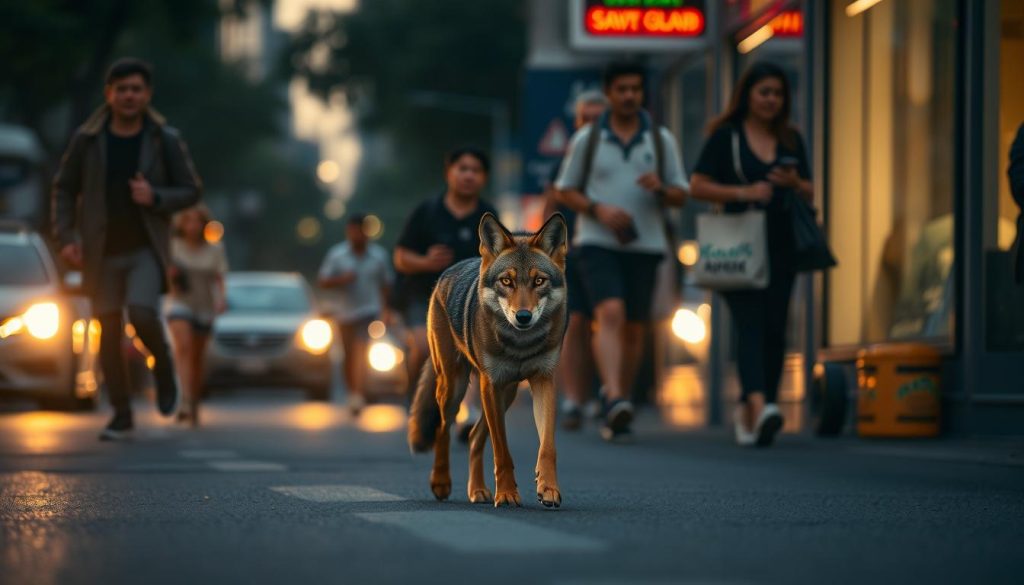
Coyotes have spread across North American cities, raising questions about human-coyote interactions. Despite their increased presence, serious attacks are incredibly uncommon1. Only two fatal coyote attacks have been confirmed in North America1.
Experts say coyote attacks are usually defensive or investigative, not predatory. From 1976 to 2006, about 160 coyote attacks were reported in the United States1. Most encounters don’t cause significant harm to humans.
To understand coyote interactions, we must study their population patterns and behavior. Attacks have increased near wildland-suburban areas1. This trend highlights the need to learn safe coexistence with these adaptable urban wildlife residents.
Key Takeaways
- Fatal coyote attacks are extremely uncommon in North America
- Most coyote encounters are non-aggressive
- Urban coyote populations continue to expand
- Understanding coyote behavior can help prevent conflicts
- Proper human behavior is crucial in reducing potential interactions
Understanding Coyote Attack Behavior in Urban Areas
Urban coyotes are now common in North American cities. This presents new challenges for human-wildlife interactions. Understanding coyote aggression is crucial for public safety2.
Predatory vs Investigative Attacks
Coyote interactions fall into two main types: predatory and investigative attacks. Most encounters show clear behavioral patterns2.
- Predatory attacks often target small children, making up 37% of incidents2
- Investigative interactions usually happen without physical contact
- Attacks peak during pup-rearing season from May to August2
Risk Factors for Children and Adults
Coyote territory plays a big role in attack risks. Children are more vulnerable due to certain factors.
- Unsupervised outdoor activities
- Proximity to coyote habitats
- Presence of accessible food sources2
Urban Coyote Population Patterns
Coyotes have adapted well to city life. They have unique population traits in urban areas.
| Characteristic | Urban Coyote Behavior |
|---|---|
| Primary Habitat | Wooded patches and shrubbery |
| Active Hours | Evening and nighttime |
| Diet Composition | Rodents, fruit, deer, rabbits2 |
Coyotes are more afraid of humans than humans are of them, but habituation can change this dynamic2.
Knowing these patterns helps people live safely with urban wildlife. It can reduce conflicts between humans and coyotes3.
Effective Strategies for Preventing Human-Coyote Conflicts
Urban wildlife conflicts with coyotes need smart management. Understanding coyote behavior is key for safe coexistence4. These adaptable predators live in every U.S. state except Hawaii4.
Effective coyote hazing can reduce interactions. Residents should follow these prevention strategies:
- Make loud noises when encountering coyotes
- Maintain direct eye contact
- Never run away from a coyote
- Secure garbage containers
Community efforts are vital in managing wildlife conflicts. The Humane Society’s coyote management plan focuses on education and habitat changes5.
| Prevention Strategy | Key Action |
|---|---|
| Pet Safety | Keep dogs on 6-foot leashes during breeding season4 |
| Fence Protection | Install 8-foot tall coyote-proof fences4 |
| Food Management | Eliminate accessible food sources5 |
Coyote attacks on humans remain extremely rare4. Understanding coyote behavior helps communities manage urban populations better. This approach minimizes conflicts and promotes peaceful coexistence.
Conclusion
Coyote attacks on humans are extremely rare. Only 367 attacks were recorded in North America from 1977 to 20156. While risks exist, especially for children, most human-coyote interactions don’t cause harm6.
Urban wildlife management needs community education about coyote behavior. Environmental factors affect hunting patterns. A Cape Breton study showed how scarce resources change coyote strategies7. Most coyotes avoid humans and retreat when encountered.
Prevention is key in managing human-coyote interactions. Secure food sources and stay aware of local wildlife habits. This can greatly reduce potential conflicts.
Wildlife authorities suggest creating deterrents to keep coyotes away from homes. These methods should respect the coyotes’ role in the ecosystem. Responsible coexistence relies on community awareness and scientific understanding.
Sharing knowledge about coyote behavior empowers neighborhoods. It helps develop practical, compassionate approaches to wildlife management. This protects both human safety and animal habitats.
FAQ
How common are coyote attacks on humans?
Coyote attacks on humans rarely occur. These wild animals usually avoid people and retreat when encountered. Urban areas have seen more coyotes, but serious incidents remain uncommon.
What’s the difference between predatory and investigative coyote attacks?
Predatory attacks involve hunting behaviors targeting smaller prey. Investigative attacks are exploratory, with coyotes assessing potential threats or food sources. Knowing this difference helps prevent dangerous interactions.
Are children more at risk from coyote attacks?
Children face higher risks due to their smaller size. Parents should watch kids in coyote-populated areas. Teaching wildlife safety techniques is crucial for protection.
How can I protect my pets from coyotes?
Keep pets leashed or supervised outdoors. Avoid leaving pet food outside and secure garbage containers. Create a safe outdoor space for your furry friends.
Small pets are especially vulnerable. Never leave them alone in areas with coyote activity.
What is coyote hazing, and how does it work?
Coyote hazing discourages these animals from approaching populated areas. It involves making loud noises and appearing threatening. This technique makes coyotes feel unwelcome and encourages them to leave.
What should I do if I encounter a coyote?
Stay calm and stand your ground if you see a coyote. Make yourself look bigger and create noise. Slowly back away, but never run.
Carry a whistle or noise-maker for extra protection. Running can trigger a predatory response in coyotes.
How are urban coyote populations managed?
Urban coyote management involves community-wide strategies and public education. Habitat modification and responsible waste management play key roles. Experts, authorities, and residents must work together for effective control.
Why are coyotes moving into urban areas?
Coyotes adapt well to city life due to habitat loss. They find food in garbage and small prey. These clever animals quickly adjust to human-modified environments.
How can communities reduce human-coyote conflicts?
Communities can implement comprehensive wildlife management programs. This includes educating the public and managing waste properly. Removing attractants and creating clear interaction guidelines also help reduce conflicts.
Are coyotes dangerous to humans?
Coyotes can be potentially dangerous, but serious attacks are extremely rare. Most prefer to avoid human contact. Understanding their behavior reduces risks significantly.
Respecting their space and following safety measures keeps both humans and coyotes safe.
Source Links
- Coyote attack – https://en.wikipedia.org/wiki/Coyote_attack
- Urban Coyotes: Conflict and Management – https://woodlandstewards.osu.edu/sites/woodlands/files/d6/files/pubfiles/Urban_Coyotes_Conflict_and_Management_W-24-12.pdf
- Coyote Attacks: An Increasing Suburban Problem – https://digitalcommons.unl.edu/cgi/viewcontent.cgi?article=1000&context=vpc21
- PDF – https://www.humanesociety.org/sites/default/files/docs/Coyote-Advocate-Toolkit_2020.pdf
- TIPS to avoid conflicts with coyotes – Arizona Game & Fish Department – https://www.azgfd.com/2023/04/07/tips-to-avoid-conflicts-with-coyotes/
- PDF – https://escholarship.org/content/qt0qz6c152/qt0qz6c152_noSplash_4083ece1b75459a8b564c086fce0f0ad.pdf
- Researchers Reach Conclusion in 2009 Fatal Coyote Attack – https://realtree.com/the-realblog-with-stephanie-mallory/researchers-reach-conclusion-in-2009-fatal-coyote-attack?srsltid=AfmBOope9cIxEj0_lFYM5izuZs9LQMD6QPjYpy3xi0p5duUb0sa_-a4z

