
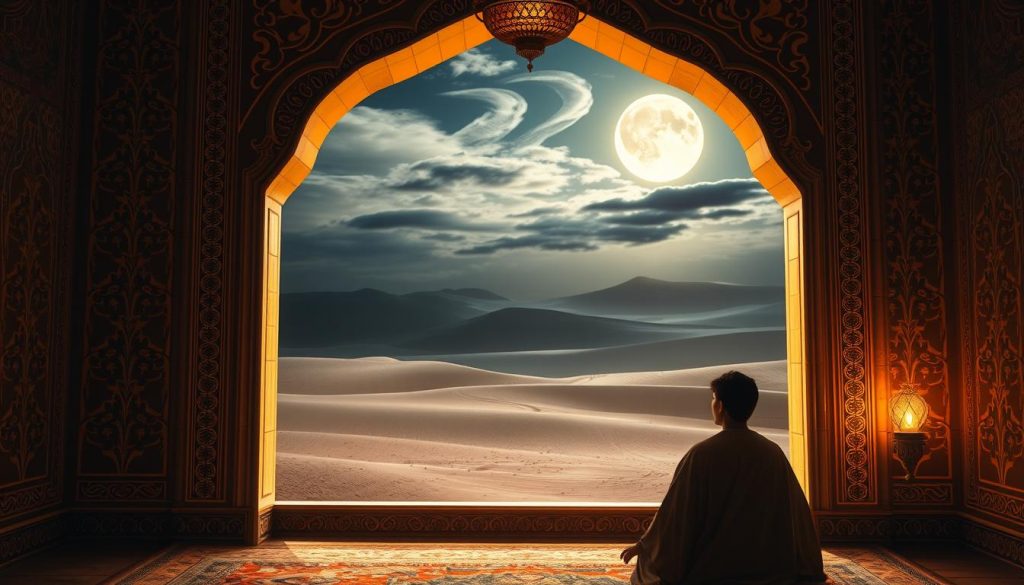
In Islamic tradition, dreams hold deep spiritual significance. They represent a complex realm of divine communication and personal insight. Dreams serve as potential channels of guidance and spiritual understanding1.
Islamic teachings offer a nuanced view on dreams. They categorize them into distinct types reflecting their spiritual origins. Dreams can come from divine inspiration, personal subconscious, or negative influences1.
The spiritual meaning of dreams in Islam suggests they’re not random. Instead, they’re meaningful experiences with potential spiritual implications.
Prophet Muhammad stressed the spiritual importance of dreams. He noted that they represent a part of prophethood1. In Islam, dreams fall into three main categories.
These categories are true dreams from Allah, false dreams from Satan, and confused dreams from personal thoughts1.
Since the 1990s, scholarly interest in Islamic dream interpretation has grown. This reflects increasing academic curiosity about this profound spiritual practice2. Researchers have explored dream narratives across various Islamic traditions.
Key Takeaways
- Dreams are considered potential divine messages in Islamic tradition
- Islamic teachings categorize dreams into three distinct types
- Dreams can provide spiritual guidance and insights
- The Prophet Muhammad highlighted the significance of dreams
- Dream interpretation requires spiritual discernment
Understanding Dreams in Islam Meaning
Islamic dream interpretation delves into the hidden messages of our nighttime visions. Muslims view dreams as meaningful communications, not random experiences. These visions can offer guidance and insight to the dreamer3.
Prophet Muhammad identified three types of dreams, each with unique spiritual significance3:
- True Dreams (Divine Messages)
- False Dreams
- Meaningless Dreams
Exploring True Dreams as Divine Guidance
True dreams are rare but powerful spiritual experiences. They often come to righteous individuals as a form of divine communication3.
Islamic tradition sees these prophetic dreams as part of prophethood4. They make up one of its forty-six parts.
The Qur’an provides remarkable examples of true dreams, such as Joseph’s interpretations that saved Egypt from drought3.
Understanding False Dreams
False dreams are typically nightmares from negative spiritual sources. Prophet Muhammad gave specific advice for handling these dreams3. He suggested seeking God’s refuge and avoiding sharing them.
Meaningless Dreams in Islamic Teaching
Meaningless dreams are the most common type. They often reflect daily experiences or subconscious thoughts3. These Islamic dream symbols don’t carry significant spiritual meaning.
Muslim scholars link dream authenticity to the dreamer’s sincerity and spiritual state4. The most truthful dreams reportedly occur during suhoor, just before dawn4.
Islamic Dream Interpretation and Spiritual Significance
Dreams play a vital role in Islamic tradition. They offer believers a unique glimpse into divine communication. Dream analysis in Islam reveals a deep approach to understanding spiritual visions5.
The Quran recognizes four Arabic terms for dreams. These are Ru’yaa (vision), Manam (sleep), Hulum (dream), and Bushra (tidings)5. This shows the rich theological framework surrounding dreams in the Quran6.
- True dreams (Ru’yaa) are considered direct messages from Allah6
- Bad dreams (Hulum) are believed to originate from negative spiritual influences6
- Personal mental dreams represent the third category6
Istikhara dreams help seek divine guidance. Muslims often pray for clarity about big life decisions through these visions5.
Islamic scholars have created detailed methods for dream interpretation. Ibn Sirin, a famous dream interpreter, set key rules for understanding spiritual messages5.
| Dream Type | Spiritual Origin | Recommended Action |
|---|---|---|
| True Vision (Ru’yaa) | Divine Message | Share with trusted individuals |
| Bad Dream (Hulum) | Negative Influence | Seek protection through prayer |
Prophet Muhammad said seeing him in a dream is a true vision. Satan can’t copy his spiritual essence5.
Muslims should approach dream interpretation with humility. It’s wise to seek help from knowledgeable scholars6.
Conclusion
Islamic oneiromancy reveals a spiritual dimension to dreams beyond nighttime experiences. Dreams in Islam serve as a spiritual communication channel for divine guidance7. They are so significant that they make up one-forty-sixth of prophethood7.
The Islamic view on dreams is multifaceted. It recognizes their potential as messages from Allah while maintaining a balanced understanding8. Dreams fall into three categories: divine visions, satanic influences, and personal psychological reflections8.
Scholars like Sheikh Abdul Ghani Al-Nablusi stress that dream interpretation is personal and context-dependent8. Muslims should seek interpretations from learned professionals for nuanced insights into potential spiritual messages7.
For those eager to explore this tradition, Islamic dream interpretation guides offer valuable perspectives. These resources help navigate spiritual experiences and their meanings.
Dreams hold spiritual significance but are not legislative sources in Islam. They offer potential guidance, inviting reflection and connection with divine wisdom8. Approaching dreams with humility can unlock meaningful insights into one’s spiritual journey.
FAQ
What is the Islamic perspective on dreams?
Islamic tradition views dreams as important spiritual experiences. They’re seen as potential sources of divine guidance from Allah. The Quran and Hadith discuss dreams as a way to receive spiritual insights.
Are all dreams meaningful in Islam?
Islamic teachings recognize three types of dreams. True dreams are divine messages. False dreams may come from negative spiritual sources. Meaningless dreams usually stem from daily thoughts or experiences.
What are true dreams in Islamic tradition?
True dreams, or “ru’ya,” are believed to be divine messages from Allah. They often provide guidance, warnings, or spiritual insights. Prophetic figures in Islamic history received important revelations through dreams.
How do Muslims interpret dreams?
Dream interpretation in Islam involves consulting Islamic scholars and understanding dream symbols. It also considers the spiritual context. Istikhara, a practice of seeking divine guidance, is common for spiritual direction.
Can dreams predict the future in Islam?
Islam cautions against definitive future predictions from dreams. Not all dreams are prophetic. Muslims are encouraged to seek guidance through prayer and understand dreams as potential spiritual messages.
What should I do if I have a disturbing dream?
Islamic teachings suggest seeking refuge in Allah from negative dreams. It’s best to avoid sharing disturbing dreams with others. Performing a protective prayer may help. Consulting an Islamic scholar can provide spiritual guidance if needed.
How are false dreams defined in Islamic tradition?
False dreams are thought to come from negative sources like personal anxieties or shaitan (devil). They can also stem from physiological conditions. These dreams aren’t viewed as divine communications.
What is the significance of istikhara dreams?
Istikhara is a prayer for divine guidance in decision-making. The dream or feeling after this prayer is seen as Allah’s guidance. It helps believers make choices aligned with divine wisdom.
Are there specific guidelines for dream interpretation in Islam?
Islamic dream interpretation follows specific principles. These include understanding symbols through Quranic references and consulting knowledgeable scholars. Personal context is considered, and superstitious interpretations are avoided. The goal is spiritual understanding, not fortune-telling.
Can non-Muslims understand Islamic perspectives on dreams?
Islamic dream traditions offer rich spiritual insights for all backgrounds. While theological interpretations are specific to Islam, the themes are universal. These include seeking guidance, self-reflection, and spiritual growth.
Source Links
- Types of Dreams in Islam – Islam Question & Answer – https://islamqa.info/en/answers/67624/types-of-dreams-in-islam
- No title found – https://www.oxfordbibliographies.com/abstract/document/obo-9780195390155/obo-9780195390155-0296.xml
- Dreams in Islam3 min read – https://www.whyislam.org/dreams/
- Dreams and Dream Interpretation – Islam Question & Answer – https://islamqa.info/en/answers/6537/dreams-and-dream-interpretation
- Islamic Dream Interpretation: Good Visions, Bad Dreams, And Hadiths – https://zamzam.com/blog/islamic-dream-interpretation/
- Dream Interpretation in Islam: Rules & Methods – https://www.wikihow.com/Dreams-Interpretation-in-Islam
- Can we keep a dream journal and do you interpret dreams in Islam? – IslamQA – https://islamqa.org/hanafi/muftisays/9386/can-we-keep-a-dream-journal-and-do-you-interpret-dreams-in-islam/
- Islamic Dream Interpretation: Insights from Hadith | About Islam – https://aboutislam.net/counseling/ask-the-scholar/muslim-creed/interpretation-dreams-islamic-view/

