
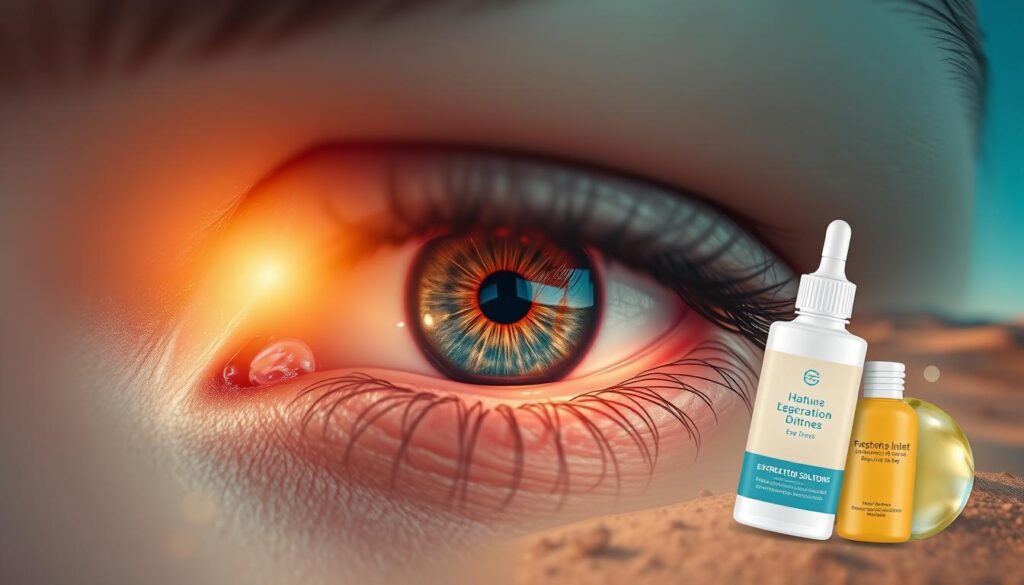
Dry eyes can be frustrating and uncomfortable. Millions of people worldwide deal with this condition. It happens when your tear film can’t keep your eyes moist enough.
People over 65 often experience dry eye symptoms1. Women face higher risks due to hormonal changes1. These changes can come from pregnancy, birth control pills, or menopause.
Many factors can lead to dry eyes. Some medications reduce tear production1. Health issues like arthritis, diabetes, and thyroid problems also increase the risk1.
Your surroundings play a big role too. Smoke, wind, and dry climates can make tears evaporate faster1. Contact lens wearers and those who’ve had LASIK surgery are more likely to get dry eyes1.
Key Takeaways
- Dry eyes affect people of all ages, with increased prevalence in older adults
- Hormonal changes significantly impact tear production
- Multiple factors contribute to dry eye syndrome
- Environmental conditions can worsen dry eye symptoms
- Medical conditions and medications play a crucial role in tear production
Understanding Dry Eyes: What You Need to Know
Your eyes need a careful balance of moisture to work well. Dry eye syndrome can hurt your eye comfort and health. It’s a common problem that affects many people.
Over 16 million Americans have moderate to severe dry eye symptoms2. This happens when the tear film doesn’t work right. Without good tears, your eyes can’t stay moist and protected.
What are Dry Eyes?
Dry eyes happen when the tear film fails. The tear film has three important layers:
- Fatty oil layer (lipid)
- Aqueous fluid layer
- Mucus layer
Common Causes of Dry Eye Syndrome
Many things can cause dry eyes. A big problem is when the meibomian glands don’t work right2. The most common type is evaporative dry eye2.
| Cause | Description |
|---|---|
| Decreased Tear Production | Reduces eye lubrication |
| Increased Tear Evaporation | Disrupts protective tear film |
| Meibomian Gland Dysfunction | Impairs oil layer production |
Risk Factors You Should Be Aware Of
Women are twice as likely to get dry eyes as men2. Here are some key risk factors:
- Age over 50
- Hormonal changes
- Autoimmune conditions
- Medication side effects
- Contact lens use
Knowing these factors helps you manage and prevent dry eye symptoms better.
Spot the signs early and take good care of your eyes. This can make your eyes feel better and avoid future problems.
Recognizing the Symptoms of Dry Eyes
Dry eyes can be more than a minor nuisance. Knowing the signs helps you safeguard your eye health. It also improves your daily comfort3.
Signs You Might Have Dry Eyes
Your eyes signal distress through various symptoms. Look out for these clear signs of eye dryness:
- Stinging or burning sensation in the eyes4
- Feeling like something is constantly in your eyes3
- Increased light sensitivity5
- Redness and inflammation5
- Stringy mucus around the eye area3
How Dry Eyes Affect Your Daily Life
Dry eyes can greatly impact your everyday activities. Reading, computer work, and night driving become tough4. You might face:
- Blurred vision during important tasks
- Difficulty wearing contact lenses3
- Persistent eye strain5
- Unexpected watery eyes as a compensatory mechanism4
“Your eyes are precious – listen to their signals and seek help when needed.”
Blepharitis and eye strain often come with dry eye syndrome. Professional evaluation is crucial5. If symptoms persist, see an eye care professional to prevent complications5.
Effective Treatment Options for Dry Eyes
Dry eye treatment requires a comprehensive approach to manage ocular discomfort. Finding the right solutions provides lasting relief and protects your vision. Your eye health depends on effective treatment for persistent dryness.
Over-the-Counter Relief Strategies
Artificial tears offer quick relief for mild dry eye symptoms. These over-the-counter eye drops lubricate and soothe irritated eyes6. Preservative-free options in single-use vials are most effective6.
- Use artificial tears 2-4 times daily7
- Choose preservative-free eye drops for sensitive eyes6
- Consider specialized contact lenses that promote eye lubrication6
Prescription Medication Options
Prescription medications help manage severe ocular discomfort when over-the-counter solutions aren’t enough. Cyclosporine (Restasis®) offers long-term relief, especially for patients with autoimmune conditions7.
Full symptom relief may take weeks or months with these treatments7. Patience is key when using prescription medications for dry eyes.
| Medication Type | Purpose | Frequency |
|---|---|---|
| Artificial Tears | Lubricate Eyes | 2-4 times daily |
| Cyclosporine | Long-term Relief | Twice daily |
Advanced Treatment Techniques
Advanced treatments can provide significant relief for persistent dry eye conditions. Intense Pulsed Light (IPL) therapy is an innovative solution for blocked oil glands or ocular rosacea8.
IPL treatment typically involves four sessions spaced two to four weeks apart8. This approach can offer long-lasting relief for chronic dry eye sufferers.
Your eye health is unique – always consult an eye care professional to determine the most effective treatment plan for your specific needs.
Preventive Tips for Maintaining Eye Health
Protecting your eyes requires smart strategies and good habits. Regular eye care practices can lower your risk of vision problems. Yearly eye exams help catch issues early, allowing for quick action9.
Your eye health relies on lifestyle choices and awareness. Drink plenty of water and eat foods rich in omega-3s. Take breaks from screens to prevent dry eyes and strain910.
Shield your eyes from UV rays and keep them clean. These steps help prevent vision complications9.
Know when to get professional help for your eyes. See an eye doctor if you have lasting redness, irritation, or blurry vision11. Regular check-ups can spot and manage problems early, keeping your vision healthy10.
FAQ
What exactly are dry eyes?
Dry eyes happen when your tear film can’t lubricate your eyes properly. This occurs due to low tear production or poor-quality tears. The tear film has three layers: oils, fluid, and mucus.
When this balance is off, you may experience dry eye symptoms. These can lead to inflammation and possible damage to your eye’s surface.
What are the most common symptoms of dry eyes?
You might feel a stinging or burning in your eyes. Stringy mucus around the eyes and light sensitivity are also common. Eye redness and a gritty feeling may occur too.
Other signs include trouble with contact lenses and night driving. You may have watery eyes at times. Blurred vision and eye fatigue are also possible.
Who is most at risk for developing dry eyes?
People over 50 and women are more likely to get dry eyes. Those with poor nutrition or who wear contacts face higher risks. Some health issues, like Sjogren’s syndrome, can also cause dry eyes.
Age, hormone changes, and certain conditions can affect tear production and quality. These factors can increase your chances of developing dry eyes.
What treatment options are available for dry eyes?
Treatments range from over-the-counter drops to prescription drugs. Artificial tears and lubricating eye drops can help. Anti-inflammatory or tear-stimulating medications may be prescribed.
Lifestyle changes like using a humidifier and taking screen breaks can provide relief. Your eye doctor might suggest procedures such as punctal plugs or light therapy.
How can I prevent dry eyes?
Avoid direct air on your eyes and use a humidifier. Wear protective eyewear and take regular eye breaks during screen time. Place your computer screen below eye level.
Quit smoking and eat foods rich in vitamin A and omega-3s. Regular eye check-ups can help catch and manage dry eyes early.
Can dry eyes cause permanent damage?
Untreated chronic dry eyes can harm your eye surface. This can lead to increased infection risk and vision problems. The ongoing inflammation may damage your cornea.
It’s important to address symptoms quickly. See an eye care professional if you have concerns about dry eyes.
Are there natural remedies for dry eyes?
Natural remedies can help manage dry eyes. Stay hydrated and eat omega-3 rich foods like fish and flaxseeds. Use warm compresses and practice good eyelid hygiene.
Take breaks during screen time to rest your eyes. Remember, these tips should support, not replace, professional medical advice and treatment.
Source Links
- Dry eye – https://www.aoa.org/healthy-eyes/eye-and-vision-conditions/dry-eye
- Understanding Dry Eye – Prevent Blindness – https://preventblindness.org/understanding-dry-eye/
- Dry eyes: How to maintain clear, comfortable vision-Dry eyes – Symptoms & causes – Mayo Clinic – https://www.mayoclinic.org/diseases-conditions/dry-eyes/symptoms-causes/syc-20371863
- How Do I Know If I Have Dry Eyes? | 6 Common Signs of Dry Eye | Takle – https://www.takleeye.com/the-6-common-signs-of-dry-eye/
- Is It Dry Eye? Your Guide to Symptoms | eyecarecenter – https://www.eyecarecenter.com/eye-care-resources/dry-eye-symptoms
- Dry Eyes Can Be ‘Debilitating.’ Here’s How to Find Relief – https://www.pennmedicine.org/news/news-blog/2021/july/dry-eyes-can-be-debilitating-heres-how-to-find-relief
- Medications for Dry Eye Syndrome – https://nyulangone.org/conditions/dry-eye-syndrome/treatments/medications-for-dry-eye-syndrome
- New light therapy treatment provides relief for dry eye disease – https://www.nebraskamed.com/health/conditions-and-services/eye-care/new-light-therapy-treatment-provides-relief-for-dry-eye
- 10 Essential Tips for Maintaining Eye Health | Teche Action Clinic – https://tabhealth.org/protect-your-vision/
- 6 Tips for Eye Health and Maintaining Good Eyesight – https://www.webmd.com/eye-health/good-eyesight
- 5 Easy Tips to Prevent Dry Eyes and Maintain Optimal Eye Health – https://www.perfectvisioneyecare.com/blog/5-easy-tips-to-prevent-dry-eyes-and-maintain-optimal-eye-health.html

