
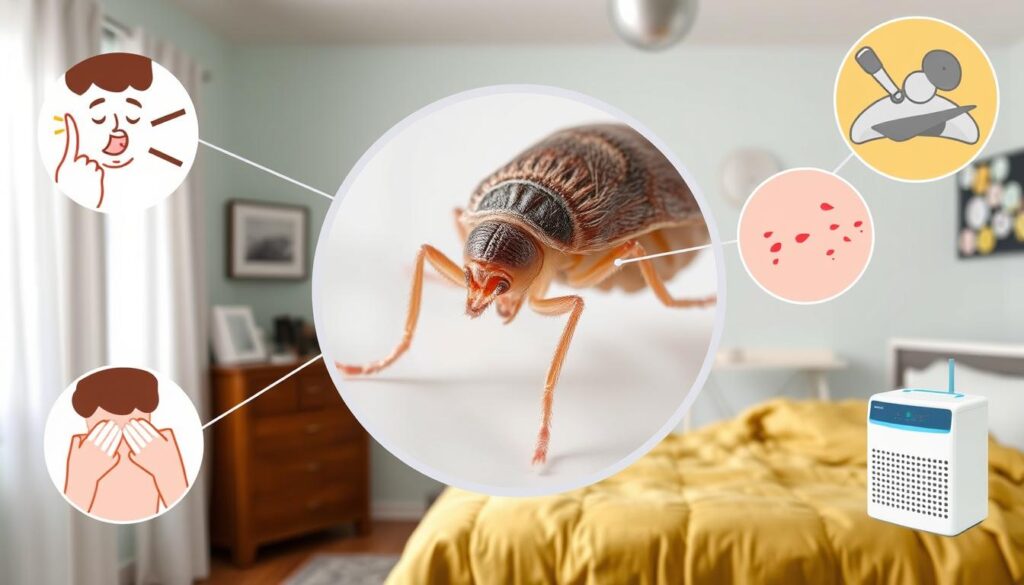
Dust mite allergy affects millions of Americans. These tiny creatures thrive in warm, humid spots in your home. They can trigger allergic reactions that disrupt your daily life1.
Dust mites are too small to see. Yet, they can cause big health issues for sensitive people. Understanding these allergies is vital if you have allergic rhinitis or asthma2.
People with respiratory conditions may face worse symptoms. Dust mite allergies can lower their quality of life2.
Key Takeaways
- Dust mites are a common cause of year-round allergies
- Approximately 20 million Americans suffer from dust mite allergies
- Warm, humid environments are ideal for dust mite reproduction
- Symptoms can range from mild congestion to severe asthma attacks
- Proper home maintenance can help reduce dust mite populations
Understanding Dust Mite Allergy and Its Impact on Health
Dust mites are tiny creatures that can affect your health and comfort. These microscopic arthropods are invisible but play a big role in household allergens3. Learning about them can help you protect yourself and your family from health risks.
What Are Dust Mites and Where Do They Live
Dust mites are like tiny spiders that thrive in warm indoor spaces. They live on every continent except Antarctica4.
Your home is perfect for these tiny creatures. They love bedding, upholstered furniture, and carpeting3.
- Temperatures between 68 to 77°F (20 to 25°C)
- Humidity levels of 70-80%
- Environments with abundant dead skin cells
Common Symptoms and Warning Signs
Dust mite allergies can cause different reactions. Mild cases might lead to runny nose, watery eyes, and sneezing3.
Severe reactions can include:
- Persistent sneezing
- Cough and congestion
- Facial pressure
- Eczema flare-ups
- Asthma attacks
Risk Factors and Triggers
Some people are more likely to have dust mite allergies. Key risk factors include:
| Risk Factor | Description |
|---|---|
| Family History | Genetic predisposition to allergies |
| Early Exposure | High levels of dust mite exposure early in life |
| Age | More common in children and young adults |
To reduce dust mite allergens, use air purifiers and hypoallergenic bedding. Keep your home’s humidity below 50% and wash bedding weekly in hot water5.
Protecting yourself from dust mites is about creating an environment that’s less hospitable to these microscopic creatures.
Effective Treatment Options for Dust Mite Allergy
Dust mite allergies need a mix of medical and environmental strategies. Relief starts with knowing the best treatments experts recommend. Your doctor can help create a plan that works for you.
Allergy meds are key to managing symptoms. Your doctor might suggest different types of treatments.
- Antihistamines to reduce itching and sneezing
- Nasal corticosteroids to decrease inflammation
- Leukotriene receptor antagonists to control respiratory symptoms
Immunotherapy offers a long-term fix for dust mite allergies6. There are two main types: allergy shots and oral tablets.
Allergy shots involve weekly injections for 6-8 months. Then, you get monthly shots for 2-3 years6. Oral tablets are taken daily to reduce allergic reactions over time6.
| Treatment Method | Frequency | Duration |
|---|---|---|
| Allergy Shots | Weekly, then monthly | 2-3 years |
| Oral Tablets | Daily | Ongoing |
Your home can be your second line of defense. Use air purifiers with HEPA filters to cut airborne allergens. Hypoallergenic bedding helps reduce dust mite exposure.
Wash bedding weekly in hot water. Keep your living spaces at low humidity levels7.
“Consistent management is key to controlling dust mite allergies” – Allergy Specialists
Everyone’s allergy profile is unique. Team up with your doctor to create a plan that works best for you. This will help you find the most effective relief from dust mite allergies.
Conclusion
Dust mite prevention requires a strategic approach to allergen reduction. Your strategy should focus on minimizing dust mite populations. Remember, 82% of homes have detectable dust mite allergens.
Use targeted cleaning techniques and control indoor humidity to reduce dust mites. Keep your home’s temperature between 68 to 77 degrees Fahrenheit. Maintain humidity levels below 50% to limit dust mite growth8.
Use hypoallergenic bedding and wash fabrics in hot water regularly. Consider medical interventions recommended by allergists9. Your long-term health depends on proactive dust mite control.
Complete elimination is impossible, but consistent strategies can improve your quality of life. Consult healthcare professionals to develop a personalized treatment plan. This will help you manage symptoms and breathe easier at home8.
Successful dust mite allergy management is ongoing. Stay informed and be persistent. Don’t get discouraged. With the right approach, you can create a healthier home environment.
FAQ
What exactly are dust mites?
Dust mites are tiny arthropods, invisible to the naked eye. They measure about one-quarter to one-third of a millimeter. These creatures thrive in warm, humid places like bedding and carpets.
Dust mites feed on dead skin cells. They prefer temperatures between 68 to 77°F and humidity levels of 70-80%.
What are the most common symptoms of a dust mite allergy?
Dust mite allergies can cause sneezing, runny nose, and itchy eyes. Nasal congestion and skin irritation are also common symptoms. These issues typically occur year-round.
For people with asthma, symptoms may include breathing difficulties and chest tightness. Wheezing can also occur, impacting daily life significantly.
How can I reduce dust mite populations in my home?
Use allergen-proof bed covers and wash bedding weekly in hot water. Maintain low humidity levels and use HEPA air purifiers. Remove carpets and choose hypoallergenic bedding.
Regular cleaning helps minimize dust mite populations. Using a dehumidifier can also be effective in reducing these tiny creatures.
What treatment options are available for dust mite allergies?
Treatment combines environmental control and medication. Options include antihistamines, nasal corticosteroids, and leukotriene receptor antagonists. These help manage symptoms effectively.
For long-term relief, immunotherapy can be useful. This includes allergy shots (SCIT) or sublingual tablets (SLIT). Always consult an allergist for a personalized treatment plan.
Who is most at risk for dust mite allergies?
People in warm, humid climates are more likely to have dust mite allergies. Those with a family history of allergies or asthma face higher risks.
Children and individuals with weak immune systems are also susceptible. Living conditions play a crucial role in developing these allergies.
Can dust mite allergies be completely cured?
There’s no complete cure for dust mite allergies. However, they can be managed effectively. Implementing environmental controls and using appropriate medications can help.
Pursuing immunotherapy may also reduce symptoms significantly. These steps can greatly improve your overall quality of life.
Source Links
- Dust Allergy | Causes, Symptoms & Treatment | ACAAI Public Website – https://acaai.org/allergies/allergic-conditions/dust-allergies/
- Dust Mite Allergies: Symptoms, Treatment and Prevention – https://www.healthline.com/health/allergies/dust-mites
- Dust mite allergy-Dust mite allergy – Symptoms & causes – Mayo Clinic – https://www.mayoclinic.org/diseases-conditions/dust-mites/symptoms-causes/syc-20352173
- Dust Mite Allergy – https://aafa.org/allergies/types-of-allergies/insect-allergy/dust-mite-allergy/
- Dust Mites – https://www.lung.org/clean-air/indoor-air/indoor-air-pollutants/dust-mites
- Ask the Allergist: Dust Mite Immunotherapy Options – Allergy & Asthma Network – https://allergyasthmanetwork.org/news/ask-the-allergist-dust-mite-immunotherapy/
- Home Environmental Interventions For House Dust Mite – https://pmc.ncbi.nlm.nih.gov/articles/PMC6474366/
- What is a Dust Mite Allergy? | ZYRTEC® – https://www.zyrtec.com/allergy-guide/understanding-allergies/types/dust-mites
- Exposure to dust mite allergen and endotoxin in early life and asthma and atopy in childhood – https://pmc.ncbi.nlm.nih.gov/articles/PMC3737770/

