
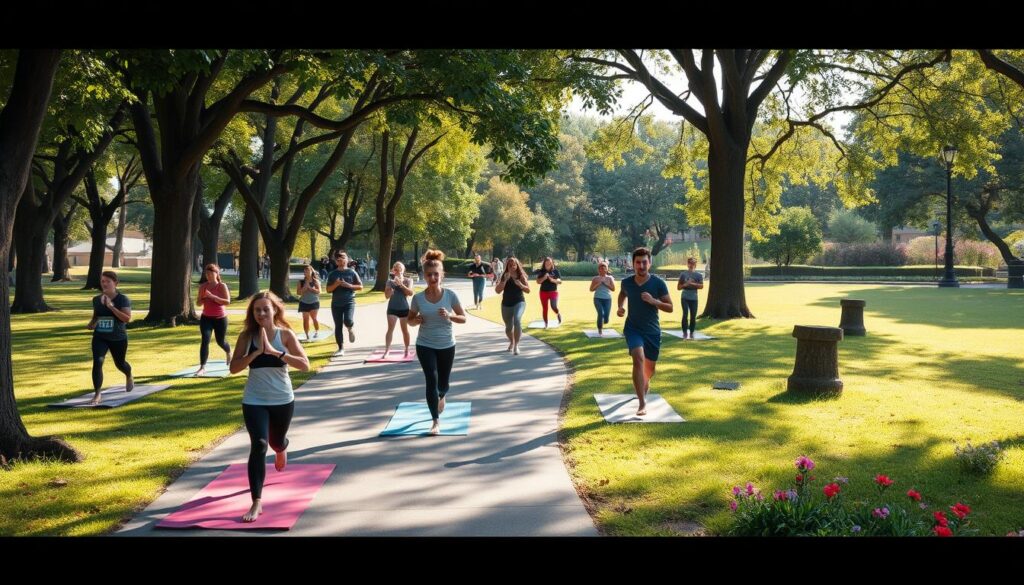
Starting a fitness journey can change your life for the better. With the right approach, you can build a sustainable exercise routine. Regular physical activity boosts health, energy, and lowers disease risks1.
Setting realistic goals is key when beginning to exercise. Try to get 150 minutes of moderate aerobic activity weekly. Or, aim for 75 minutes of vigorous activity1.
For even better health benefits, you can increase your exercise time to 300 minutes weekly1. Remember, any movement is better than none at all.
Choose activities you enjoy and start slowly. Break up your routine into shorter sessions throughout the day. This makes fitness more manageable for beginners1.
Your body needs rest and recovery between exercise sessions. This helps prevent injury and fatigue1. Before starting an intense program, check your fitness level.
Assess factors like pulse rate, flexibility, and body composition1. This will help you track your progress over time.
Key Takeaways
- Start with manageable exercise goals
- Aim for 150 minutes of moderate activity weekly
- Choose enjoyable physical activities
- Allow proper recovery between workouts
- Focus on gradual, consistent progress
How to Start Exercising: Essential First Steps
Starting a fitness journey can seem daunting. Breaking it into manageable steps helps build a successful routine. Understanding your fitness level and setting realistic goals are key.
Assessing Your Current Fitness Level
Know your physical condition before starting workouts. Perform basic fitness tests to gauge your starting point.
- Measure your resting heart rate
- Check how many push-ups you can complete
- Time yourself walking or jogging a specific distance
These tests help track progress and create a personalized plan. Fitness tracking motivates and shows clear improvements.
Setting Realistic Fitness Goals
Attainable goals keep you motivated. Set specific, achievable mini-goals. Increasing your daily walking distance by 10 feet is a good start2.
| Goal Type | Example | Timeframe |
|---|---|---|
| Short-term | Walk 15 minutes daily | 1 month |
| Medium-term | Complete 3 workout sessions weekly | 3 months |
| Long-term | Run a 5K | 6-12 months |
Choosing the Right Exercise Equipment
The right gear makes fitness more enjoyable. Focus on comfort and function when selecting equipment. Aim for 2.5 hours of moderate exercise each week3.
Include both cardio and strength training in your routine3.
“Exercise should be a pleasure, not a punishment.” – Unknown Fitness Trainer
Essential beginner equipment includes:
- Comfortable athletic shoes
- Breathable workout clothing
- Resistance bands
- Yoga mat
Always consult a healthcare professional before starting a new exercise routine. This is especially important if you have pre-existing health conditions3.
Building a Sustainable Exercise Routine
Creating a sustainable fitness plan can be simple and fun. Find activities you enjoy and build a routine that fits your life4. This approach keeps you motivated and engaged.
Here are key strategies for an effective exercise routine:
- Start slowly and progress gradually to prevent burnout4
- Choose easy exercises for beginners that you find fun5
- Create a consistent schedule that works with your daily life
- Mix up your workouts to keep things interesting
Pro tip: Loving your exercise can boost motivation by up to 70%5. Try different activities until you find what excites you.
“The best exercise routine is the one you’ll actually do consistently.”
Focus on building habits rather than aiming for perfection. Here are ways to stay motivated:
- Track your progress in a fitness journal
- Reward yourself for reaching milestones
- Find a supportive workout buddy or join a supportive fitness community
Remember, 90% of exercise success comes from enjoying your activities4. Feel free to experiment and listen to your body.
If something doesn’t feel right, modify it or try something new. Your body knows best, so trust its signals.
Conclusion
Creating sustainable exercise habits can transform your health. Understanding the benefits of staying active makes overcoming obstacles easier. Physical activity improves wellness, enhances mental clarity, and reduces disease risks6.
Regular movement yields incredible results. Exercise releases mood-improving chemicals that combat stress and anxiety. It strengthens your physical resilience and stimulates brain function6.
Consistent, modest efforts matter more than intense, sporadic workouts. Start small and be patient with yourself. Every step counts towards overcoming obstacles and achieving a healthier life7.
Aim to gradually increase your activity. Try working towards 8,000 to 10,000 steps per day7. Your exercise journey is unique, so celebrate your progress.
Long-term success comes from finding joy in movement. Create habits that fit seamlessly into your lifestyle. Each workout is a powerful step towards a healthier you.
FAQ
How do I know if I’m ready to start exercising?
Assess your current fitness level before starting an exercise program. Measure your pulse rate before and after walking a mile. Record how long it takes to walk or run a specific distance.
Note how many pushups you can do. If you have health concerns, consult your doctor first. This ensures you’re ready to begin a new fitness routine.
What are some tips for beginners just starting to exercise?
Start slowly and gradually build up your intensity. Choose activities you enjoy to increase the likelihood of sticking with the program. Invest in comfortable, properly fitting sneakers and appropriate workout clothing.
Begin with small, achievable goals and focus on consistency. Remember, any activity is better than no activity. Even short bursts of exercise can be beneficial.
How often should I exercise as a beginner?
The American Heart Association recommends 150 minutes of moderate or 75 minutes of vigorous aerobic activity weekly. Start with shorter sessions and gradually increase duration and intensity. Aim to exercise at the same time each day.
Allow time for recovery between sessions to prevent burnout and injury. This helps establish a healthy exercise habit.
What equipment do I need to start exercising?
You don’t need expensive equipment to get started. Begin with comfortable, supportive sneakers and clothing suitable for your chosen activity. Try equipment at a gym before purchasing.
Fitness apps or activity trackers can help monitor your progress. As you advance, consider adding resistance bands, dumbbells, or other basic equipment.
How do I stay motivated to exercise?
Set clear, realistic fitness goals and track your progress. Choose activities you enjoy and mix up your routine to prevent boredom. Consider cross-training with different low-impact activities like biking or swimming.
Reward yourself at milestones and be kind to yourself. Remember that consistency is key. It’s okay to have setbacks – just get back on track quickly.
What if I’m too busy to exercise?
Find convenient times and places for activities. Be flexible with your schedule. Treat exercise like any other important appointment. Look for opportunities to be active throughout your day.
Take the stairs, walk during lunch breaks, or do short home workouts. Even 10-15 minute sessions can be beneficial if you’re short on time.
How can I prevent injury when starting a new exercise routine?
Start slowly and gradually increase intensity and duration. Warm up before exercising and cool down afterward. Listen to your body and avoid pushing too hard too quickly.
Incorporate proper form and technique. Consider working with a fitness professional initially. Allow time for recovery between sessions and stay hydrated. If you experience pain, stop and consult a healthcare professional.
Source Links
- 5 steps to start a fitness program – https://www.mayoclinic.org/healthy-lifestyle/fitness/in-depth/fitness/art-20048269
- Beginning Exercise: Best Way To Start Working Out – https://health.clevelandclinic.org/how-to-start-working-out
- 8 Easy Steps to Start Exercising for a Healthy Heart | Mercy – https://www.mercy.net/service/heart-and-vascular-health/8-easy-steps-to-start-exercising-for-a-healthy-heart/
- How to Create a Sustainable Exercise Routine – Katie Bell – https://katiebellphysio.com/how-to-create-a-sustainable-exercise-routine/
- 10 Tips to Create a Workout Routine You’ll Actually Stick To – https://www.self.com/story/fitness-resistance-building-sustainable-workout-program
- Benefits of Exercise: MedlinePlus – https://medlineplus.gov/benefitsofexercise.html
- Exercise and mental health – https://www.healthdirect.gov.au/exercise-and-mental-health

