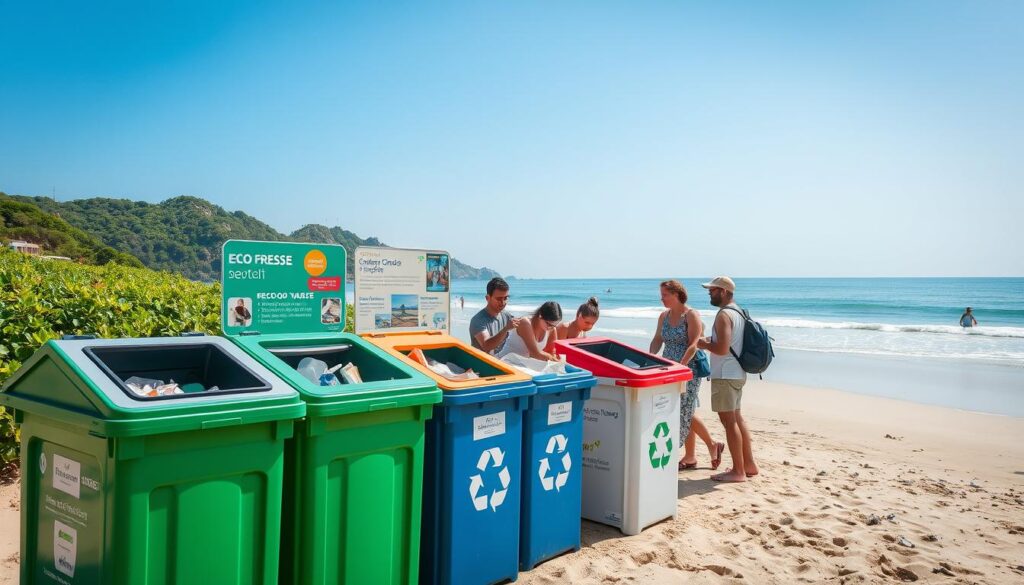
Waste management is a big challenge in tourism. It needs new ideas to protect the environment. Your knowledge of waste reduction can help save our planet’s ecosystems1.
Many places now see the need for better waste control. They want to lower their impact on nature1. Tourist spots face special problems with waste from visitors.
Hotels often struggle with too much trash. Small packaging items are a big part of this problem2. The idea of a circular economy could help fix waste issues in tourism.
Teaching about waste management is key to solving these problems. Places from Asia to Europe are working on better ways to handle waste1. Getting everyone involved is crucial for clean tourism spots1.
Key Takeaways
- Waste management is essential for sustainable tourism development
- Tourist destinations generate significantly more waste than local communities
- Education and awareness are critical for effective waste reduction
- Technology can enhance waste management strategies
- Collaborative approaches are necessary for environmental sustainability
Understanding Waste Management in the Tourism Sector
Waste management in tourism is a pressing environmental issue. The industry produces huge amounts of Municipal Solid Waste. This puts strain on local ecosystems and waste management systems3.
Importance of Waste Management
Effective waste management is key to sustainable tourism. European tourism creates 35 million tons of solid waste yearly. This makes up 7% of the service sector’s total waste3.
These numbers show the urgent need for better recycling and waste reduction. Smart strategies can help lessen tourism’s environmental impact.
Common Types of Waste in Tourism
- Food waste from restaurants and hotels
- Packaging materials
- Single-use plastics
- Disposable amenities
Tourist spots can produce twice as much waste as local areas. Greek hotels, for example, generate up to 550,000 tons of solid waste yearly.
Each guest in these hotels creates 1.7 to 2.5 kg of waste per night3. This shows how much waste tourism can produce.
The Impact of Waste on the Environment
By 2050, tourism could create 251% more solid waste4. Landfills are struggling to cope with this increase. We need quick, smart solutions to tackle this problem.
“Effective waste management is not just an option, but a necessity for sustainable tourism development.”
Small islands face unique waste management challenges. Some tourist areas produce up to 3.9 kg of solid waste per person daily.
This is much higher than average waste production4. It shows why we need strong waste management plans for different tourism settings.
Best Practices for Waste Management in Tourism
Effective waste management is vital for sustainable tourism. The industry faces challenges in handling waste responsibly. Innovative strategies are emerging to tackle environmental concerns5.
Tourism businesses are adopting comprehensive approaches to reduce their ecological footprint. These methods aim to create more sustainable and attractive destinations.
Reducing Single-Use Plastics
Single-use plastics are a major problem in tourism. Many destinations now have strict policies to eliminate these hazards. Waste-to-Energy projects are gaining popularity, turning plastic waste into valuable energy5.
- Implement reusable alternative programs
- Provide guests with eco-friendly water bottles
- Remove single-use plastic amenities from rooms
Recycling Initiatives
Comprehensive recycling programs are key for responsible waste management. Waste audits help destinations track and improve their disposal methods6. Hazardous Waste Disposal needs special care to protect the environment and human health.
| Waste Management Strategy | Impact |
|---|---|
| Waste Auditing | Identify waste production patterns |
| Recycling Programs | Reduce landfill waste |
| Circular Economy Processes | Minimize environmental impact |
Composting Organic Waste
Organic waste management is crucial for sustainable tourism. Composting systems can greatly reduce waste generation7. These strategies benefit the environment and enhance guest experiences.
“Sustainable waste management is not just an environmental responsibility, but a competitive advantage in modern tourism.”
By using these practices, tourism businesses can lower their environmental impact. They can create eco-friendly destinations that attract conscious travelers7.
Engaging Tourists in Waste Management Efforts
Tourism impacts environmental sustainability. Travelers can help promote a circular economy through responsible practices. By understanding their impact, tourists become powerful allies in waste management efforts.
Creating Awareness Campaigns
Effective campaigns can transform tourist behavior. Destinations can inspire responsible travel choices by educating visitors about environmental consequences. The tourism sector generates significant waste.
Hotels and restaurants produce over 35 million tons of solid waste annually8.
- Design interactive educational programs
- Use visual storytelling techniques
- Leverage social media platforms
- Create engaging infographics
Eco-Friendly Travel Tips
Practical waste reduction strategies can make a substantial difference. Here are some actionable tips:
- Bring reusable water bottles
- Pack lightweight, recyclable shopping bags
- Minimize single-use plastic consumption
- Participate in local recycling programs
“Small actions by individual travelers can create significant environmental impact.”
Collaborating with Local Communities
Successful waste management needs cooperation between tourists, locals, and businesses. Innovative policies can benefit both the environment and local economies9.
| Waste Management Strategy | Environmental Impact |
|---|---|
| Zero Waste Initiatives | Reduce landfill contributions |
| Waste-to-Energy Programs | Generate renewable energy |
| Community Recycling Projects | Create local economic opportunities |
These strategies can transform your travel experience. You’ll support environmental sustainability and boost circular economies in tourist destinations worldwide.
Future Trends in Waste Management for Tourism
Tourism is shifting towards sustainable waste management. New tech is changing how businesses handle environmental issues. Hotels can cut waste costs by 30% using smart sensors and AI.
New tech is key in cutting waste. Waste management strategies now use advanced systems to track and reduce waste. Many hotels are using waste-to-energy tech to lower costs and use less fossil fuel10.
Global waste is growing, especially in lower middle-income countries11. This makes waste reduction even more important.
Green tourism certifications are becoming vital. They show a business’s commitment to the environment. More places are seeking these to prove they’re cutting plastic use and helping the planet11.
Your choices matter in supporting these efforts. Picking eco-friendly spots helps create a greener future for global tourism10.
FAQ
What is waste management in tourism?
Waste management in tourism handles waste from tourist activities. It includes collecting, transporting, treating, and disposing of waste. The goal is to minimize environmental impact through reduction, recycling, and proper handling.
This process covers waste from accommodations, dining, recreation, and shopping. Effective strategies help maintain cleanliness and preserve local ecosystems.
Why is waste management important in the tourism industry?
Waste management is vital for sustainable tourism development. Tourism activities generate significant waste in destination areas. Proper management protects the environment and maintains cleanliness.
It also preserves local ecosystems and enhances experiences for tourists and locals. Effective waste handling creates a positive impact on destinations.
What are the common sources of waste in tourism?
Tourism waste comes from various sources. Accommodations produce food leftovers, packaging, and amenity item waste. Dining establishments generate food waste and disposable items.
Recreational activities often result in litter. Shopping leads to packaging waste. Tourist transportation and event venues also contribute to waste production.
How can tourists contribute to better waste management?
Tourists can make a difference in waste management. They can use reusable water bottles and shopping bags. Proper waste sorting and disposal are crucial.
Participating in local recycling programs helps. Minimizing single-use plastics is important. Supporting eco-friendly businesses and following local guidelines also contribute to better waste management.
What are some innovative waste management practices in tourism?
Tourism industry uses various innovative waste management practices. These include zero waste initiatives and waste-to-energy programs. Green certifications and regular waste audits are becoming common.
Using biodegradable materials reduces environmental impact. Smart waste management technologies are emerging. Many businesses are adopting circular economy principles for sustainability.
How does waste management support environmental sustainability?
Waste management plays a crucial role in environmental sustainability. It reduces pollution and conserves natural resources. Proper management minimizes landfill usage and promotes recycling.
It also helps reduce carbon emissions and protect local ecosystems. These practices support the circular economy concept, enhancing overall environmental sustainability.
What are the future trends in tourism waste management?
Future trends in tourism waste management are exciting. Advanced waste tracking technologies are on the rise. Sustainable tourism certifications are becoming more widespread.
Artificial intelligence is being used in waste sorting. International collaboration on waste reduction is increasing. More comprehensive circular economy approaches are being developed.
How can destinations improve their waste management strategies?
Destinations can enhance their waste management strategies in several ways. Developing comprehensive policies is crucial. Investing in infrastructure and providing stakeholder education are important steps.
Regular waste audits help track progress. Collaborating with local communities increases effectiveness. Encouraging innovative technologies and creating awareness campaigns also improve waste management strategies.
Source Links
- IRMA-International.org: Global Perspectives on Waste Management Education in Tourism and Hospitality: Pradip Kumar, Himanshu Bhusan Rout: Book Chapters – https://www.irma-international.org/chapter/global-perspectives-on-waste-management-education-in-tourism-and-hospitality/362919/
- Integrated Models for Solid Waste Management in Tourism Regions: Langkawi Island, Malaysia – https://pmc.ncbi.nlm.nih.gov/articles/PMC3166712/
- Understanding the Impact of Waste Management on a Destination′s Image: A Stakeholders′ Perspective – https://www.mdpi.com/2673-5768/4/1/4
- Stakeholder collaboration for solid waste management in a small tourism island – https://journals.plos.org/plosone/article?id=10.1371/journal.pone.0288839
- Turning Trash to Treasure: 5 Strategies to Revolutionize Waste Management in Hospitality — Asia Sustainable Travel – https://www.asiasustainabletravel.com/articles/sustainable-waste-management-hospitality
- Tourism Seasonality | Tool and Resources – http://www.unwto.org/sustainable-development/unwto-international-network-of-sustainable-tourism-observatories/tools-solid-waste-management
- Sustainable Waste Management Practices in Outdoor Hospitality – https://crrhospitality.com/blog/sustainable-waste-management-practices-in-outdoor-hospitality/
- The Impact of Tourism on Global Waste – https://soulfulconcepts.com/2024/04/29/the-impact-of-tourism-on-global-waste/
- Tourism Waste Management Policy: Impact & Role – https://www.vaia.com/en-us/explanations/hospitality-and-tourism/tourism-policy-and-regulation/tourism-waste-management-policy/
- Efficient Hotels Waste Management: Sustainable Solutions for a Greener Future – HomeBiogas – https://www.homebiogas.com/blog/hotels-waste-management/?srsltid=AfmBOoozGh6kOrjdV0Xu-v7EK9OgJsAMEMMqfQA2aoraAPgig1oVxkZV
- What a Waste: An Updated Look into the Future of Solid Waste Management – https://www.worldbank.org/en/news/immersive-story/2018/09/20/what-a-waste-an-updated-look-into-the-future-of-solid-waste-management