
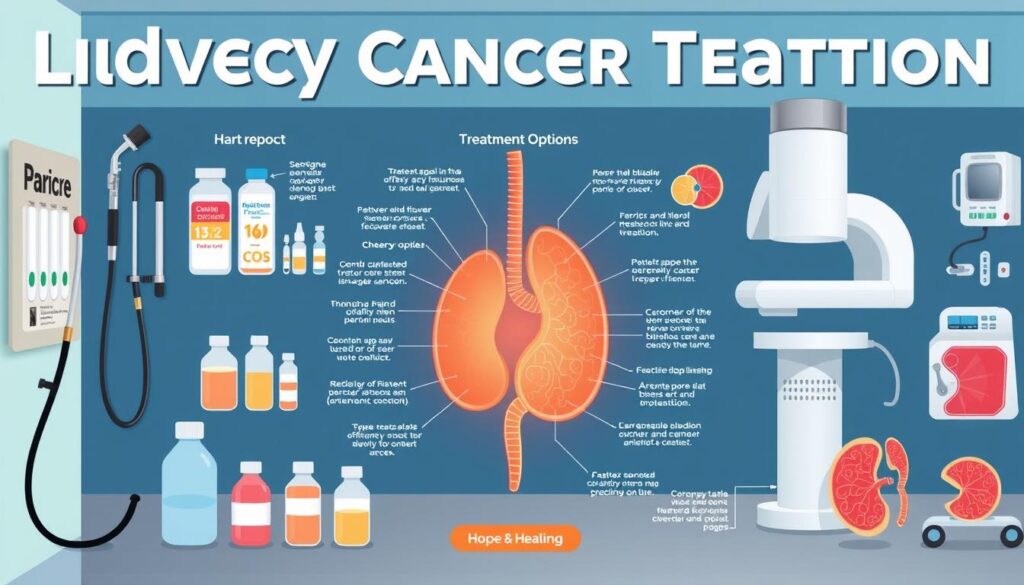
Understanding bladder cancer treatment options can be empowering. Medical professionals create personalized strategies based on your diagnosis and health. Your active participation in this process is crucial1.
Surgery is the main approach for treating bladder cancer. Different techniques remove cancerous tissue effectively2. Depending on the cancer’s stage, you might need transurethral resection or radical cystectomy3.
Chemotherapy is vital in managing bladder cancer. Systemic drugs like carboplatin and cisplatin can shrink tumors before surgery2. Intravesical chemotherapy targets treatment by introducing medications directly into the bladder2.
Immunotherapy has become a promising option for bladder cancer. Drugs such as atezolizumab and pembrolizumab help manage advanced stages2. BCG immunotherapy shows good results for nonmuscle-invasive cases3.
Key Takeaways
- Bladder cancer treatment is highly personalized
- Surgery remains the primary treatment method
- Chemotherapy can help shrink tumors before intervention
- Immunotherapy offers new hope for advanced cases
- Multiple treatment options exist based on cancer stage
Understanding Bladder Cancer Treatment Approaches
Bladder cancer treatment requires a personalized approach. Understanding available strategies can help you make informed decisions about your health. Your medical team will develop an effective plan based on your specific diagnosis.
Treatments vary depending on cancer stage and patient characteristics. Multiple factors are considered to create the most effective plan. Your medical team will tailor the approach to your unique situation.
Early Stage Treatment Options
For early-stage bladder cancer, several approaches can be effective:
- Transurethral resection (TUR) to remove visible tumors4
- Intravesical therapy for targeted medication delivery5
- BCG immunotherapy to stimulate immune response4
Non-muscle invasive bladder cancers are categorized into different risk levels. Each level requires a specific treatment strategy5. Low-risk cases might need minimal intervention, while high-risk scenarios could demand aggressive treatments.
Advanced Stage Treatment Strategies
Advanced bladder cancer requires more comprehensive treatment approaches:
- Radical cystectomy for muscle-invasive cancers
- Neoadjuvant chemotherapy to shrink tumors before surgery4
- Combination of radiation therapy and targeted treatments
“Treatment is not one-size-fits-all. Each patient’s journey is unique.” – Oncology Expert
Factors Influencing Treatment Choice
Several critical factors determine your treatment plan:
- Cancer stage and tumor grade
- Patient’s overall health and fitness
- Quality of life considerations
- Potential side effects of treatments4
Your medical team will create a strategy balancing medical effectiveness with your health goals. Stage IV treatments might include immunotherapy and clinical trials4.
Remember, early detection and a multidisciplinary approach can significantly improve treatment outcomes.
Bladder Cancer Treatment
Bladder cancer treatment combines expertise from top specialists. It starts with understanding effective strategies for your diagnosis6. The best centers provide personalized care for unique medical needs7.
- Cancer type and stage
- Patient’s overall health
- Specific molecular characteristics
Clinical trials offer innovative approaches for cutting-edge treatments. Specialized centers provide access to groundbreaking therapies7. These can significantly improve patient outcomes.
“Personalized medicine is transforming how we approach bladder cancer treatment.”
Key treatment approaches include:
- Surgical interventions
- Chemotherapy
- Immunotherapy
- Radiation therapy
Men are four times more likely to develop bladder cancer. The average diagnosis age is 736. This highlights the need for early detection and specialized treatment options7.
Your treatment may involve a mix of strategies. Some patients benefit from blue-light cystoscopy. This method enhances tumor detection and lowers recurrence rates7.
Conclusion
Bladder cancer treatment is unique and complex for each person. Modern options offer hope and personalized care strategies. Understanding these approaches can help you make informed decisions about your health care8.
Research keeps changing how we manage bladder cancer. The U.S. sees about 83,000 new cases yearly8. Medical advances now provide more sophisticated treatment protocols.
Doctors consider cancer stage, tumor traits, and overall health for targeted therapies9. Your treatment team will explore various options with you. From early-stage care to advanced therapies, modern medicine offers many approaches.
Clinical trials and research continue to improve treatments and patient outcomes10. Staying informed and talking openly with your doctors is crucial. Remember, each patient’s experience is different.
Your medical team is committed to finding the best treatment for you. With their help, you can navigate this challenging journey with hope and confidence.
FAQ
What are the main treatment options for bladder cancer?
Bladder cancer treatment includes surgery, chemotherapy, radiation therapy, immunotherapy, and targeted therapy. Your doctor will create a personalized plan based on your cancer’s stage and grade. Your overall health is also considered when choosing the best treatment options.
How is early-stage bladder cancer typically treated?
Early-stage bladder cancer often involves transurethral resection (TUR) to remove visible tumors. This is followed by intravesical therapy. BCG immunotherapy is a common approach that boosts your immune system to fight cancer cells.
What treatments are used for advanced bladder cancer?
Advanced bladder cancer may require more aggressive treatments. These can include radical cystectomy, which is complete bladder removal. Neoadjuvant chemotherapy before surgery is also common.
Systemic treatments like immunotherapy and targeted therapy may be used. Some patients might be eligible for bladder-preserving approaches combining TUR, chemotherapy, and radiation therapy.
How do doctors determine the best treatment plan?
Doctors consider cancer stage, grade, overall health, and personal preferences when deciding treatment. Genetic testing may guide choices, especially for targeted therapies. A team of specialists will work with you to develop the best plan.
Are there any new or innovative treatments for bladder cancer?
Yes, new treatments include advanced immunotherapies, gene therapy, and antibody-drug conjugates. Clinical trials offer access to cutting-edge treatments. Cancer centers are always exploring new ways to improve patient outcomes.
What is intravesical therapy?
Intravesical therapy involves applying medications directly into the bladder after tumor removal. It’s often used for early-stage bladder cancer to prevent recurrence and progression. BCG immunotherapy and chemotherapy drugs are commonly used in this method.
What should I expect after bladder cancer treatment?
After treatment, you’ll have regular check-ups to monitor your progress. Your doctor will help manage any side effects. Support programs can help you recover and address quality of life concerns.
How can I find the best bladder cancer treatment center?
Look for specialized cancer centers with teams of urologic surgeons, oncologists, and radiation experts. Consider centers offering advanced surgical techniques and clinical trials. Comprehensive supportive care programs are also important when choosing a treatment center.
Source Links
- Bladder cancer – Diagnosis and treatment – https://www.mayoclinic.org/diseases-conditions/bladder-cancer/diagnosis-treatment/drc-20356109
- Bladder Cancer Treatment – https://www.cancer.gov/types/bladder/treatment
- Bladder Cancer Treatment – https://www.hopkinsmedicine.org/health/conditions-and-diseases/bladder-cancer/bladder-cancer-treatment
- How We Treat Bladder Cancer – https://www.dana-farber.org/cancer-care/types/bladder-cancer/treatment
- Treatment of Bladder Cancer, Based on the Stage and Other Factors – https://www.cancer.org/cancer/types/bladder-cancer/treating/by-stage.html
- Bladder Cancer: Symptoms, Causes & Treatment – https://my.clevelandclinic.org/health/diseases/14326-bladder-cancer
- Treatment for Bladder Cancer – https://www.fredhutch.org/en/diseases/bladder-cancer/treatment.html
- Bladder Cancer Treatment (PDQ®) – https://www.cancer.gov/types/bladder/hp/bladder-treatment-pdq
- Bladder Cancer: Current Challenges and Future Directions – https://pmc.ncbi.nlm.nih.gov/articles/PMC8402079/
- Outcome of urinary bladder cancer after combined therapies – https://pmc.ncbi.nlm.nih.gov/articles/PMC5152610/

