
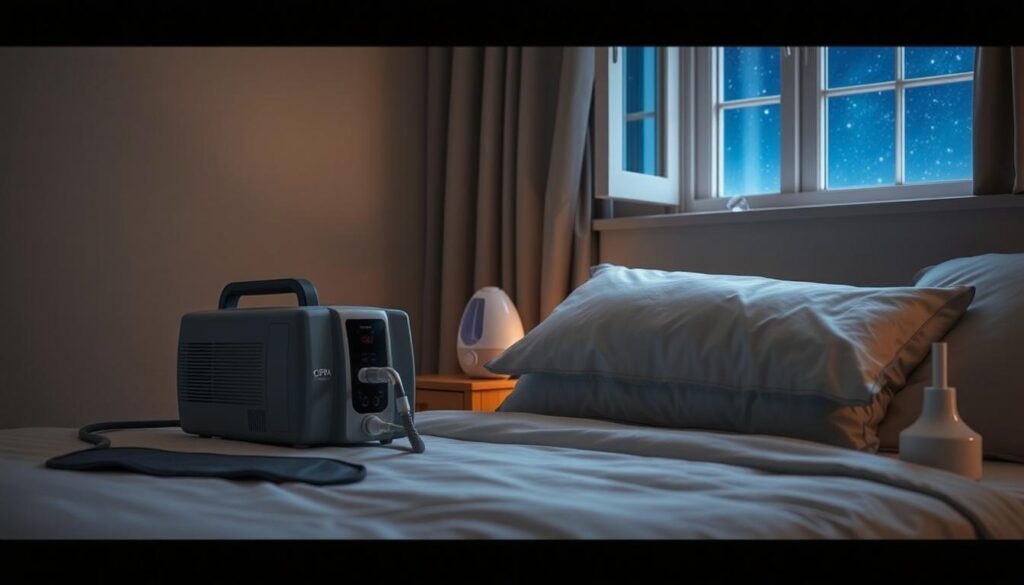
Sleep apnea can disrupt your life, but treatments are available. These options help you breathe easier and sleep better. Understanding your choices is key to improving your health1.
Your treatment journey starts with a thorough evaluation. A sleep study monitors your heart, lung, and brain activity1. This can happen at a sleep center or through a home test1.
The study helps doctors find the best treatment for you2. There are several ways to manage sleep apnea. CPAP machines are a common option1.
These machines deliver air pressure to keep airways open. They also prevent snoring1. Oral appliances offer another choice for some patients1.
These devices reposition your jaw to keep your throat open. Weight loss can help manage mild sleep apnea1. Regular exercise and diet changes often improve symptoms1.
In severe cases, surgery might be considered. This option is used when other methods don’t work1.
Key Takeaways
- Sleep apnea requires professional diagnosis and personalized treatment
- CPAP machines are a primary treatment option for many patients
- Lifestyle changes can significantly improve sleep apnea symptoms
- Multiple treatment approaches exist beyond traditional methods
- Comprehensive evaluation is crucial for effective management
Understanding Sleep Apnea and Its Impact
Sleep apnea is a serious disorder that disrupts breathing during sleep. It can greatly affect your health and life quality. Proper diagnosis is essential for managing this condition.
Obstructive sleep apnea (OSA) is a common sleep disorder. It affects 10% to 30% of adults in the United States3.
What is Sleep Apnea?
Sleep apnea causes repeated stops and starts in breathing while sleeping. There are two main types:
- Obstructive Sleep Apnea (OSA): Caused by throat muscle relaxation
- Central Sleep Apnea (CSA): Occurs when your brain fails to send proper signals to breathing muscles4
Symptoms to Recognize
Spotting sleep apnea early can prevent serious health issues. Key symptoms include:
- Loud snoring that disrupts partner’s sleep4
- Gasping for air during sleep
- Morning headaches
- Excessive daytime sleepiness
Why Treatment is Important
Untreated sleep apnea can lead to major health risks. Men are 2 to 3 times more likely to develop OSA4. Specific risk factors include:
| Risk Factor | Impact |
|---|---|
| Smoking | Three times higher OSA risk4 |
| Age | Higher prevalence in older adults4 |
| Body Weight | Excess weight increases OSA likelihood3 |
Early sleep apnea diagnosis can prevent serious health problems. These include heart disease, high blood pressure, and irregular liver function4.
A complete sleep study by a healthcare expert is vital. It helps manage sleep apnea effectively and improves overall health.
Lifestyle Changes to Improve Sleep Quality
Sleep apnea management goes beyond medical treatments. Lifestyle changes can greatly impact your sleep health. These modifications can improve your life quality and breathing during sleep.
By making strategic changes, you can reduce sleep apnea symptoms. These adjustments can lead to better overall health and well-being.
Weight Management Strategies
Weight loss is crucial for sleep apnea treatment. Excess weight can block airways, making breathing difficult. Sleep apnea is more common in obese adults5.
Even modest weight reduction can improve sleep quality. It can also reduce sleep apnea severity6. Achieving a healthy BMI is key.
- Target a healthy body mass index (BMI)
- Incorporate regular physical activity
- Consult a nutritionist for personalized diet plans
Sleep Position Adjustments
Your sleeping position affects sleep apnea symptoms. Side sleeping can help ease breathing difficulties5. Special pillows can support side sleeping.
These pillows maintain proper head and neck alignment. They can significantly improve your sleep quality6.
Limiting Alcohol and Tobacco
Reduce alcohol intake and quit smoking. Alcohol can worsen sleep apnea by relaxing airway muscles5. Smoking increases sleep apnea risks5.
Establishing a Sleep Routine
Create a consistent sleep schedule for better sleep quality. Aim for 7 to 9 hours of sleep each night6. Develop healthy sleep habits.
- Avoiding electronic devices before bedtime
- Creating a comfortable sleep environment
- Maintaining a consistent sleep-wake schedule
“Small lifestyle changes can lead to significant improvements in sleep apnea management.”
| Lifestyle Factor | Impact on Sleep Apnea |
|---|---|
| Weight Loss | Reduces airway obstruction |
| Exercise | Improves oxygen levels and sleep quality |
| Sleep Position | Minimizes breathing interruptions |
Medical Treatments for Sleep Apnea
Multiple medical treatments can help you breathe easier and sleep better with sleep apnea. Your doctor will suggest a plan based on your condition’s severity and health needs7.
Continuous Positive Airway Pressure (CPAP) Machines
CPAP therapy is the top choice for treating obstructive sleep apnea. These machines use air pressure through a mask to keep your airway open7.
CPAP works best for moderate to severe sleep apnea. It helps reduce breathing issues and improves sleep quality.
- Most recommended first-line treatment
- Reduces breathing interruptions
- Improves oxygen levels during sleep
Oral Appliance Therapy
Oral appliances offer an alternative if CPAP is difficult. Dentists design these devices to reposition your jaw or tongue8.
They work best for mild to moderate sleep apnea cases.
Surgical Options
Surgery becomes an option when other treatments don’t work. Surgical approaches may include:
| Procedure | Purpose |
|---|---|
| Tissue Removal | Eliminate excess throat tissue blocking airflow |
| Jaw Repositioning | Enlarge space behind tongue and soft palate |
| Nerve Stimulation | Regulate breathing muscle movements |
Finding the right treatment takes patience and teamwork with your doctor9.
Successful sleep apnea management needs regular check-ups and following your prescribed therapy. Your doctor may adjust your treatment over time9.
Alternative Therapies and Support
Alternative sleep apnea treatments can help manage your condition effectively. Traditional methods like CPAP are important, but innovative approaches offer promising results. Hypoglossal Nerve Stimulation has shown success for moderate to severe obstructive sleep apnea10.
Positional Therapy Strategies
Positional therapy can significantly improve your sleep apnea management. Devices that encourage side sleeping help reduce breathing interruptions. This approach is especially useful for those with supine-predominant sleep apnea11.
Cognitive Behavioral Therapy and Support
Cognitive Behavioral Therapy for Insomnia (CBT-I) offers a holistic approach to managing sleep apnea. Support groups provide emotional support and practical advice for your treatment journey. Connecting with others who face similar challenges can be empowering10.
Some patients find that combining multiple therapeutic approaches enhances their overall treatment effectiveness10. This strategy can lead to better sleep quality and improved daily life.
FAQ
What is sleep apnea and how serious is it?
Sleep apnea is a severe disorder causing breathing pauses during sleep. It can lead to heart problems and strokes if untreated. There are two main types: obstructive and central sleep apnea.
Early detection and treatment are vital to prevent long-term health risks. They also improve your overall quality of life.
What are the most common symptoms of sleep apnea?
Common signs include loud snoring and gasping for air while sleeping. Morning headaches, daytime sleepiness, and trouble focusing are also typical symptoms.
You might experience restless sleep, night sweats, and mood swings. If these sound familiar, consult a doctor for a sleep study.
What treatment options are available for sleep apnea?
Treatment varies based on severity. Options include CPAP machines, oral appliances, lifestyle changes, and sometimes surgery.
CPAP is common for moderate to severe cases. It delivers air pressure to keep your airway open. Oral devices can reposition your jaw.
How can lifestyle changes help manage sleep apnea?
Lifestyle changes can greatly improve sleep apnea symptoms. Weight loss is especially effective, as excess weight can obstruct airways.
Side-sleeping, avoiding alcohol before bed, and keeping a regular sleep schedule help. Exercise can also reduce symptoms, especially for mild cases.
Is sleep apnea only a problem for older or overweight individuals?
No, sleep apnea can affect anyone, regardless of age, body type, or gender. Risk factors include obesity, age, and being male.
However, even children, athletes, and fit individuals can develop it. Family history and health conditions also play a role.
How is sleep apnea diagnosed?
Diagnosis usually involves a sleep study. This can be done at a sleep center or at home.
The test monitors your breathing, heart rate, and oxygen levels overnight. A doctor then analyzes results to determine presence and severity.
Are there alternative therapies for sleep apnea?
Yes, alternative therapies include positional therapy and cognitive behavioral therapy for insomnia. New treatments like hypoglossal nerve stimulation are also emerging.
Some find acupuncture or yoga helpful, but more research is needed. Always talk to your doctor about the best approach for you.
Source Links
- Sleep apnea – Diagnosis and treatment – https://www.mayoclinic.org/diseases-conditions/sleep-apnea/diagnosis-treatment/drc-20377636
- Obstructive sleep apnea – Diagnosis and treatment – https://www.mayoclinic.org/diseases-conditions/obstructive-sleep-apnea/diagnosis-treatment/drc-20352095
- Sleep Apnea – https://www.sleepfoundation.org/sleep-apnea
- Sleep apnea – Symptoms and causes – https://www.mayoclinic.org/diseases-conditions/sleep-apnea/symptoms-causes/syc-20377631
- Lifestyle Changes to Manage Sleep Apnea – https://www.webmd.com/sleep-disorders/sleep-apnea/features/lifestyle-changes-sleep-apnea
- Healthy Tips for Sleeping Better with Sleep Apnea | Banner – https://www.bannerhealth.com/healthcareblog/better-me/sleeping-like-a-baby-when-you-have-obstructive-sleep-apnea
- Sleep Apnea Treatment – https://www.sleepfoundation.org/sleep-apnea/treatment
- Treatments for obstructive sleep apnea: CPAP and beyond – https://www.ccjm.org/content/90/12/755
- Diagnosing and Treating Obstructive Sleep Apnea (OSA) – https://www.lung.org/lung-health-diseases/lung-disease-lookup/sleep-apnea/treating-and-managing
- 5 Alternatives to CPAP for Sleep Apnea | Becker ENT Center – https://www.beckerentandallergy.com/blog/5-alternatives-cpap-sleep-apnea
- Sleep Apnea Treatments Without CPAP – https://www.sleepfoundation.org/sleep-apnea/alternatives-to-cpap

