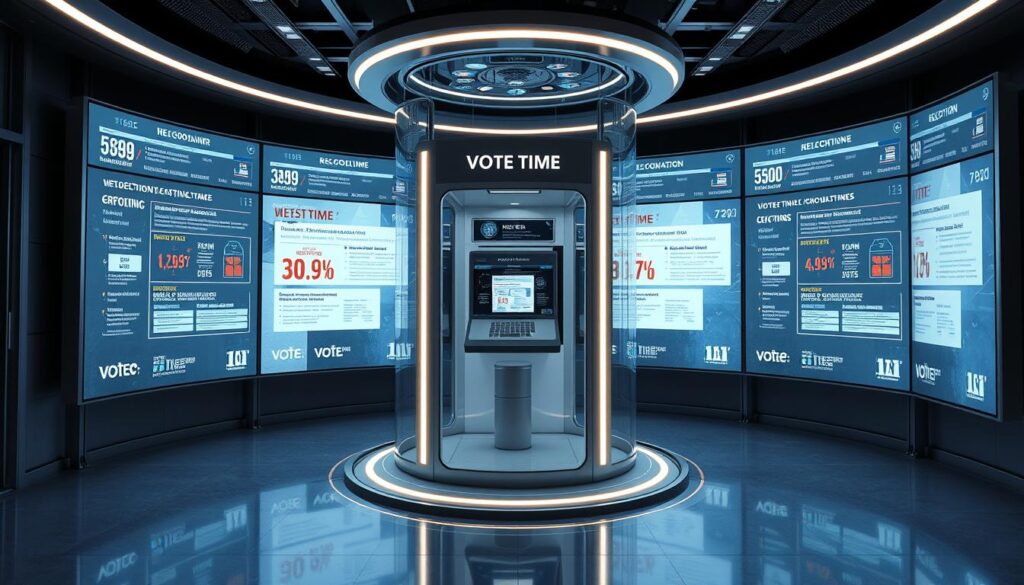
Technology has changed how we vote and interact with elections. Electronic voting is becoming more common as devices get cheaper and more secure1. This change makes voting easier and more accessible, boosting democracy and voter turnout.
Now, many election services can be done online, like registering to vote and checking donations1. This move to digital has also led to better ways to prove who you are, making voting smoother1.
Think about how tech can help more people vote and make elections better. Social media has made politics more engaging, drawing in young voters2.
Introduction to Election Technology
Election tech has evolved from paper ballots to advanced electronic systems. This shift aims to make voting more accurate, efficient, and secure. Today, many places use electronic voting machines, like Direct Recording Electronic (DRE) Systems and Optical Scanners2.
Key Takeaways
- The rise of electronic voting methods is anticipated as electronic devices become cheaper, more powerful, and more secure1.
- Many services provided by election management bodies have the potential to be provided electronically, including voter registration and candidate nomination1.
- Online voter registration has become more prevalent, benefiting younger voters comfortable with digital platforms2.
- Modern elections rely on technology for efficient and accurate vote counting, with automated systems tallying results much faster than manual processes2.
- The use of social media in shaping voter behavior has significantly increased political engagement and awareness, particularly among younger voters2.
Understanding Election Technology
Election technology is key in today’s democracy. It makes voting smoother and results more accurate. Digital tools help keep elections safe and make voting easier for everyone.
Definition and Importance of Election Technology
Election technology includes many systems for voting. It makes elections more efficient, accurate, and open. This is why it’s so important.
- It boosts election security by fighting fraud.
- It makes online voting easier for everyone.
- It uses top-notch ballot counting software for quick results3.
Key Components of Election Technology
At the heart of election tech are several key parts. Each part has a special job to help with voting.
- Voter Registration Systems: Keep voter lists up to date.
- Electronic Voting Machines: Offer safe and easy ways to vote.
- Ballot Counting Software: Counts votes fast and accurately3.
- Online Voting Platforms: Let voters vote from anywhere4.
Keeping elections safe is a top priority. New tech like encrypted voting and secure data helps keep elections fair3.
| Component | Function | Benefits |
|---|---|---|
| Voter Registration Systems | Manage voter information | Efficiency, accuracy |
| Electronic Voting Machines | Facilitate casting votes | User-friendly, secure |
| Ballot Counting Software | Tabulate votes quickly | Speed, reliability |
| Online Voting Platforms | Enable remote voting | Accessibility, convenience |
Types of Election Technology
`, `
| Type of Election Technology | Features | Advantages | Drawbacks |
|---|---|---|---|
| Electronic Voting Machines (EVMs) | Touchscreen interfaces, mechanical levers | Increased accessibility, faster counting | Security concerns, high costs |
| Online Voter Registration Systems | Internet-based registration, real-time updates | Convenience, higher turnout | Vulnerability to cyber threats |
| Election Management Systems (EMS) | Integrated platforms, data analytics | Efficiency, informed decision-making | Complexity, dependence on technology |
Impact of Technology on the Election Process
Technology has changed elections a lot. It has made voting easier, safer, and more about data.
Enhancing Voter Accessibility
New tools like mobile voting apps and special machines help people with disabilities vote. Remote voting lets overseas citizens vote too, making sure everyone’s voice is heard7.
Single sign-on tech makes voting online easy. It lets voters vote through a website without hassle7.
Improving Election Security
Strong encryption and blockchain help keep elections safe. They stop tampering and keep votes honest. AI spots fraud by looking at data, making votes more reliable8.
States check election results after voting. This makes sure the results are right8.
Data Analysis and Decision-Making
AI is key in making decisions. It looks at lots of data to guess how many will vote and where. It helps officials see where votes come from and why7.
Watching voting systems live helps officials act fast if something goes wrong8.
| Technology | Impact | Reference |
|---|---|---|
| Mobile Voting Apps | Increases accessibility for remote voters | 7 |
| Blockchain | Enhances election security through transparency | 8 |
| AI-Powered Fraud Detection | Identifies and prevents fraudulent activities | 8 |
| Election Analytics | Enables data-driven decision-making | 7 |
Challenges and Concerns in Election Technology
Technology has changed how we vote, making digital democracy more accessible. But, it also brings big challenges. We need to keep elections safe and make sure people trust them.
Cybersecurity Threats
Many voting systems in the U.S. are old and no longer made. Election officials have to find parts online, which is risky9. Also, some databases run on outdated software, making them easy targets for hackers9.
These systems are vulnerable to attacks from countries and advanced malware. We need strong security to protect our voting data10.
Public Trust and Transparency Issues
Some voting systems are too complex, making people doubt the results. Without clear ways to see how votes are counted, trust is hard to gain10. Using open-source systems and audits can help.
Tools like “Verifier” show where different voting systems are used. This helps build trust in our digital voting system10.
Regulatory and Compliance Challenges
Creating rules for election tech is tough because tech changes fast. Laws about digital voting vary worldwide, making it hard to set standards9. We need to keep updating laws to fight new threats.
Getting money from Congress and states is key. It helps upgrade our voting systems and keep them safe9.
FAQ
What is election technology and why is it important?
Election technology is about the tools and systems for voting. It makes elections better by being fast, accurate, and open. This helps democracy by making voting easier and more reliable.
How do electronic voting machines (EVMs) enhance the voting process?
Electronic Voting Machines (EVMs) make voting easier by using digital ballots. They cut down on counting mistakes and give quick results. They also help people with disabilities vote more easily. Countries like India and Brazil use EVMs well for big elections.
What are the benefits and risks of online voting?
Online voting is convenient and can get more people to vote. But, it faces risks like hacking and how to know who’s voting. It’s key to keep it safe to keep voters’ trust.
How does election security protect the integrity of elections?
Election security keeps elections safe from cyber threats and fraud. It uses encryption, blockchain, and AI to protect votes. This ensures votes are counted right, keeping elections fair.
What role does electoral data analytics play in modern elections?
Electoral data analytics helps understand voting patterns and trends. It guides how to use resources and predict turnout. Big data makes elections more informed and voter-focused.
Can you explain what digital democracy means?
Digital democracy uses digital tools to boost civic engagement. It includes online voting and social media for citizen-government talks. It aims to make governance open, inclusive, and quick to respond.
How have voter registration systems improved with technology?
Technology has made voter registration systems better. Online registration is faster and easier. It cuts down on errors and keeps voter info up-to-date.
What are the main challenges facing election technology today?
The big challenges are keeping elections safe from cyber threats and keeping trust. There’s also the fast-changing tech world. Systems and policies need to keep up with new threats and ideas.
How do Election Management Systems (EMS) streamline election administration?
Election Management Systems (EMS) bring together election tasks like registration and counting. This makes things more efficient and reduces mistakes. It gives officials tools to manage voting smoothly.
What future advancements are expected in voting systems?
Future voting systems will focus on security with blockchain and AI for fraud detection. They’ll also be easier to use and include new tech like biometrics. These changes will make voting more secure and open to everyone.
Source Links
- The Future of Elections and Technology — – https://aceproject.org/main/english/et/etq.htm
- The Role of Technology in Modern Elections – https://catchmarkcommunity.com/the-role-of-technology-in-modern-elections/
- Election Technology | U.S. Election Assistance Commission – https://www.eac.gov/election-technology
- Election Technology Through the Years – The Council of State Governments – https://www.csg.org/2023/11/08/election-technology-through-the-years/
- Voting Equipment – https://verifiedvoting.org/votingequipment/
- Types of Technology With Electoral Applications — – https://aceproject.org/main/english/et/et70.htm
- How can modern technology help your election process? – https://www.surveyandballotsystems.com/blog/participation/can-modern-technology-help-election-process/
- Voting Technology: How New Tech is Being Used in the Election Process | Capitol Technology University – https://www.captechu.edu/blog/voting-technology-how-new-tech-being-used-election-process
- Election Security – https://www.brennancenter.org/election-security
- Experts Discuss Challenges of Voting in An Electronic Age – https://www.govtech.com/elections/Experts-Discuss-Challenges-of-Voting-in-An-Electronic-Age.html