
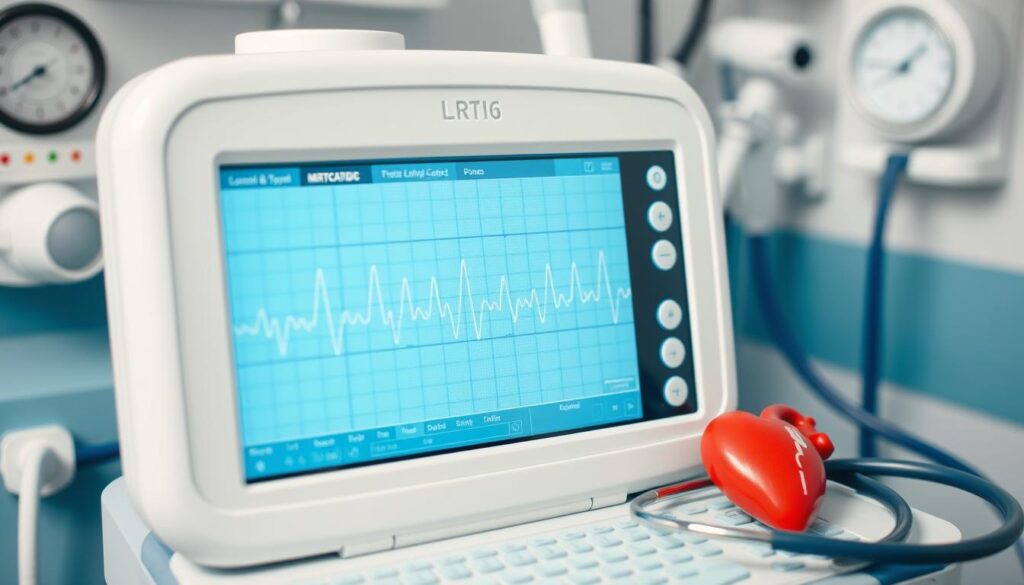
An electrocardiogram (ECG or EKG) offers a quick look into your heart’s health. It’s a simple way to check your heart’s electrical activity1. This test can help if you have chest pain, feel tired, or notice irregular heartbeats1.
ECGs aren’t just for people with heart problems. They can spot issues before they get serious. Doctors often use them to check overall heart health1.
The best part? ECGs are easy and safe. They take just minutes to do and give important info about your heart’s rhythm2.
Whether you’re worried about your heart or want a check-up, an ECG can help keep you healthy.
Key Takeaways
- ECG is a quick and non-invasive heart diagnostic test
- Helps detect various heart-related conditions early
- Minimal risks and discomfort during the procedure
- Useful for both diagnostic and preventive healthcare
- Provides a snapshot of heart’s electrical activity
What is an Electrocardiogram (ECG or EKG)?
An electrocardiogram captures your heart’s electrical activity. EKG and ECG are different abbreviations for the same medical test3. It provides vital insights into your cardiovascular health.
The test offers a glimpse into your heart’s inner workings. It measures electrical signals that control each heartbeat. These signals help doctors understand your heart’s rhythm and potential issues.
Understanding the Basics of ECG
ECG technology tracks several key heart wave patterns:
- P wave: Representing atrial contraction
- QRS complex: Showing ventricular contraction
- T wave: Indicating ventricular recovery
How ECG Works to Monitor Heart Health
The 12-lead ECG method uses electrodes on your limbs and chest. It measures electrical potential from twelve different angles4. Wearable ECG devices now allow continuous monitoring of heart rate variability.
Types of ECG Tests Available
| ECG Test Type | Duration | Purpose |
|---|---|---|
| Resting ECG | 3 minutes | Baseline heart activity check |
| Exercise ECG | 15-30 minutes | Heart performance during physical activity |
| Holter Monitor | 24-48 hours | Continuous heart rhythm tracking |
Your heart tells a story – an ECG helps you listen.
These tests can help diagnose various heart conditions. They can identify causes of chest pain, heart attacks, and arrhythmias3. A normal heart rate ranges from 60 to 100 beats per minute5.
Why is an ECG Important for You?
Your heart needs careful monitoring. An electrocardiogram (ECG) helps protect your cardiovascular health. This test provides insights into your heart’s electrical activity and overall functioning.
ECGs can detect potential heart issues early, which may save lives. It’s often the first test for heart disease6. An ECG reveals crucial information about your heart’s performance.
Detecting Heart Issues Early
Early detection of heart problems is vital for effective treatment. An ECG can uncover various heart conditions. These include irregular heartbeats, electrolyte imbalances, and heart muscle damage.
- Irregular heartbeats (arrhythmia detection)
- Electrolyte imbalances
- Heart muscle damage
- Potential heart attacks
Different types of ECG monitoring can track your heart health. These include stress tests, Holter monitors, and event recorders7.
Monitoring Existing Heart Conditions
For those with known heart conditions, remote ECG monitoring is crucial. Ten electrodes can record 12 views of your heart’s electrical activity8. This provides comprehensive insights into your cardiac function.
“Early detection can transform heart health outcomes” – American Heart Association
Role of ECG in Overall Health Assessment
An ECG does more than measure heart rate. It can identify potential risks and guide preventive healthcare strategies. Miniaturization of ECG equipment has even led to wearable devices for long-term monitoring8.
| ECG Insight | Potential Health Indicator |
|---|---|
| Heart Rate | Normal range: 60-100 beats per minute6 |
| Electrical Activity | Reveals potential heart rhythm abnormalities |
| Electrode Placement | Comprehensive heart view with minimal discomfort |
An ECG is a quick, non-invasive test that offers deep insights into heart health. Regular monitoring helps you stay proactive about your cardiovascular well-being.
What to Expect During an ECG Test
An electrocardiogram (ECG) is a quick, painless test that checks your heart’s electrical activity9. Electrodes are placed on your chest, arms, and legs to gather heart data9. This test is crucial for assessing your heart health.
Preparing for an ECG is simple. Just tell your doctor about your medicines and health history9. The test only takes a few minutes to finish9.
You’ll need to take off jewelry and upper body clothes. Then, lie still on a table while technicians attach the electrodes9.
ECGs can be done in different ways. You might be resting, using a portable monitor, or exercising during the test10. After the ECG, you can go back to your normal routine right away9.
Results may be ready the same day or take a few weeks. It depends on the type of ECG you had10.
Your doctor will check the ECG results for any heart rhythm problems9. If they find issues, they might schedule a follow-up to discuss next steps10.
FAQ
What exactly is an ECG or EKG?
An ECG records your heart’s electrical activity. It’s a non-invasive test that shows how your heart functions. The test captures the timing and strength of electrical signals in your heart muscle.
Is an ECG test painful?
ECG tests are painless and risk-free. Electrodes are placed on your chest, arms, or legs. They record heart activity without sending electricity into your body.
How long does an ECG test take?
A standard ECG test is quick, usually taking only a few minutes. You’ll lie down while electrodes are attached. The actual recording process is brief.
Stay still and avoid talking during the test. This ensures accurate results.
Do I need to prepare anything special for an ECG?
ECG tests need minimal preparation. Tell your doctor about all medications and supplements you’re taking. Most tests don’t have significant pre-test restrictions.
What can an ECG detect?
ECGs can diagnose various heart conditions. These include arrhythmias, heart attacks, and coronary artery disease. They also detect heart rate issues like tachycardia or bradycardia.
ECGs monitor heart treatment effectiveness and check pacemaker function.
Are there different types of ECG tests?
Several ECG test types exist. These include standard in-office tests and Holter monitors for 24-hour recording. Event monitors track heart activity over extended periods.
Some modern smartwatches even offer basic ECG functionality.
Who should consider getting an ECG?
The American Heart Association recommends ECG screening for various individuals. This includes people with heart symptoms or existing conditions. Even low-risk individuals without symptoms may benefit.
Your doctor can advise you based on your health history.
What happens after the ECG test?
A healthcare professional interprets the ECG after the test. They examine your heart rate, rhythm, and signs of damage. Results may be discussed immediately or at a follow-up appointment.
Depending on the findings, additional tests might be recommended.
Source Links
- Electrocardiogram – https://www.hopkinsmedicine.org/health/treatment-tests-and-therapies/electrocardiogram
- Electrocardiogram: MedlinePlus Medical Test – https://medlineplus.gov/lab-tests/electrocardiogram/
- ECG vs. EKG: Definition, procedure, and results – https://www.medicalnewstoday.com/articles/ecg-vs-ekg
- Electrocardiography – https://en.wikipedia.org/wiki/Electrocardiography
- Electrocardiogram Information | Mount Sinai – https://www.mountsinai.org/health-library/tests/electrocardiogram
- ECG – https://www.ucsfhealth.org/medical-tests/electrocardiogram
- Electrocardiogram: Procedure, Risks & Results – https://www.healthline.com/health/electrocardiogram
- What is an electrocardiogram (ECG)? – https://www.bhf.org.uk/informationsupport/heart-matters-magazine/medical/tests/electrocardiogram-ecg
- Electrocardiogram (ECG or EKG) Procedure: What to Expect – https://www.upmc.com/services/heart-vascular/services/tests/ecg-ekg
- Electrocardiogram (ECG) – https://www.nhs.uk/conditions/electrocardiogram/

