
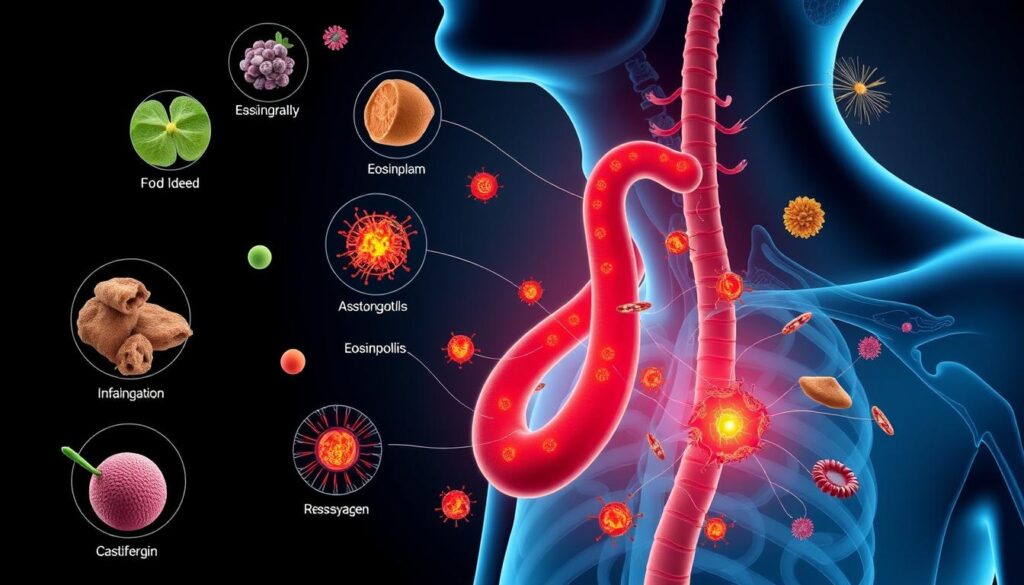
Eosinophilic esophagitis (EoE) is a complex digestive disorder affecting more people than you might think. This chronic immune condition inflames your esophagus, potentially causing digestive health issues1. Once rare, EoE has become more common in recent years1.
Knowing about this eosinophilic disorder helps spot symptoms and get proper care. It happens when eosinophils, a type of white blood cell, build up in your esophagus2. This can lead to inflammation and tissue damage.
EoE can affect anyone, but it’s more often seen in white males2. The disease has links to other allergic conditions. People with asthma or environmental allergies may be at higher risk1.
Key Takeaways
- EoE is a chronic immune system disorder affecting the esophagus
- The condition has increased significantly in recent years
- White males are more frequently diagnosed
- Allergic conditions may increase EoE risk
- Proper medical management is essential for handling symptoms
Understanding Eosinophilic Esophagitis and Its Impact
Eosinophilic esophagitis (EoE) is a complex digestive disorder. This chronic condition can greatly affect your life quality. It causes swallowing problems and food getting stuck in your throat3.
What Causes EoE
EoE starts with an allergic reaction in your esophagus. Food allergens and environmental triggers are the main culprits. Your immune system overreacts, sending white blood cells to your esophagus3.
These cells, called eosinophils, build up and irritate the esophageal lining. This leads to inflammation and other symptoms.
- Dairy products
- Wheat
- Soy
- Eggs
Risk Factors and Prevalence
Knowing your EoE risk can help catch it early. Some factors make you more likely to get this condition:
| Risk Factor | Impact |
|---|---|
| Family History | Genetic predisposition |
| Allergic Conditions | Higher susceptibility |
| Gender | More common in males |
How EoE Affects Your Body
EoE can cause major issues in your digestive system. You might have heartburn, acid reflux, and trouble swallowing3. Your esophagus may narrow, making eating painful.
Food can even get stuck in your throat4. These symptoms can greatly impact your daily life.
“EoE is a complex condition that requires comprehensive understanding and management.”
Many people have symptoms for years before getting diagnosed3. Keep track of your symptoms and work with doctors. This can help manage EoE effectively4.
Common Signs and Symptoms to Watch For
Eosinophilic esophagitis (EoE) shows different signs based on age and individual cases. Knowing these key symptoms helps catch EoE early and manage it well5.
Adults often face specific esophageal health issues. These can make eating and drinking quite uncomfortable.
- Swallowing difficulties that make eating uncomfortable
- Food impaction where meals get stuck in the esophagus
- Persistent heartburn unresponsive to typical antacids
- Unexpected chest pain that doesn’t follow traditional cardiac patterns
Children might show different warning signs. Parents should watch out for these symptoms5:
- Challenges with feeding or eating
- Recurring vomiting episodes
- Abdominal discomfort
- Poor growth patterns
“Recognizing these symptoms early can significantly improve treatment outcomes and quality of life.”
EoE affects about one in 2,000 people. Half of these patients also have other allergic conditions.
Some people notice their symptoms change with seasons. This is more common in those with food allergy-induced EoE6.
| Symptom Category | Adult Manifestations | Pediatric Manifestations |
|---|---|---|
| Eating Challenges | Swallowing difficulties | Feeding problems |
| Digestive Discomfort | Food impaction | Frequent vomiting |
| Pain Indicators | Chest pain | Abdominal pain |
It’s critical to consult a healthcare professional if you consistently experience these symptoms, as they could indicate underlying esophageal issues.
Treatment Options and Management Strategies
EoE management combines medical interventions and lifestyle changes. Your treatment plan depends on your symptoms and health profile. Medical professionals guide this personalized approach.
Dietary Modifications and Restrictions
Dietary restrictions are crucial in managing EoE. Your healthcare team may suggest elimination diets to identify food triggers. Research shows promising results with various dietary approaches.
- Approximately 60% of children respond to eliminating cow’s milk7
- About 72-74% of patients improve with a six-food elimination diet7
- Elemental diets have shown up to 90% effectiveness in symptom management8
Medical Interventions
EoE treatment typically involves steroid therapy and endoscopic dilation. Topical corticosteroids can provide significant relief for many patients.
Clinical studies show that 82% of patients experience remission or response when using these medications8. Endoscopic dilation helps stretch the esophagus and improve swallowing for those with narrowing9.
Monitoring and Long-term Care
Effective EoE management requires regular check-ups. Your care team may recommend periodic endoscopies to track progress. This helps adjust treatment strategies as needed.
While treatments can greatly improve symptoms, they are not permanent cures. Ongoing management is essential for long-term health7.
Remember, each patient’s EoE journey is unique. Working closely with your healthcare providers is key to finding effective treatments.
Conclusion
Managing Eosinophilic Esophagitis (EoE) requires a holistic approach to esophageal health. You can effectively handle your diagnosis with the right strategies. EoE affects people of all ages, from kids to adults10.
Ongoing research reveals new insights into this complex condition. Genetic studies have identified potential biomarkers and risk factors for more tailored treatments10. EoE prevalence varies across regions, highlighting the need for personalized care11.
Your EoE journey doesn’t define you. Work with healthcare pros, explore diet changes, and stay informed about new research. Support groups like APFED offer valuable resources and community connections10.
An EoE diagnosis is a chance to prioritize your health. Many people successfully manage this condition and lead active lives. Stay proactive and hopeful about ongoing medical advancements.
FAQ
What is Eosinophilic Esophagitis (EoE)?
EoE is a chronic immune system disease affecting the esophagus. It occurs when eosinophils, white blood cells, build up in the esophageal lining. This causes inflammation and tissue damage, leading to swallowing difficulties.
Who is most likely to develop EoE?
EoE is more common in white males but can affect anyone. You’re at higher risk if you have seasonal allergies or live in cold climates. A family history of allergic conditions also increases your risk.
What are the main symptoms of EoE in adults?
Adults with EoE often struggle to swallow or have food stuck in their esophagus. They may experience chest pain that doesn’t respond to antacids. Regurgitation of undigested food is also common.
GERD medications typically don’t help EoE symptoms.
How is EoE diagnosed?
Doctors usually diagnose EoE through an endoscopy with a biopsy. They look for excessive eosinophils in your esophageal lining. Tests to rule out other conditions may be performed.
Identifying food triggers through elimination diets and allergy testing is crucial.
What are the primary treatment options for EoE?
Treatment involves a multidisciplinary approach. This includes dietary changes to avoid trigger foods like dairy, eggs, and wheat. Medications such as corticosteroids and proton pump inhibitors are often prescribed.
In some cases, endoscopic dilation may be needed to stretch a narrowed esophagus.
Can EoE be cured?
EoE is a chronic condition that requires ongoing management. While there’s no permanent cure, proper treatment can improve your quality of life. Lifestyle changes can help control symptoms effectively.
What foods should I avoid if I have EoE?
Common trigger foods include dairy, eggs, wheat, soy, peanuts, tree nuts, and fish. However, triggers can vary for each person. Working with a dietitian to identify your specific food triggers is crucial.
How does EoE differ in children and adults?
Children with EoE may have feeding difficulties, vomiting, and poor growth. Adults often experience more severe swallowing problems and chest pain. Diagnostic and treatment approaches may vary slightly between age groups.
Are there support resources available for people with EoE?
Yes! Organizations like the American Partnership for Eosinophilic Disorders (APFED) offer valuable support. They provide resources and information for patients and families dealing with EoE. Joining support groups can help you connect with others.
How often should I be monitored if I have EoE?
Regular monitoring is essential for managing EoE. This usually involves periodic endoscopies and biopsies to track your condition’s progress. Your healthcare team will determine the best monitoring schedule for your specific case.
Source Links
- Eosinophilic esophagitis – Symptoms and causes – https://www.mayoclinic.org/diseases-conditions/eosinophilic-esophagitis/symptoms-causes/syc-20372197
- Eosinophilic Esophagitis – https://www.hopkinsmedicine.org/health/conditions-and-diseases/eosinophilic-esophagitis
- Eosinophilic Esophagitis (EoE) | University of Michigan Health – https://www.uofmhealth.org/conditions-treatments/digestive-and-liver-health/eosinophilic-esophagitis-eoe
- Understanding Eosinophilic Oesophagitis (EoE) – Symptoms, Causes, and Treatment – https://www.eosnetwork.org/eoe-eosinophilic-oesophagitis
- Eosinophilic Esophagitis – https://medlineplus.gov/eosinophilicesophagitis.html
- Eosinophilic Esophagitis | Symptoms & Treatment | ACAAI Public Website – https://acaai.org/allergies/allergic-conditions/eosinophilic-esophagitis/
- Treating Eosinophilic Esophagitis – https://www.childrenscolorado.org/doctors-and-departments/departments/digestive-health/programs/eosinophilic-gastrointestinal-diseases/eoe-treatment/
- Management of Eosinophilic Esophagitis – https://www.aap.org/en/patient-care/eosinophilic-esophagitis/management-of-eosinophilic-esophagitis/?srsltid=AfmBOoo1pBPJ0IU_l_HuHSNqlMwnIPiKAkGMrjfiYz6kMhxCPZOG8CxL
- Eosinophilic oesophagitis: recent advances and practical management – https://fg.bmj.com/content/12/7/644
- Frontiers | Eosinophilic Esophagitis: Review and Update – https://www.frontiersin.org/journals/medicine/articles/10.3389/fmed.2018.00247/full
- Eosinophilic esophagitis – PMC – https://pmc.ncbi.nlm.nih.gov/articles/PMC10370381/

