
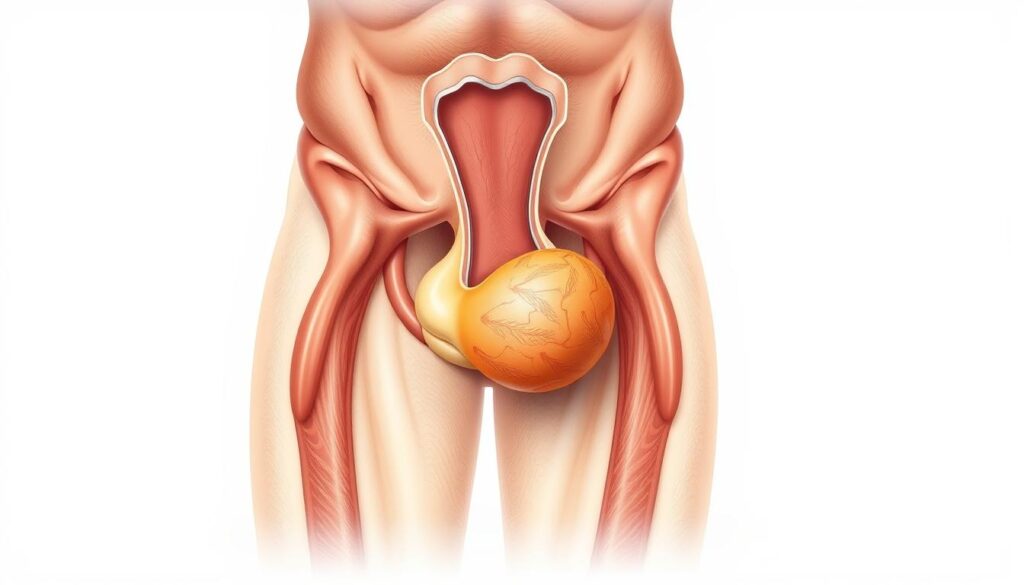
Epididymitis can cause testicular pain and a swollen scrotum. This condition inflames the epididymis, causing discomfort. It requires careful medical attention12.
Bacterial or viral infections often cause epididymitis. Sexually transmitted infections like chlamydia and gonorrhea can lead to acute cases. These usually resolve within six weeks1.
E. coli bacteria may also trigger this condition, especially in older people2. Persistent testicular pain could signal various health issues. Look out for discharge or burning sensations during urination.
If you notice these symptoms, seek medical help right away2. Early diagnosis can prevent potential complications.
Key Takeaways
- Epididymitis can affect males of all ages
- Bacterial infections are primary causes
- Symptoms include testicular pain and swelling
- Treatment typically involves antibiotics
- Early diagnosis prevents potential complications
Understanding Epididymitis and Its Impact on Male Health
Epididymitis is a serious condition affecting male reproductive health. It can impact your overall well-being. This inflammation requires attention to prevent complications related to urinary tract infections and fertility.
The epididymis plays a crucial role in sperm development and transportation. Men between 19 and 35 years are most commonly affected by this condition3.
The Epididymis: A Critical Male Reproductive Structure
The epididymis is a tightly coiled tube at the back of each testicle. Its primary functions include:
- Storing mature sperm
- Supporting sperm transportation
- Protecting sperm from potential damage
Types of Epididymitis: Acute vs. Chronic
Knowing the differences between acute and chronic epididymitis is key for proper management:
- Acute Epididymitis: Lasts less than six weeks, typically caused by bacterial infections4
- Chronic Epididymitis: Persists longer than six weeks and may recur even after treatment3
Risk Factors and Common Causes
Several factors can increase your risk of developing epididymitis. These include:
- Sexually transmitted diseases like chlamydia and gonorrhea4
- Recent urological surgeries3
- Urinary tract infections
- Use of medical catheters3
“Prevention is always better than cure, especially when it comes to reproductive health.”
Bacterial infections are the most common cause of epididymitis5. Knowing these risk factors can help protect your reproductive health. Take steps to prevent complications like male infertility.
Common Symptoms and Warning Signs of Testicular Pain
Recognizing epididymitis symptoms is vital for quick treatment. Men should watch for specific signs that might indicate a serious condition6.
Testicular pain can show up in different ways. Key symptoms include:
- Unilateral testicular pain and tenderness
- A swollen scrotum that feels warm to the touch
- Palpable swelling of the epididymis
- Pain during urination
Men aged 19-35 are more likely to get epididymitis from STIs. Bacterial infections often cause this issue, leading to groin discomfort67.
Other warning signs to look out for include:
- Frequent urge to urinate
- Lower abdominal or pelvic pain
- Occasional blood in the semen
- Potential fever
“Any persistent scrotal pain or swelling requires immediate medical attention to prevent potential long-term complications.”
A urinary tract infection can also cause these symptoms, especially in older men. Chronic epididymitis develops slowly and may last over six weeks67.
Warning: Some symptoms of epididymitis can mimic more serious conditions like testicular torsion, which requires emergency surgical intervention. Sudden, severe testicular pain needs immediate medical help7.
Diagnosis and Treatment Options for Epididymitis
Grasping the proper diagnostic approach and treatment for epididymitis is vital for your well-being. Doctors use various methods to accurately diagnose and manage this condition.
Medical Examination Procedures
Your doctor will perform a thorough evaluation to diagnose epididymitis. This includes a physical exam of the scrotum and urinalysis to check for infections.
They’ll also screen for sexually transmitted infections. A scrotal ultrasound may be done to rule serious conditions.
Antibiotic Treatment Protocols
Antibiotics are the main treatment for epididymitis8. The type prescribed depends on the underlying cause.
- For sexually transmitted infections: Ceftriaxone plus doxycycline
- For non-sexually transmitted cases: Levofloxacin or alternative antibiotics
Prompt and appropriate antibiotic treatment can prevent potential complications and ensure faster recovery.
Home Care and Pain Management
You can manage epididymitis at home to ease discomfort. Rest and elevate the scrotum. Use nonsteroidal anti-inflammatory drugs for pain relief.
Apply cold compresses to the affected area. Wear supportive underwear to reduce movement and pain.
When to Seek Emergency Care
Call your doctor right away if you have severe testicular pain or a high fever. Seek help if there’s no improvement after 72 hours of treatment8.
Also, watch for signs of spreading infection. Quick action can prevent serious complications.
Most epididymitis cases have a high success rate. Symptoms usually clear up within three months8. Follow your doctor’s advice and finish all antibiotics for best results.
Conclusion
Epididymitis can greatly affect your reproductive health and life quality. Symptoms range from mild discomfort to severe testicular pain. Early detection and proper treatment are vital for managing this issue.
Your proactive approach is crucial when dealing with epididymitis. Young, sexually active males should know the risks and prevention methods. Safe sex, good hygiene, and quick medical help can lower your chances of getting this condition.
If you have ongoing scrotal discomfort, see a doctor right away. They can provide an accurate medical evaluation of epididymitis. This step is key to your health.
Treatment often includes antibiotics for infections and pain management strategies9. Chronic epididymitis may affect fertility, so addressing symptoms early is important10. Stay informed and take action to protect your reproductive health.
FAQ
What exactly is epididymitis?
Epididymitis is an inflammation of the epididymis, a tube behind the testicle. It stores and transports sperm. This condition can affect males of any age.
Bacterial infections, including sexually transmitted ones like gonorrhea or chlamydia, often cause epididymitis.
What are the main symptoms of epididymitis?
You might feel pain and tenderness in one testicle. The scrotum may be swollen and warm. You could also notice swelling of the epididymis.
Other signs include pain when peeing and frequent urges to urinate. Some men experience penile discharge, lower belly pain, and fever.
How is epididymitis diagnosed?
Doctors use physical exams, urine tests, and STI screenings to diagnose epididymitis. They may also order a scrotal ultrasound to rule out other issues.
This imaging test can confirm the diagnosis and exclude conditions like testicular torsion.
What treatment options are available?
Antibiotics are the main treatment for epididymitis. The type depends on the cause. For STI-related cases, doctors often prescribe ceftriaxone and doxycycline.
Non-STI cases might need levofloxacin. Home care includes rest, lifting the scrotum, and taking over-the-counter pain relievers.
How long does epididymitis last?
Epididymitis can be acute, lasting less than 6 weeks. It can also be chronic, persisting for 6 weeks or more.
Acute cases usually respond well to antibiotics. Chronic cases may need more extensive treatment and testing.
Can epididymitis affect fertility?
Untreated or severe epididymitis can impact male fertility. It may cause scarring or blockages in the reproductive tract.
Early diagnosis and proper treatment are key. They help minimize long-term complications and protect fertility.
When should I seek emergency medical care?
Seek immediate help if you have severe testicle pain or high fever. Also, get care if symptoms don’t improve within 72 hours of starting treatment.
These signs could point to a more serious condition. Quick action may prevent further complications.
How can I prevent epididymitis?
Practice safe sex and maintain good hygiene to prevent epididymitis. Treat urinary tract infections quickly. Get regular sexual health check-ups.
Use protection during sex. Address any underlying health issues. These steps can lower your risk of developing epididymitis.
Source Links
- Epididymitis – STI Treatment Guidelines – https://www.cdc.gov/std/treatment-guidelines/epididymitis.htm
- Epididymitis – https://www.healthdirect.gov.au/epididymitis
- Epididymitis | Aurora Health Care – https://www.aurorahealthcare.org/services/urology/epididymitis
- Epididymitis – Symptoms and causes – https://www.mayoclinic.org/diseases-conditions/epididymitis/symptoms-causes/syc-20363853
- What Is Epididymitis? – https://my.clevelandclinic.org/health/diseases/17697-epididymitis
- Epididymitis – https://www.nhs.uk/conditions/epididymitis/
- Epididymitis | Advocate Health Care – https://www.advocatehealth.com/health-services/urology/epididymitis
- Everything You Need to Know About Epididymitis – https://www.healthline.com/health/epididymitis
- Epididymitis : Causes, Symptoms, and Treatment – https://www.artfertilityclinics.com/in/en/art-blog/epididymitis-causes-symptoms-treatment
- Epididymitis: Types, Causes, Symptoms & Treatment | Indira IVF – https://www.indiraivf.com/blog/epididymitis-types-causes-symptoms-treatment

