
Vitamin C, or ascorbic acid, is a powerful antioxidant crucial for your health. This nutrient offers amazing benefits that can boost your wellness. It’s a true health superhero, supporting your immune system and heart health.
Men need 90 mg of vitamin C daily, while women require 75 mg. Your body can absorb up to 90% of vitamin C at moderate intake levels. About 35% of adults get their vitamin C from multivitamin supplements1.
Vitamin C boosts your immune system by encouraging white blood cell production. It strengthens your body’s defense system against various health challenges. This essential nutrient supports your overall well-being effectively2.
Key Takeaways
- Vitamin C is a powerful antioxidant with multiple health benefits
- Daily intake varies between 75-90 mg for adults
- Supports immune system function
- Can be obtained through diet and supplements
- Helps protect against cellular damage
What is Vitamin C and Why is it Important?
Vitamin C, or ascorbic acid, is a crucial nutrient for your health. It’s a water-soluble vitamin that your body can’t produce on its own3. Knowing its importance helps you make smart choices about your diet.
Understanding the Basics of Vitamin C
Ascorbic acid is a powerful antioxidant that supports many bodily functions. It protects cells from free radical damage and aids various physiological processes3.
Vitamin C is vital for healthy skin and immune function. It also promotes wound healing and enhances iron absorption.
- Maintaining healthy skin
- Supporting immune function
- Promoting wound healing
- Enhancing iron absorption
Rich Sources of Vitamin C
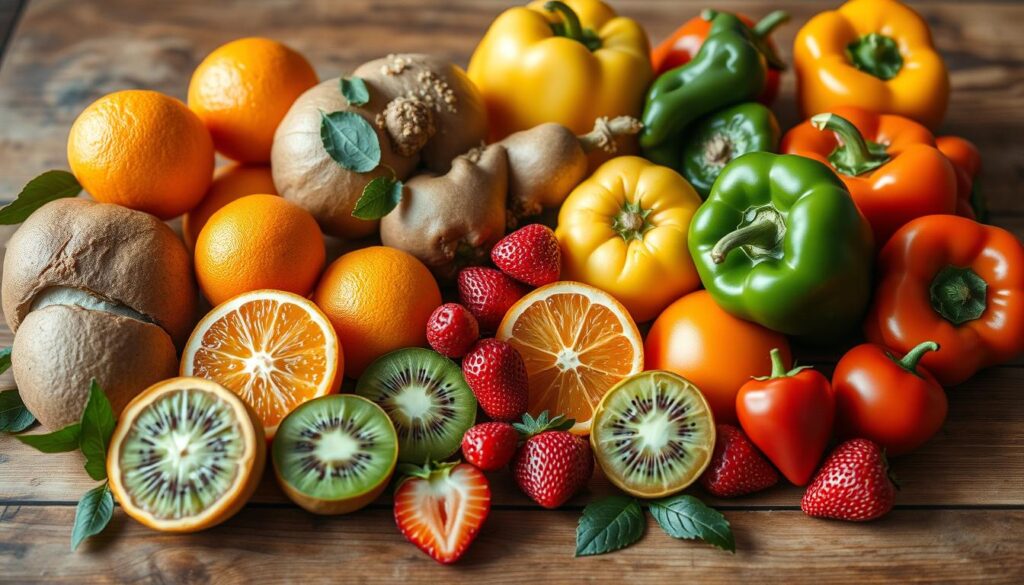
You can find vitamin C in many tasty fruits and nutritious foods. Some great sources include:
| Food Source | Vitamin C Content |
|---|---|
| Oranges | 70 mg per fruit |
| Kiwi | 64 mg per fruit |
| Green Peppers | 60 mg per half cup |
| Strawberries | 85 mg per cup |
Recommended Daily Intake
Your vitamin C needs vary based on age and gender. Adult men need 90 milligrams daily, while women require 75 milligrams4.
Smokers or those exposed to secondhand smoke should add 35 mg to their daily intake5.
Pro tip: Eating a variety of fruits and vegetables can help you meet your daily vitamin C requirements naturally.
Most people get enough vitamin C through diet. Some might benefit from natural supplements. Be careful, as long-term use over 2,000 milligrams daily can cause side effects4.
Immune System Boosting Properties
Your body’s defense mechanism needs vital nutrients to work well. Vitamin C is a key immune booster. It plays a crucial role in supporting your body’s natural protection system.
How Vitamin C Supports Immunity
Vitamin C empowers your immune system in many ways. White blood cells store high amounts of vitamin C. This concentration is up to 100 times greater than plasma levels6.
This high concentration boosts immune cell function. It helps stimulate neutrophil activity and increase antibody levels67. Vitamin C also acts as a powerful antioxidant to protect immune cells6.
- Stimulating neutrophil chemotactic activity6
- Increasing antibody levels in B and T-lymphocytes7
- Acting as a powerful antioxidant to protect immune cells6
“Vitamin C is not just a nutrient, it’s a shield for your immune system.”
Symptoms of Vitamin C Deficiency
Vitamin C deficiency, though rare, can affect your health. It can show up through various symptoms. These symptoms can impact your overall well-being.
| Deficiency Symptoms | Potential Health Implications |
|---|---|
| Weakened immunity | Increased susceptibility to infections |
| Slow wound healing | Reduced collagen production |
| Dry and splitting hair | Nutritional imbalance |
Severe vitamin C deficiency can lead to scurvy. This serious condition weakens collagen structures and impairs immunity7. Poor diet, smoking, and alcohol use increase the risk7.
To keep your immune system strong, eat vitamin C-rich foods. You can also take supplements. Always consult a healthcare professional before starting any new supplement8.
The Role of Vitamin C in Skin Health
Vitamin C is a powerful ally for skin health. It maintains a youthful, radiant complexion through its remarkable properties. Vitamin C is crucial for supporting overall skin well-being.
Unlocking Radiant Skin Appearance
Vitamin C boosts collagen production, supporting skin’s structural integrity. It helps maintain skin elasticity and firmness. This process reduces the appearance of fine lines and wrinkles.
- Promotes collagen production
- Enhances skin elasticity
- Protects against environmental damage
Combating Skin Aging
As an antioxidant, vitamin C shields against UV-induced photodamage9. It neutralizes free radicals that cause premature aging. This keeps your skin looking younger and more vibrant10.
| Vitamin C Skin Benefits | Impact |
|---|---|
| Antioxidant Protection | Neutralizes free radicals |
| Collagen Support | Improves skin elasticity |
| UV Damage Prevention | Reduces premature aging signs |
Incorporating Vitamin C in Your Skincare Routine
To maximize vitamin C benefits, consider these strategies:
- Use topical serums with vitamin C derivatives
- Consume vitamin C-rich foods
- Consider oral supplements
Pro tip: Topical applications can boost vitamin C levels in your skin9. Combining it with vitamin E enhances photoprotection and skin health10.
Additional Health Benefits of Vitamin C
Vitamin C offers remarkable health advantages beyond basic nutrition. This essential nutrient protects your body from harmful free radicals. It supports multiple physiological processes as a powerful antioxidant11.
Your body can’t produce vitamin C naturally. Getting it through diet or natural supplements is crucial for optimal health11.
Vitamin C shows promising potential for heart health. Higher vitamin C levels are linked to reduced risks of hypertension and heart disease11. It may help decrease inflammation and support cardiovascular function12.
Vitamin C plays a crucial role in iron absorption. It helps your body absorb iron from plant-based sources effectively. This can prevent iron deficiency anemia12.
By enhancing iron uptake, vitamin C ensures your cells receive needed oxygen and nutrients12. Experts recommend getting this nutrient mainly through a balanced diet rich in fruits and vegetables13.
Always consult a healthcare professional about your vitamin C intake. They can help determine the right amount for your health goals13.
FAQ
What is Vitamin C and why is it important?
Vitamin C is a vital nutrient your body can’t produce. It’s essential for immune support and collagen production. This powerful antioxidant protects cells from damage and promotes overall health.
Vitamin C supports your immune system and helps maintain healthy skin. It also aids in iron absorption, crucial for many bodily functions.
How much Vitamin C do I need daily?
Adult women need 75 mg of vitamin C daily, while men require 90 mg. A balanced diet rich in fruits and vegetables can meet this need.
Citrus fruits, berries, bell peppers, and leafy greens are excellent sources. Supplements can help if you struggle to get enough through food.
What are the signs of Vitamin C deficiency?
Vitamin C deficiency can cause weakened immunity and slow wound healing. Other signs include dry hair, rough skin, and swollen gums.
Severe cases may lead to scurvy, causing fatigue, joint pain, and poor healing. Consult a doctor if you notice these symptoms.
How does Vitamin C benefit my skin?
Vitamin C is crucial for skin health. It helps produce collagen, maintaining skin elasticity and firmness. Its antioxidant properties protect against UV damage and pollutants.
This vitamin may reduce signs of aging like wrinkles. You can boost intake through diet or topical products.
Can Vitamin C help boost my immune system?
Yes, vitamin C is vital for a strong immune system. It stimulates white blood cell production, which protects against infections.
Its antioxidant properties fight harmful free radicals. It may also reduce the duration of common colds.
Are Vitamin C supplements safe?
Vitamin C supplements are generally safe when taken as directed. However, getting nutrients from a balanced diet is best.
Consult your doctor before taking supplements, especially if you have health conditions or take medications.
What are the best food sources of Vitamin C?
Citrus fruits, berries, and kiwi are excellent sources of vitamin C. Bell peppers, broccoli, and leafy greens are also rich in this nutrient.
Eating a variety of these foods helps meet your daily vitamin C needs. You’ll also gain additional nutritional benefits.
Source Links
- Office of Dietary Supplements – Vitamin C – https://ods.od.nih.gov/factsheets/VitaminC-HealthProfessional/
- 7 Impressive Benefits of Vitamin C Supplements – https://www.healthline.com/nutrition/vitamin-c-benefits
- Vitamin C (Ascorbic acid) Information | Mount Sinai – https://www.mountsinai.org/health-library/supplement/vitamin-c-ascorbic-acid
- Vitamin C – https://www.mayoclinic.org/drugs-supplements-vitamin-c/art-20363932
- Vitamin C: MedlinePlus Medical Encyclopedia – https://medlineplus.gov/ency/article/002404.htm
- The Role of Vitamin C in Human Immunity and Its Treatment Potential Against COVID-19: A Review Article – https://pmc.ncbi.nlm.nih.gov/articles/PMC9925039/
- Vitamin C and Immune Function – https://pmc.ncbi.nlm.nih.gov/articles/PMC5707683/
- Can Vitamin C Help You Fight a Cold? – https://health.clevelandclinic.org/benefits-of-vitamin-c
- Vitamin C and Skin Health – https://lpi.oregonstate.edu/mic/health-disease/skin-health/vitamin-C
- The Roles of Vitamin C in Skin Health – PubMed – https://pubmed.ncbi.nlm.nih.gov/28805671/
- Vitamin C – https://lpi.oregonstate.edu/mic/vitamins/vitamin-C
- Vitamin C: Why we need it, sources, and how much is too much – https://www.medicalnewstoday.com/articles/219352
- Vitamin C – https://nutritionsource.hsph.harvard.edu/vitamin-c/

