
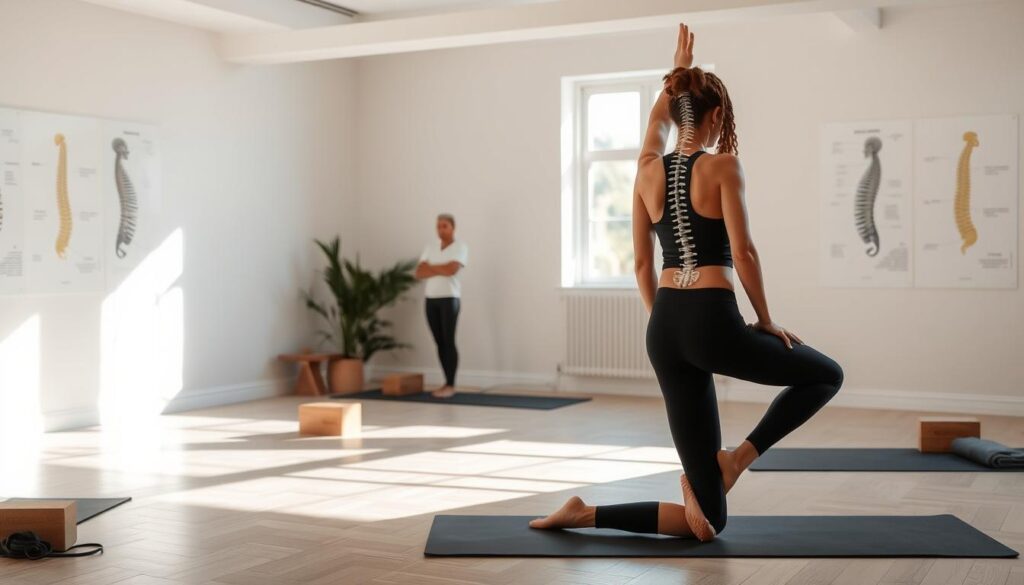
Back pain got you down? Spine health is vital for daily comfort and long-term wellness. Posture exercises can transform how you feel and move1.
80% of Americans sit for long periods. This habit can lead to muscle tension and discomfort1. Poor posture isn’t just about looks. It can cause serious health issues.
Many suffer from neck, shoulder, and back pain due to bad body positioning1. Desk work and screen time contribute to poor posture2.
Stretching routines can help realign your body. Specific movements reduce muscle imbalances and boost flexibility2. Back pain relief is possible with regular posture exercises2.
Key Takeaways
- Posture impacts overall physical and mental health
- Regular exercises can improve body alignment
- Targeted stretches reduce muscle tension
- Sitting for long periods increases posture risks
- Consistent practice leads to better body awareness
Understanding the Impact of Good Posture on Overall Health
Posture affects both physical and mental health. It’s crucial for preventing pain and maintaining optimal body function. Your body’s alignment plays a key role in overall wellness.
Good posture involves maintaining proper spine curves and ergonomics. There are two main types: static and dynamic posture. Both are important for different movement and positioning aspects3.
Physical Benefits of Proper Alignment
Muscle imbalance correction starts with understanding body movements. Many Americans face back and neck pain due to poor posture4.
The spine has three natural curves: cervical, thoracic, and lumbar. These curves help maintain alignment and reduce strain3.
- Reduces muscle and joint stress
- Improves core strengthening
- Prevents chronic pain conditions
- Enhances overall body mechanics
Mental and Emotional Benefits
Posture directly influences mental well-being. Proper alignment can boost confidence and reduce fatigue. It also creates a more positive emotional state.
Poor posture contributes to increased stress. It can also lead to negative self-perception4.
“Your body hears everything your mind says.” – Naomi Judd
To improve workplace wellness, try these ergonomic tips:
- Take regular movement breaks
- Adjust monitor height
- Set up an ergonomically friendly workstation
- Practice core strengthening exercises
Investing in your posture is an investment in your overall health and well-being.
Posture Exercises for Strength and Flexibility
Good posture needs a smart plan for core strength and muscle balance. Your sitting position affects your body’s alignment and health5. Targeted exercises can change your body’s natural stance and reduce long-term strain.
By working on specific muscles, you can improve your overall posture. This includes making your upper chest more flexible and your core stronger.
- Focus on upper chest muscle flexibility
- Strengthen core muscle groups
- Practice regular posture checks
- Implement muscle imbalance correction techniques
Tech can help you fix your posture. Set a timer every 10 minutes to check your body position5. Posture gadgets might seem useful, but they often only work for a short time5.
“Your body’s alignment is a reflection of your daily habits and movements.”
| Exercise Type | Muscle Group Targeted | Frequency |
|---|---|---|
| Chest Stretches | Upper Chest | 3-4 times weekly |
| Core Strengthening | Abdominal Muscles | Daily |
| Back Alignment | Shoulder Muscles | 2-3 times weekly |
Regular practice can bring big changes. Studies show that good posture can boost your mood and energy6. It may also help you feel more positive about yourself.
By working on your posture, you’re helping both your body and mind. Good alignment can make you feel stronger and more resilient6.
Remember, your body’s posture is a dynamic system that responds to consistent, mindful training.
Conclusion
Improving posture takes dedication and consistent effort. It’s about developing long-term strategies that strengthen your body. By doing daily posture exercises, you can transform your physical alignment7.
The benefits go beyond reducing discomfort. They include stronger muscles, better breathing, and more self-confidence7. Ergonomics is key to maintaining good posture. Your workspace, habits, and exercise all affect spinal health.
Try targeted postural interventions for core, shoulder, and spine7. Regular stretching and strength training can lower injury risks and boost muscle function8.
Progress takes time. If posture problems persist, seek help from a physical therapist or chiropractor. They can create a personalized plan for better alignment8.
Better posture is an investment in your health. Stay consistent and listen to your body. Embrace the gradual improvements that come with mindful movement and targeted exercises.
FAQ
What is good posture and why is it important?
Good posture is the proper alignment of your body in various positions. It reduces muscle strain and prevents pain. Proper posture improves breathing, organ function, and mental well-being.
How can poor posture affect my health?
Poor posture can lead to multiple health issues, including muscle imbalances and chronic pain. It may cause tension in your neck, shoulders, and back.
This tension can result in headaches and reduced mobility. Poor posture can also increase the risk of injury during physical activities.
What are some effective exercises to improve posture?
Effective posture exercises include Child’s Pose, Forward Fold, and Cat-Cow. Standing Cat-Cow, Chest Opener, and High Plank are also beneficial.
Other helpful exercises are Side Plank, Downward-Facing Dog, and Pigeon Pose. These moves stretch and strengthen muscles crucial for proper alignment.
How often should I do posture exercises?
Aim to perform posture exercises 3-4 times a week. Include rest days between strength training sessions.
Take short stretching breaks throughout your day. This is especially important if you have a sedentary job.
Can posture impact mental health?
Research suggests that posture can significantly impact mental health. Upright posture can increase positive emotions and decrease negative self-focus.
An expansive posture may improve body image satisfaction. It can also boost confidence and contribute to overall emotional well-being.
What are signs of poor posture?
Common signs of poor posture include rounded shoulders and forward head position. Uneven hips, lower back pain, and frequent headaches are also indicators.
Muscle tension and reduced flexibility can be signs too. If you notice these symptoms, focus on improving your posture.
How long does it take to improve posture?
Improving posture is a gradual process that requires patience. Noticeable improvements can typically be seen within 4-6 weeks of regular exercise.
Long-term posture correction is an ongoing journey. It requires continuous attention and practice for lasting results.
When should I consult a professional about my posture?
Consult a professional if you experience persistent pain or have significant postural misalignment. Seek help if your posture affects your daily activities.
A physical therapist can provide personalized guidance. They can create a targeted treatment plan and address underlying muscle imbalances.
Source Links
- Guide to Good Posture: MedlinePlus – https://medlineplus.gov/guidetogoodposture.html
- How to Improve Your Posture—and Why It’s Important For Your Workouts – https://www.onepeloton.com/blog/posture-exercises/
- What Is Proper Posture? – https://my.clevelandclinic.org/health/articles/posture
- Posture and How It Affects Your Health – https://www.brownhealth.org/be-well/posture-and-how-it-affects-your-health
- Stretches and Exercises To Improve Poor Posture – https://health.clevelandclinic.org/posture-exercises
- Posture Exercises: 12 Exercises to Improve Your Posture – https://www.healthline.com/health/posture-exercises
- Good Posture for Better Health: Benefits, Exercises, and Ergonomic Tips – https://www.performancehealth.co.uk/articles/good-posture-for-better-health
- Top Posture Exercises & Stretches – https://chiropractorinoviedo.com/blog/top-posture-exercises-stretches/

