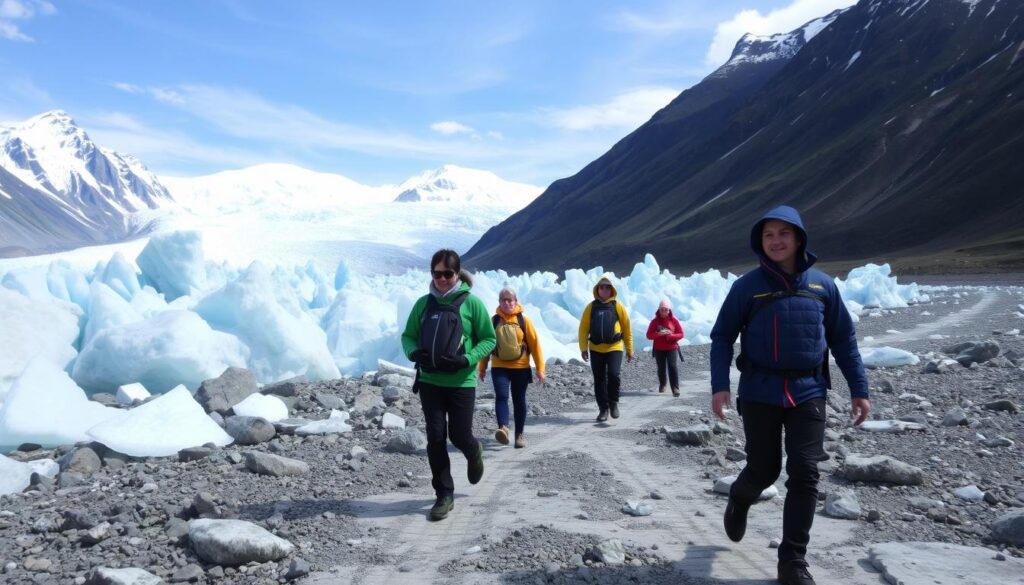
Glacier tourism blends environmental protection with human curiosity. It presents a complex ethical landscape that challenges traditional travel experiences. The growth of responsible glacier tourism shows increased awareness of climate change’s impact on delicate ecosystems1.
Your travel choices now have significant environmental consequences. Places like the European Alps are changing dramatically. Millions visit these glaciers, yet they face possible extinction2.
“Extinction tourism” is a new trend. Travelers rush to see threatened landscapes before they vanish forever. This raises important questions about our responsibility to protect these natural wonders.
Glacier tourism requires a careful balance between exploration and conservation. Sustainable tourism strategies are vital for protecting these remarkable environments1. These efforts aim to minimize harm while allowing people to experience nature’s beauty.
Key Takeaways
- Glacier tourism raises critical ethical questions about environmental preservation
- Climate change directly threatens glacial landscapes worldwide
- Responsible travel choices can minimize ecological disruption
- Visitors play a crucial role in supporting conservation efforts
- Educational experiences can transform tourism into meaningful environmental advocacy
Understanding the Impact of Glacier Tourism
Glacier tourism connects human exploration with delicate natural environments. Your travel choices can greatly affect these pristine landscapes. As glaciers gain popularity, knowing their broader impacts is key for responsible travel.
These majestic ice formations attract many visitors. However, each trip can affect the environment and local communities. The rising interest in glacier experiences brings both benefits and challenges.
Environmental Consequences
Glacier tourism impacts fragile ecosystems. Iceland expects over two million tourists this year, many seeking glacier experiences3. The environmental cost is high.
- Increased carbon emissions from transportation
- Potential damage to glacier surfaces
- Littering and pollution risks
Tourism and climate change cause rapid glacier retreat. Solheimajokull glacier loses 100 meters yearly, releasing millions of water cubic meters3.
Cultural Sensitivity
Glacier tourism affects indigenous rights. Local communities often have deep cultural ties to these landscapes. Responsible travelers must respect these connections and avoid disrupting traditional lifestyles.
Economic Considerations
Glacier tourism can boost the economy, but overtourism needs management. In Iceland, tourism provides a sixth of all jobs3. Balancing economic growth with environmental protection requires careful planning.
“Protecting glaciers is an urgent matter, calling for sustainable and educational tourism practices.”
Understanding these impacts helps you make better travel choices. Your decisions can support both nature conservation and local communities. Responsible tourism benefits everyone involved.
Best Practices for Responsible Glacier Tourism
Responsible glacier tourism balances environmental preservation, visitor education, and community engagement. It goes beyond just visiting beautiful landscapes. This approach ensures the protection of these icy wonders4.
Your glacier trip can make a big impact through mindful practices. By making informed choices, you can help conservation efforts5.
Sustainable Travel Choices
Start with smart decisions for responsible travel. Here are some key approaches to consider:
- Choose carbon offsetting options for your travel
- Select eco-friendly transportation like electric buses
- Support conservation-focused tour operators
- Book directly with local sustainable businesses
Visitor Education Strategies
Understanding your environmental impact is crucial. Learn and practice Leave No Trace principles to reduce your footprint4. This includes:
- Respecting wildlife zones
- Managing personal waste
- Avoiding sensitive ecological areas
- Practicing responsible social media documentation
Partnerships with Local Communities
Sustainable tourism thrives through teamwork. Engage with local communities in these ways:
- Purchasing locally produced goods
- Participating in community-led tours
- Respecting cultural traditions
- Supporting local economic development
“Responsible travel is not just about seeing the world, but about protecting it for future generations.”
Your thoughtful choices can turn glacier tourism into a force for good. They can help protect the environment and boost sustainable growth5.
Future Directions in Glacier Tourism Ethics
Glacier tourism is changing fast, focusing on sustainability and conservation. Your role as a responsible traveler is crucial. The future needs new ways to protect these fragile ecosystems while providing meaningful experiences.
Innovations in Eco-Friendly Tourism
New eco-friendly ideas are changing how we explore glacial landscapes. Tour operators are using low-impact transport and green infrastructure. New Zealand shows how glacier tourism can boost the economy while prioritizing conservation6.
Advocacy for Conservation Policies
Protecting glacier regions needs strong policies. Research shows glaciers might lose over 80% of their mass by 21007. Your support for conservation policies can help reduce these risks.
Getting involved with local governments and supporting glacier preservation groups is vital. This helps ensure these natural wonders stay protected for future generations.
Importance of Visitor Responsibility
Your choices can greatly impact glacial conservation. Pick responsible tour operators and reduce your environmental footprint. Stay informed about local ecology.
The future of glacier tourism depends on our shared commitment. Together, we can preserve these extraordinary environments7.
FAQ
What is glacier tourism, and why are there ethical concerns?
Glacier tourism offers unique experiences in icy regions. However, it raises ethical concerns due to its environmental impact. Climate change speeds up glacial retreat, and tourism can worsen this problem.
Visitors must balance experiencing these landscapes with preserving them. Your choices can help protect these fragile ecosystems for future generations.
How does glacier tourism affect the environment?
Your glacier visit can harm the environment in several ways. Tourism increases carbon emissions through transportation and lodging. At popular glaciers, energy use shows the impact on delicate ecosystems.
Aviation alone contributes 2% of global emissions. Every traveler’s choice matters for protecting our planet.
What is “extinction tourism,” and is it ethical?
“Extinction tourism” means visiting threatened places before they vanish, like melting glaciers. This practice raises ethical questions. Consider if your visit helps conservation or increases environmental damage through your carbon footprint.
How can I practice responsible glacier tourism?
To be a responsible tourist, minimize your impact. Choose eco-friendly transport like electric buses and support conservation-focused tour operators. Use carbon offsets and bring reusable items.
Select local products and follow Leave No Trace principles. Your choices can reduce environmental strain while supporting local communities.
What are the cultural implications of glacier tourism?
Glacier tourism can disrupt indigenous communities’ traditional ways of life. Approach these places with respect for local customs. Support community-driven tourism initiatives that benefit local populations.
Choose tours that engage with and support the local community. This ensures your visit positively impacts the region.
Are there economic benefits to glacier tourism?
Glacier tourism can boost local economies if managed carefully. Support tourism models that balance profits with long-term sustainability. Look for initiatives that reinvest in conservation, infrastructure, and community development.
What innovations exist in sustainable glacier tourism?
Sustainable tourism innovations include eco-friendly lodgings and transport options. Advanced carbon offset programs are also available. Support tour operators committed to green practices.
Choose environmentally certified accommodations. Participate in conservation-focused experiences to make a positive impact.
How can individual travelers make a difference?
Your choices as a traveler matter greatly. Use low-carbon transportation and support local businesses. Learn about the destination’s environmental challenges.
Share your knowledge responsibly on social media. Every conscious decision helps create more sustainable glacier tourism.
Source Links
- Visiting Melting Glaciers Can Be Profound. But Is It Morally Wrong? – https://www.smithsonianmag.com/science-nature/visiting-melting-glaciers-can-be-profound-it-morally-wrong-180960514/
- Frontiers | Glacier tourism without ice: Envisioning future adaptations in a melting world – https://www.frontiersin.org/journals/human-dynamics/articles/10.3389/fhumd.2023.1137551/full
- Iceland’s glacier guides: Tourism under climate change – https://www.aljazeera.com/features/2017/5/25/icelands-glacier-guides-tourism-under-climate-change
- Western Montana & Glacier National Park Travel Information – https://main.glaciermt.io/recreate-responsibly
- Environmental Ethic – Antarctic Logistics & Expeditions – https://antarctic-logistics.com/about-ale/environmental-ethic/
- Analysis of the Image of Global Glacier Tourism Destinations from the Perspective of Tourists – https://www.mdpi.com/2073-445X/11/10/1853
- Frontiers | The Tourism Adaptation Classification (TAC) framework: An application to New Zealand’s Glacier country – https://www.frontiersin.org/journals/human-dynamics/articles/10.3389/fhumd.2023.1130918/full