
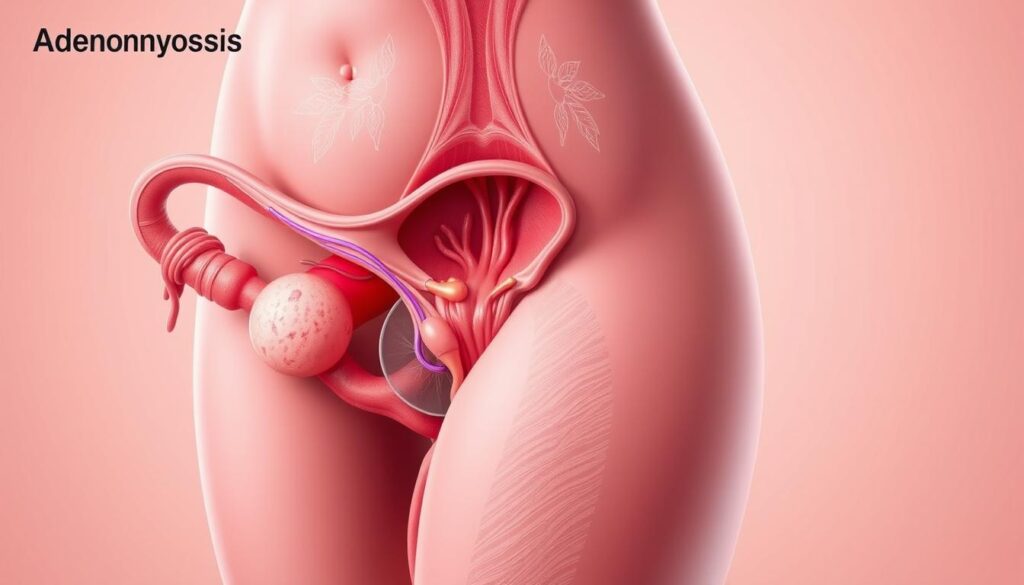
Adenomyosis is a complex gynecologic condition affecting reproductive health. It occurs when endometrial tissue grows into the uterus’s muscular wall. This can cause discomfort and changes in menstrual experiences1.
Common symptoms include heavy menstrual bleeding and severe cramping. Chronic pelvic pain may also disrupt daily life. The condition mainly affects women in their 40s and 50s1.
The exact cause of adenomyosis remains unknown. Researchers have proposed several theories for its origin. These include invasive tissue growth, developmental factors, and possible links to uterine inflammation1.
Key Takeaways
- Adenomyosis affects up to one in three women2
- Symptoms typically occur in women between 35-50 years old3
- Hormonal treatments can help manage symptoms
- Risk factors include previous uterine surgeries and childbirth1
- Symptoms often subside after menopause3
Understanding Adenomyosis and Its Impact on Women’s Health
Adenomyosis is a complex condition affecting many women’s reproductive health. It occurs when endometrial tissue grows into the uterus’s muscular walls. This growth creates potential health challenges4.
What Happens Inside Your Uterus
In adenomyosis, uterine lining invades the muscle wall, causing significant changes. About 1 in 5 females experience this, usually between ages 30 and 504.
The invaded tissue responds to hormonal changes. This leads to painful and unpredictable menstrual experiences.
How Adenomyosis Differs from Other Uterine Conditions
Adenomyosis has unique characteristics:
- Endometrial tissue grows within the uterine muscle
- Symptoms can range from mild to severe5
- Often associated with endometriosis6
Risk Factors to Consider
Several factors can increase your chance of developing adenomyosis:
- Age between 30-50 years
- Multiple childbirths
- Previous uterine surgeries
- Hormonal influences
Understanding your body and seeking an adenomyosis specialist can help manage this challenging condition effectively.
Modern medical techniques are improving adenomyosis awareness and diagnosis5. Consulting a healthcare professional can provide personalized insights into your situation4.
Common Signs and Symptoms to Watch For
Adenomyosis can cause various symptoms that affect your daily life. Recognizing these signs early is key for effective management. Some people may feel little discomfort, while others face big challenges.
This condition often affects women in their 40s and 50s. However, it’s now being found in younger people too. Surprisingly, about one-third of those with adenomyosis may not notice any symptoms.
“Knowledge is power when it comes to understanding your body’s signals”
Key Symptoms to Recognize
- Heavy or prolonged menstrual bleeding
- Severe menstrual cramping
- Chronic pelvic pain
- Painful intercourse
- Abdominal tenderness or pressure
These symptoms can greatly impact your life quality. Heavy bleeding might cause iron-deficiency anemia, leading to fatigue and dizziness7. Some may feel discomfort from an enlarged uterus.
When to Seek Medical Advice
Managing adenomyosis starts with noticing when symptoms disrupt your daily life. See a doctor if you have ongoing pelvic pain or very heavy periods8.
Though adenomyosis can be tough, many treatments can help ease symptoms. These options can improve your overall quality of life7.
Diagnosis and Treatment Options for Adenomyosis
Adenomyosis is a complex condition that requires careful diagnosis and treatment. Learning about your options helps you make smart choices for managing this challenging issue.
Medical Testing and Diagnostic Procedures
Doctors use several methods to diagnose adenomyosis. Transvaginal ultrasonography is highly effective, identifying the condition 83.8% of the time9.
Magnetic resonance imaging (MRI) is another useful tool. It correctly identifies adenomyosis 77% of the time and rules it out 89% of the time9.
- Physical examination
- Ultrasound imaging
- MRI scans
- Laparoscopic uterine biopsy10
Treatment Approaches: From Conservative to Surgical
Your adenomyosis treatment depends on how bad your symptoms are. It also depends on your health goals. Hormonal therapies can help a lot11:
| Treatment Option | Effectiveness |
|---|---|
| Progesterone-releasing IUDs | Highly effective |
| Oral progesterone | Symptom management |
| Uterine artery embolization | Minimally invasive |
For women who don’t want more kids, a hysterectomy is a final solution. Over 80% of patients choose this option9.
Managing Symptoms at Home
Support groups can help you cope with adenomyosis. They offer emotional support and practical tips. Almost 40% of women with adenomyosis use pain meds regularly9.
- Use heating pads
- Practice stress-reduction techniques
- Consider non-steroidal anti-inflammatory drugs
Remember, adenomyosis affects each woman differently. Work closely with your doctor to find the best treatment plan for you.
Conclusion
Grasping adenomyosis is key to managing your reproductive health. This condition can be tough, but knowing more empowers women to seek proper care12. Research continues to uncover facts about this complex disorder affecting many women worldwide12.
Managing adenomyosis needs a full approach. Your doctor can create a personalized plan including pain control and hormone therapies12. It usually affects women in their middle reproductive years13.
Prevalence rates range from 5% to 70% during hysterectomy exams13. You’re not alone in this journey. Many women successfully handle adenomyosis with medical help and self-care.
Early detection and treatment can boost your life quality14. Stay informed and work with your healthcare team. Face your condition with hope and strength.
FAQ
What exactly is adenomyosis?
Adenomyosis is a condition where uterine tissue grows into the uterus wall. It causes an enlarged uterus and heavy periods. The condition mostly affects women aged 35-50 due to hormone changes.
How is adenomyosis different from endometriosis?
Adenomyosis involves tissue growth inside the uterus wall. Endometriosis, however, occurs when tissue grows outside the uterus. In adenomyosis, the tissue cycles within the uterine muscle during menstruation.
What are the main symptoms of adenomyosis?
Common symptoms include heavy periods, severe cramps, and chronic pelvic pain. Some women experience painful intercourse and an enlarged uterus.
Abdominal tenderness and pressure may also occur. Anemia symptoms like fatigue and dizziness can develop due to heavy bleeding.
What causes adenomyosis?
The exact cause remains unknown. Risk factors include age, multiple childbirths, and previous uterine surgeries. The condition is linked to estrogen and hormonal changes in women.
How is adenomyosis diagnosed?
Diagnosis involves a physical exam, ultrasound, and possibly an MRI. Your doctor will assess your symptoms and medical history. Additional tests may be done to rule out other conditions.
What treatment options are available?
Treatments range from conservative to surgical approaches. Options include hormonal birth control and progesterone-releasing IUDs. Tranexamic acid can help manage bleeding.
In severe cases, a hysterectomy might be necessary. The best treatment depends on your symptoms, age, and fertility goals.
Does adenomyosis affect fertility?
Adenomyosis can impact fertility, especially during in vitro fertilization. It may make conception more challenging. However, many women with adenomyosis can still get pregnant.
Will adenomyosis go away on its own?
Adenomyosis symptoms usually improve after menopause due to decreased estrogen. Until then, treatment focuses on managing symptoms and improving life quality. Medical and lifestyle changes can help control the condition.
Can adenomyosis be prevented?
There’s no known way to fully prevent adenomyosis. Maintaining good reproductive health can help manage symptoms. Consult your doctor to address potential complications and find effective treatments.
Are there support resources for women with adenomyosis?
Yes, support groups and online communities offer resources for women with adenomyosis. These platforms provide valuable information and emotional support. Connecting with others who understand your experience can be incredibly helpful.
Source Links
- Adenomyosis-Adenomyosis – Symptoms & causes – Mayo Clinic – https://www.mayoclinic.org/diseases-conditions/adenomyosis/symptoms-causes/syc-20369138
- What You Need to Know About Adenomyosis – https://www.endofound.org/what-you-need-to-know-about-adenomyosis
- Adenomyosis – https://www.hopkinsmedicine.org/health/conditions-and-diseases/adenomyosis
- Adenomyosis – https://www.healthdirect.gov.au/adenomyosis
- Women’s experiences of the diagnostic journey in uterine adenomyosis: a scoping review protocol – https://bmjopen.bmj.com/content/14/1/e075316
- Understanding the Needs of Women with Adenomyosis through Social Media – https://www.gavinpublishers.com/article/view/understanding-the-needs-of-women-with-adenomyosis-through-social-media
- Adenomyosis: Symptoms, Causes, and Treatments – https://www.webmd.com/women/adenomyosis-symptoms-causes-treatments
- Adenomyosis – https://www.nhsinform.scot/healthy-living/womens-health/girls-and-young-women-puberty-to-around-25/periods-and-menstrual-health/adenomyosis/
- Adenomyosis: Diagnosis and Management – https://www.aafp.org/pubs/afp/issues/2022/0100/p33.html
- Approach Considerations, Medical Care, Surgical Care – https://emedicine.medscape.com/article/2500101-treatment
- Adenomyosis Diagnosis & Treatment | Dr. Len Kliman – https://drlenkliman.com.au/services/gynaecology/adenomyosis/
- Adenomyosis: A Guide to Causes, Diagnosis, & Treatments | Shree IVF – https://www.shreeivfclinic.com/blogs/what-causes-adenomyosis-patients-guide/
- Adenomyosis: Epidemiology, Risk Factors, Clinical Phenotype and Surgical and Interventional Alternatives to Hysterectomy – https://pmc.ncbi.nlm.nih.gov/articles/PMC3859152/
- Adenomyosis | GLOWM – https://www.glowm.com/section-view/heading/Adenomyosis/item/601

