
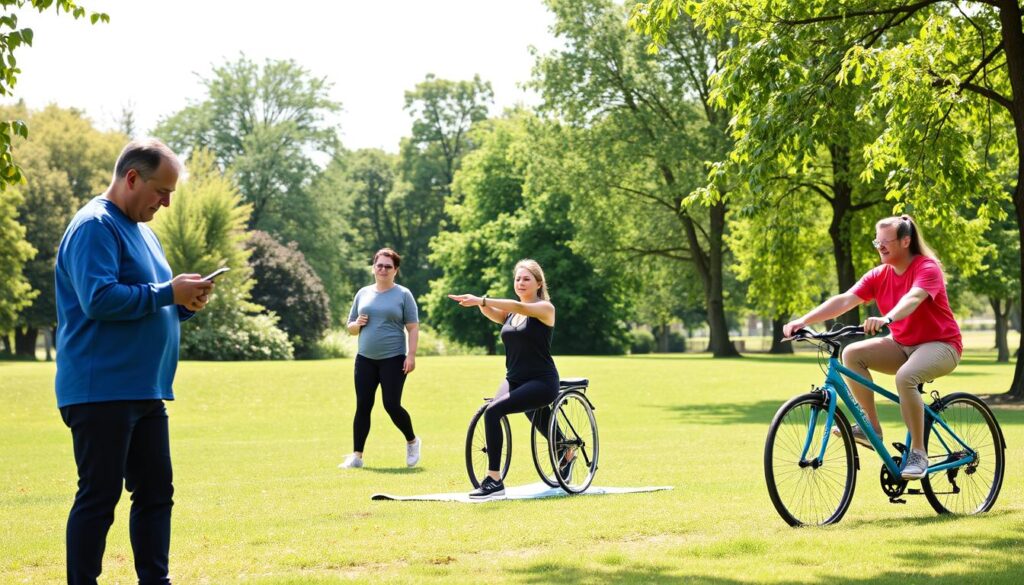
Staying active is key for those with diabetes. Exercise is a powerful tool for managing health and preventing complications. It can change how your body handles blood sugar and boost overall wellness1.
Regular physical activity helps control diabetes and improves life quality. It aids in maintaining a healthy weight and makes insulin work better. This reduces the risk of type 2 diabetes getting worse1.
Start small and build up gradually. Consistent effort is more important than intense workouts. Different exercises offer unique benefits for managing diabetes1.
Try aerobic activities, strength training, and flexibility exercises. These can keep you moving and help control blood sugar levels1.
Key Takeaways
- Regular physical activity is crucial for diabetes management
- Start with small, achievable exercise goals
- Incorporate varied types of exercise for comprehensive health benefits
- Consistency matters more than intensity
- Always consult your healthcare provider before starting a new exercise routine
Understanding Diabetes and Exercise: Benefits and Impact
Exercise is a powerful tool for managing diabetes. It offers many health benefits beyond just physical activity. By understanding how movement affects your body, you can improve glucose control and overall wellness.
Physical activity helps address insulin resistance and supports your body’s metabolic functions. Adults should aim for 150 minutes of heart-pumping aerobic activity weekly. Different types of diabetes need unique approaches to exercise management.
How Physical Activity Affects Blood Sugar Levels
Exercise directly influences your glucose control through several key mechanisms:
- Improves insulin sensitivity
- Helps muscles absorb glucose more effectively
- Reduces blood sugar fluctuations
It’s crucial to monitor your blood sugar levels before exercising. Safe exercise ranges for adults typically fall between 126-180 mg/dL2.
For those with type 2 diabetes, regular physical activity can be life-changing. This type accounts for 90%-95% of diabetes cases3.
Key Benefits for Diabetes Management
Regular exercise offers remarkable advantages for diabetes management:
- Enhanced mitochondrial density
- Improved insulin sensitivity
- Reduced A1C levels
- Better cardiovascular health
Impact on Cardiovascular Health and Weight Management
Cardiovascular health greatly improves with consistent physical activity. Moderate to high volumes of aerobic exercise can lower mortality risks for diabetics3.
“Movement is medicine for managing diabetes and improving overall health.”
Regular exercise also helps with weight management. High-intensity interval training (HIIT) can quickly improve muscle oxidative capacity3. Find a fun, sustainable way to stay active.
Getting Started with Safe Exercise Routines
Planning is crucial when starting physical activity with diabetes. Your routine should be gradual and enjoyable. It must also fit your unique health needs4.
Start endurance training with light, comfortable activities. Walking is a great option for most people with diabetes. Set clear, measurable goals to stay motivated4.
Try walking a mile daily or exercising 30 minutes on weekdays4.
“The journey of a thousand miles begins with a single step” – Especially true for diabetes management through exercise.
- Start with short 5-10 minute sessions
- Gradually increase duration and intensity
- Choose activities you genuinely enjoy4
- Avoid going more than 2 days without activity4
To build muscle strength effectively, follow these exercise guidelines5:
| Exercise Type | Recommended Approach |
|---|---|
| Aerobic Exercise | 150 minutes of moderate-intensity exercise per week |
| Resistance Training | 3 sets of 8-10 repetitions, targeting all major muscle groups |
Track your progress using fitness apps or activity trackers. This helps visualize improvements and keeps you motivated4.
Pro tip: Working out with a friend can boost enjoyment and accountability4.
Always consult your doctor before starting a new exercise routine. Remember to carry fast-acting carbs for potential blood glucose changes.
Building an Effective Exercise Plan for Blood Sugar Control
A strategic exercise plan is key for managing diabetes and optimizing glucose control. Your approach should fit your health needs and fitness level. Different activities impact blood sugar levels differently.
Choosing the Right Type of Activities
A well-rounded exercise strategy includes various physical activities. These should cover aerobic exercises, strength training, and flexibility workouts. Each type offers unique benefits for your overall health.
- Aerobic exercises for cardiovascular health
- Strength training to improve insulin resistance
- Flexibility workouts to enhance overall fitness
The American Diabetes Association suggests 150 minutes of moderate-to-vigorous activity weekly. Spread this across multiple days. Your routine can mix walking, swimming, cycling, and resistance training.
Monitoring Blood Glucose Before and After Exercise
Tracking blood sugar levels is crucial for safe and effective exercise. Exercise can boost insulin sensitivity. This allows muscle cells to better use glucose during and after activity.
- Check blood glucose before starting your workout
- Monitor levels during extended exercise sessions
- Test after completing your routine
“Understanding your body’s response to exercise is key to managing diabetes effectively.”
Timing Your Workouts for Optimal Results
Smart workout timing can greatly affect blood sugar levels. Postprandial exercise, like a short walk after meals, can help regulate glucose. Physical activity can lower blood glucose for up to 24 hours.
Always consult your healthcare provider before starting a new exercise plan. They can advise on medication adjustments and potential hypoglycemia risks67.
Conclusion
Managing diabetes through exercise is more than just a fitness routine. It’s a complete lifestyle change. Research shows that physical activity can greatly improve your health8. Regular exercise can lower HbA1c levels and boost insulin sensitivity. It also enhances your heart health diabetes management strategies8.
Timing and intensity of workouts play a crucial role. Morning and afternoon exercises affect blood glucose differently9. Find a sustainable approach that suits your needs and health condition.
Resistance training and high-intensity intervals offer major benefits. These are especially helpful for older adults with type 2 diabetes8.
Your diabetes journey is unique to you. Begin slowly and pay attention to your body’s signals. Work with your healthcare team for best results. Consistent effort can make exercise a powerful tool in diabetes management8.
FAQ
How often should I exercise if I have diabetes?
Aim for 150 minutes of moderate exercise weekly. Start slow and build up gradually. Always check with your doctor before starting a new workout routine.
What types of exercise are best for managing diabetes?
Mix aerobic activities with strength training for best results. Try walking, swimming, cycling, or resistance exercises. Choose activities you enjoy to stay motivated.
Low-impact options like chair exercises or water aerobics work well for joint pain. These are great alternatives if you have mobility issues.
How does exercise impact my blood sugar levels?
Exercise improves insulin sensitivity and glucose control. It lowers blood sugar and helps manage weight. The impact varies with exercise duration and intensity.
Monitor your blood glucose before, during, and after workouts. This helps you understand how different activities affect your levels.
What precautions should I take when exercising with diabetes?
Talk to your doctor before starting an exercise routine. Check blood sugar levels and be ready to treat low glucose.
Wear comfy, well-fitting shoes and stay hydrated. Carry fast-acting carbs with you. Begin with short sessions and slowly increase duration.
Can exercise help prevent diabetes complications?
Yes, regular exercise can help manage and prevent diabetes complications. It boosts heart health, controls blood pressure, and improves cholesterol levels.
Exercise also enhances memory, sleep quality, and mood. It supports overall health in many ways.
What if I’m not currently active?
Start small and be patient. Begin with light activities like short walks or household chores. Even 5-10 minute sessions can help.
Slowly increase your activity level. Pick exercises you enjoy. Consider working with a trainer to create a safe routine.
How do I manage my blood sugar during exercise?
Schedule workouts after meals for better blood sugar control. Check your glucose before, during, and after exercise.
Keep fast-acting carbs handy for low blood sugar. Ask your doctor about managing blood sugar during workouts.
What are the mental health benefits of exercise for people with diabetes?
Exercise boosts mood, reduces stress, and improves sleep. It enhances overall well-being and releases feel-good endorphins.
Physical activity can help fight depression and anxiety often linked to chronic health conditions. It’s great for both body and mind.
Source Links
- Exercising to Prevent Diabetes: Simple Steps for a Healthier Future – Charles County Department of Health – https://www.charlescountyhealth.org/exercising-to-prevent-diabetes-simple-steps-for-a-healthier-future/
- Diabetes and exercise: When to monitor your blood sugar – https://www.mayoclinic.org/diseases-conditions/diabetes/in-depth/diabetes-and-exercise/art-20045697
- Physical Activity/Exercise and Diabetes: A Position Statement of the American Diabetes Association – https://pmc.ncbi.nlm.nih.gov/articles/PMC6908414/
- Get Active – https://www.cdc.gov/diabetes/living-with/physical-activity.html
- Getting started with exercise – Diabetes Education Online – https://dtc.ucsf.edu/living-with-diabetes/activity-and-exercise/getting-started-with-exercise/
- The Best Exercises for Lowering Blood Sugar Levels – https://www.carearc.org/latest-news-posts/the-best-exercises-for-lowering-blood-sugar-levels
- Understanding Blood Glucose and Exercise – https://diabetes.org/health-wellness/fitness/blood-glucose-and-exercise
- The essential role of exercise in the management of type 2 diabetes – https://pmc.ncbi.nlm.nih.gov/articles/PMC5846677/
- Frontiers | Exercise, type 1 diabetes mellitus and blood glucose: The implications of exercise timing – https://www.frontiersin.org/journals/endocrinology/articles/10.3389/fendo.2022.1021800/full

