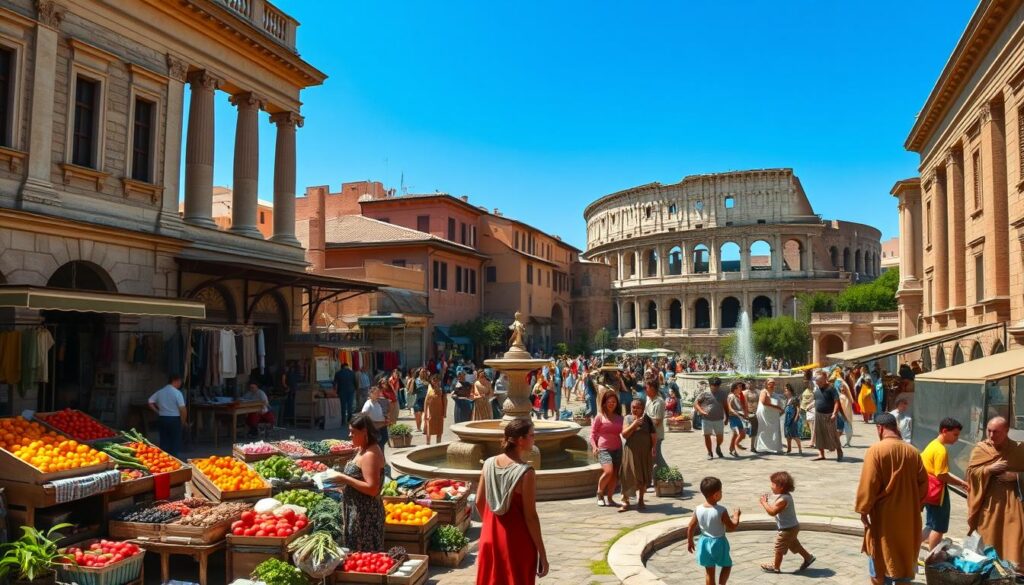
Ancient Rome was a vibrant metropolis where diverse cultures met. It was a hub of civilization that captivated millions across the Mediterranean. The city pulsed with energy, from its crowded streets to its grand architecture12.
Rome wasn’t just a city, but an empire spanning continents. At its peak, it had over 45 million people1. About one million residents called Rome home during its most prosperous era12.
Life in ancient Rome varied greatly based on social status. Wealthy Romans enjoyed spacious homes with beautiful courtyards. Most citizens, however, faced poverty and worked unskilled jobs1.
The Roman family revolved around the paterfamilias, the male head of household. Roman mothers, or materfamilias, held high respect in society1. Children’s education was often rigorous and discipline-focused.
Key Takeaways
- Rome was a diverse empire with over 45 million inhabitants
- Social classes dramatically influenced daily life experiences
- Family structure was hierarchical and deeply traditional
- Education was rigorous and often discipline-focused
- Roman architecture and urban design were sophisticated for their time
Understanding Daily Routines in Ancient Rome
Life in ancient Rome was full of unique rhythms. From dawn to dusk, Romans moved through their complex urban landscapes. Their days were filled with work, leisure, and social interactions3.
Morning Activities: Rise and Shine
Ancient Romans were early risers, starting their day before sunrise. They aimed to finish business before sundown. Breakfast was usually light, often just water and bread4.
- Work typically began at dawn
- Days lasted approximately six hours
- Most activities concluded by noon
Afternoon Leisure: A Roman Lunch
After morning work, Romans enjoyed their free time. Public bathhouses were popular spots for relaxation and socializing. These places had hot baths, swimming pools, and exercise areas4.
Evening Gatherings: Social and Family Time
Supper was the highlight of Roman daily life. It could last from one to four hours. Wealthy families reclined on couches during these elaborate meals4.
Their feasts had multiple courses with exotic dishes. Some favorites were honey-rolled dormice and date-stuffed suckling pig4.
| Meal Component | Typical Roman Dishes |
|---|---|
| Hors d’oeuvres | Varied appetizers |
| Main Course | Roasted meats |
| Dessert | Sweet delicacies |
Roman daily life shaped later cultural developments. Their cuisine, in particular, influenced future culinary traditions. This impact can be seen in Renaissance art and Vatican museums3.
The Role of Social Classes in Daily Life
Ancient Roman society was a complex tapestry of social hierarchies. These structures shaped every aspect of daily life. From grand architecture to modest dwellings, social class determined opportunities and lifestyle.
Social stratification deeply influenced Roman culture. This impact was evident in various aspects of.
Patricians vs. Plebeians: A Stark Contrast
Roman society was split between patricians and plebeians. Patricians were the elite class, owning most land and enjoying significant privileges5. They controlled political power and lived in luxurious homes near famous landmarks.
Plebeians made up the majority of the population. They worked as farmers, artisans, and traders5. Unlike patricians, plebeians had limited political influence.
- Patricians: Wealthy landowners
- Plebeians: Working-class citizens
- Equestrian Order: Wealthy businessmen
The Influence of Wealth on Lifestyle
Wealth dramatically impacted daily experiences in Rome. The Centuriate Assembly reflected this divide6. Wealthier classes held more voting power in this system.
Wealthy families near the Trevi Fountain enjoyed refined lifestyles. They consumed exotic foods and participated in social gatherings7. Their lives contrasted sharply with those of lower classes.
| Social Class | Lifestyle Characteristics |
|---|---|
| Senatorial Class | Highest status, minimum wealth of 1 million sesterces |
| Equestrian Order | Wealthy merchants and administrators |
| Plebeians | Limited economic opportunities |
Social Customs and Etiquette
Roman social interactions followed strict customs. The pater familias held legal power over family members6. Women, despite being citizens, faced significant restrictions in society.
Female citizens couldn’t vote or hold political offices6. Public spaces like bathhouses became critical social venues. These places allowed different classes to mingle7.
“In Rome, your social class was not just a label, but a destiny that shaped every aspect of your life.”
Food, Entertainment, and Culture in Ancient Rome
Roman cuisine mirrored social diversity and cultural richness. Daily meals varied between social classes. Wealthy Romans enjoyed elaborate dining, while lower classes ate simple, practical food8.
Romans typically had a light breakfast and substantial dinner. Their meals included bread, beans, vegetables, and occasional meat dishes8.
A Taste of Rome: Typical Meals
Roman banquets boasted impressive culinary delights. These gatherings started around 5 pm and featured multiple courses. Poultry, deer, or rabbit were common main dishes9.
Garum, a popular fish sauce, added unique flavor to many meals9. Elite Romans reclined on beds during elaborate feasts, showcasing their social status10.
Spectacles and Theaters: Entertainment Choices
Entertainment was vital in Roman life. Musicians, dancers, actors, and gladiators kept the population engaged8. Banquets often included music, poetry recitals, and acrobatic performances9.
These spectacles weren’t just for fun. They showcased wealth and social standing in Italian history.
Festivals and Holidays: Celebrating Life
Roman culture thrived on community celebrations. Festivals offered a break from daily routines. They brought people together through public feasts, games, and rituals.
The Vatican City’s roots trace back to these rich Roman traditions. These celebrations were key to Roman social life. They reflected the dynamic nature of their civilization.
FAQ
What was daily life like for average Romans?
Ancient Roman life varied based on social class. Most Romans woke before sunrise for a light breakfast. The workday began at dawn and lasted about six hours.
Afternoons were for leisure activities. Romans enjoyed public baths, Colosseum events, and social gatherings. These activities helped them relax after work.
Where did most Romans live?
Urban Romans lived in insulae, crowded apartment buildings often unsafe and fire-prone. Wealthy citizens enjoyed comfortable domus houses on Palatine Hill.
Housing reflected social status in ancient Rome. The rich had better-located and more pleasant living spaces. This stark contrast highlighted societal differences.
What was the social structure in ancient Rome?
Roman society had a strict hierarchy. There were clear divisions between patricians and plebeians. The paterfamilias, or male head, held significant power in families.
Social mobility was limited in ancient Rome. A person’s birth largely determined their education, work, and social opportunities. This system maintained social divisions.
What did Romans eat?
Roman diets varied by social class. Poor Romans ate grain, bread, vegetables, and occasional meat. The wealthy enjoyed elaborate meals with exotic ingredients.
Olive oil, wine, and bread were common foods for all Romans. These staples formed the base of their diet across social classes.
How did Romans spend their leisure time?
Romans enjoyed various entertainment options. These included gladiator matches, chariot races, plays, and public bath visits. Festivals and holidays were frequent.
Community celebrations featured public feasts, games, and religious rituals. These events brought Romans together and provided fun breaks from daily life.
What was the role of women in ancient Roman society?
Women’s roles in Rome changed over time. Initially restricted, they gradually gained more rights and freedoms. Upper-class women had more social opportunities.
Some women could own property and join social activities. However, they remained subordinate to male family members. This reflected the patriarchal nature of Roman society.
How long was a typical workday in ancient Rome?
A Roman workday started at dawn and lasted about six hours. It usually ended around noon, giving workers free afternoons. This schedule allowed for rest during the hottest part of the day.
Romans used their free time for leisure, socializing, or personal activities. Evening gatherings were common, rounding out their daily routine.
What were public baths like in ancient Rome?
Public baths (thermae) were key social spaces in Rome. They offered various bath types, exercise areas, and social spots. These facilities served more than just cleaning purposes.
Baths were important community gathering places. Romans socialized, exercised, and relaxed in these spaces. They played a crucial role in daily life.
Source Links
- Rome Life in Ancient Rome – http://www.historyshistories.com/rome-life-in-ancient-rome.html
- Daily Life in Ancient Rome — MayaIncaAztec.com – https://www.mayaincaaztec.com/romanempire/daily-life-in-ancient-rome
- Roman Daily Life – https://www.worldhistory.org/article/637/roman-daily-life/
- Here’s what it was like to live in ancient Rome – https://bigthink.com/the-past/ancient-rome-life-routine/
- Social Classes in Rome -A Detailed Overview and Significance – https://roman-empire.net/society/social-classes
- Social class in ancient Rome – https://en.wikipedia.org/wiki/Social_class_in_ancient_Rome
- The Daily Life of Romans – https://nsms6thgradesocialstudies.weebly.com/the-daily-life-of-romans.html
- Roman Food, Jobs, Daily Life – https://www.ducksters.com/history/ancient_rome_food_daily_life.php
- Banquets in Ancient Rome – Through Eternity Tours – https://www.througheternity.com/en/blog/things-to-do/banquets-ancient-rome.html
- Culture: Meals in Ancient Rome – https://www.empirerome.com/wordpress/?page_id=599