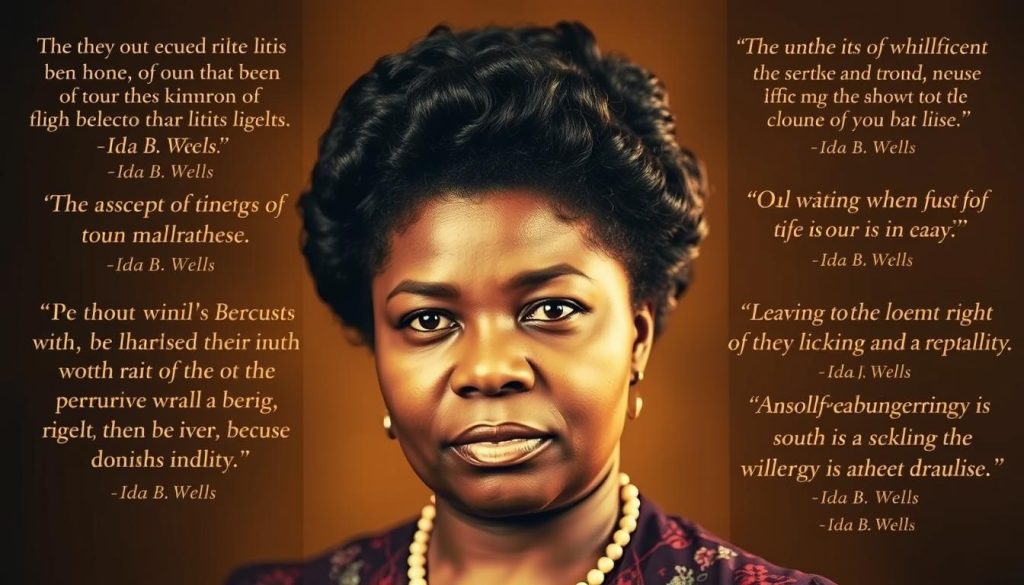
Ida B. Wells was a powerful voice for African American civil rights. Her remarkable words challenged racial injustice with extraordinary courage. Wells’ compelling quotes show her commitment to truth and equality, inspiring generations1.
Wells was born just before the Emancipation Proclamation. She rose from a legacy of slavery to become a transformative journalist and activist. Her pen became a weapon against systemic oppression1.
Wells documented brutal racial violence with remarkable precision. Her words continue to resonate today. One of her most impactful quotes gained significant attention2.
“The way to right wrongs is to turn the light of truth upon them.” This powerful statement received 114 likes. It captures Wells’ approach to fighting injustice.
Key Takeaways
- Wells was a pioneering journalist who fought against racial injustice
- She documented lynching and racial violence with unprecedented courage
- Her quotes continue to inspire civil rights movements
- She challenged systemic racism through powerful writing
- Wells was a founder of the NAACP
Early Life and Historical Impact of Ida B. Wells
Ida B. Wells was born into slavery in Holly Springs, Mississippi. She became a powerful force in American civil rights history. Her journey from enslaved child to pioneering activist reshaped social justice in the United States.
At 16, Wells faced tragedy when yellow fever took her parents and a sibling. This thrust her into adulthood early. These challenges forged her strong spirit and fueled her inspirational quotes challenging systemic racism.
From Slavery to Civil Rights Activism
Wells’ activism sparked in 1884 when she refused to give up her train seat. This led to a groundbreaking legal battle and a $500 settlement. Her feminist quotes began challenging societal norms, making her a voice for equality.
- Confronted racial discrimination through legal action
- Became a vocal critic of systemic oppression
- Transformed personal struggles into collective resistance
The Birth of an Anti-Lynching Crusader
The murder of her friend Tom Moss became a pivotal moment. It sparked Wells’ focus on documenting and fighting lynching. She published powerful pamphlets exposing racial violence, including “Southern Horrors” and “A Red Record”.
Journey as a Journalist and Educator
Wells co-founded important organizations like the National Association of Colored Women and the NAACP. She joined the 1913 Women’s Suffrage Parade in Washington, D.C. This highlighted her approach to social justice across different issues.
“The way to right wrongs is to turn the light of truth upon them.” – Ida B. Wells
QUOTES BY IDA B. WELLS on Truth and Justice
Ida B. Wells fought racial injustice with powerful words. Her quotes expose deep-rooted racism in American society. As an African American activist, she boldly challenged discrimination through her groundbreaking journalism3.
“The more I studied the situation, the more I was convinced that the Southerner had never gotten over his resentment that the Negro was no longer his plaything, his servant, and his source of income.”
Wells’ statements challenged the injustices of her time. She exposed uncomfortable truths about racial violence and discrimination. Her courage brought national attention to lynching atrocities4.
- Highlighted systemic racism in judicial processes
- Documented lynching statistics with precision
- Advocated for self-defense and equal protection
QUOTES BY IDA B. WELLS still inspire modern civil rights movements. Her words were calls to action, not just observations. Wells challenged people and institutions to confront racial injustice directly3.
| Year | Significant Work | Impact |
|---|---|---|
| 1892 | Southern Horrors: Lynch Law in All Its Phases | Exposed lynching statistics |
| 1895 | The Red Record | Documented racial violence |
| 1900 | Chicago Speech | Highlighted increasing racial brutality |
Wells used her words as tools for change. Her journalism and activism challenged deep-rooted racial prejudices. She proved that words could spark meaningful transformation3.
Powerful Statements on Civil Rights and Equality
Ida B. Wells fought against racial oppression with inspiring quotes. She highlighted the need for self-defense in African American communities. Wells documented lynchings, exposing the brutal racial terror threatening Black lives5.
Views on Self-Defense and Protection
Wells declared, “A Winchester rifle should have a place of honor in every black home.” This statement showed her belief in armed self-defense against racism.
Wells recognized that legal systems often failed to protect African Americans. She believed communities needed to protect themselves from violent oppression6.
Perspectives on Racial Justice
Wells criticized the gap between American ideals and racial violence realities. Her statements challenged systems that kept discrimination alive.
She exposed racist practices, becoming a key figure in the early civil rights movement. Her work laid the groundwork for future activists5.
FAQ
Who was Ida B. Wells?
Ida B. Wells was a trailblazing African American journalist and activist born into slavery in 1862. She fought racial injustice through her powerful writing and co-founded the NAACP. Wells bravely exposed racial violence and championed equal rights for African Americans.
What were Ida B. Wells’ most significant contributions to civil rights?
Wells made groundbreaking contributions to civil rights through her investigative journalism about lynching. She fearlessly advocated for African American rights and challenged racial discrimination. Her exposés on lynching in the U.S. were pivotal in the early civil rights movement.
How did Ida B. Wells become an activist?
Wells’ activism began after facing racial discrimination and losing her teaching job. The lynching of her friends in Memphis sparked her investigation into racial violence. These experiences fueled her determination to fight for civil rights through journalism and speeches.
What was Wells’ stance on self-defense?
Wells strongly advocated for armed self-defense for African Americans. She believed it was necessary when law enforcement failed to protect them. Wells argued that self-defense was a valid response to racial violence and systemic oppression.
How did Ida B. Wells impact journalism?
Wells revolutionized reporting by using facts to expose racial violence and systemic racism. Her writing became a powerful tool for social change. She documented lynchings and challenged racist narratives, bringing national attention to African Americans’ brutal treatment.
Was Ida B. Wells involved in the women’s suffrage movement?
Yes, Wells was a key figure in the women’s suffrage movement. She faced discrimination from white suffragists due to racial prejudice. Wells fought for voting rights for both African American women and men.
What is Ida B. Wells’ legacy today?
Wells is remembered as a pioneering civil rights activist who inspired future movements against racial injustice. Her courage and commitment to equality continue to inspire activists and scholars. In 2020, she received a posthumous Pulitzer Prize for her outstanding reporting on lynching.
Source Links
- Famous Ida B Wells Quotes – Historic Newspapers – https://www.historic-newspapers.com/blogs/article/ida-b-wells-quotes?srsltid=AfmBOopNyuyr7cUrP8WIKc6OFeVSqcUgsxr1d31vCN0TmTB6JgRxXM9W
- Ida B. Wells-Barnett Quotes (Author of Crusade for Justice) – https://www.goodreads.com/author/quotes/102474.Ida_B_Wells_Barnett
- Famous Ida B Wells Quotes – Historic Newspapers – https://www.historic-newspapers.com/blogs/blog/ida-b-wells-quotes?srsltid=AfmBOooULSKJZ4dW0FEmeqYalYxXUrW3dLE8LhGU3zCI1ano7vFRK1oL
- Crusade for Justice Quotes by Ida B. Wells-Barnett – https://www.goodreads.com/work/quotes/197333-crusade-for-justice
- 10 Civil Rights Quotes That Made History – https://www.humanrightscareers.com/issues/civil-rights-quotes/
- Quotes From Black Leaders on Racism, Equality – https://www.aarp.org/politics-society/history/info-2020/quotes-racial-justice.html