
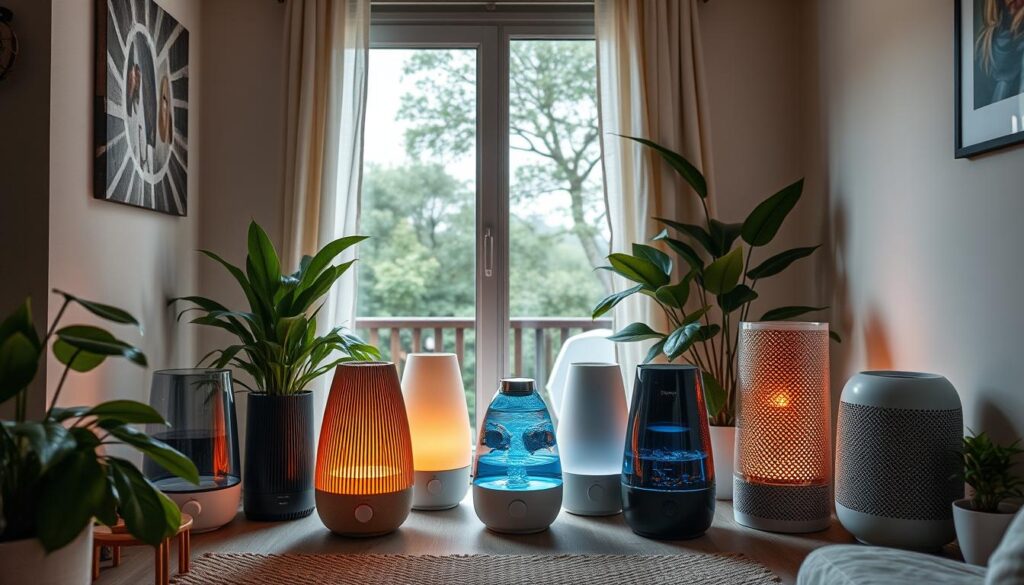
Dry air can make your home uncomfortable. The right humidifier can turn your space into a cozy haven. Choosing the best one depends on your moisture needs and room size1.
Indoor air quality affects your comfort and health daily. Experts suggest keeping humidity between 30% and 50% for the best living environment1.
Small room humidifiers can help balance moisture. They work well in spaces up to 400 square feet2.
Humidifiers come in different types with unique perks. Ultrasonic models create fine water droplets quietly. They’re great for bedrooms and nurseries2.
Cool mist options are ideal for germ-free spaces. They’re easy to clean with dishwasher-safe parts2.
Key Takeaways
- Maintain indoor humidity between 30-50% for optimal comfort
- Choose humidifiers based on room size and specific needs
- Consider noise levels and cleaning ease when selecting a model
- Different humidifier types serve various purposes
- Proper humidity can improve overall home air quality
Understanding Humidifiers and Their Benefits
Indoor humidity is key for health and comfort. Humidifiers create a balanced living space. They tackle dry air issues and offer many wellness perks.
Health Benefits of Proper Indoor Humidity
Humidifiers do more than just make you comfy. They can boost your overall health. Higher humidity may lower flu risks by deactivating virus particles3.
They can also help with coughs. Moist air makes coughing more effective3.
- Reduce respiratory discomfort
- Prevent dry skin and chapped lips
- Minimize snoring symptoms3
Ideal Humidity Levels for Your Home
The EPA suggests indoor humidity between 30% and 50%3. Various top-rated humidifiers can help you reach this range:
| Humidifier Type | Room Coverage | Cost |
|---|---|---|
| Central Humidifiers | Entire House | Most Expensive4 |
| Evaporators | Single Room | Affordable4 |
| Ultrasonic | Single Room | Moderate4 |
How Humidifiers Combat Dry Air Problems
Dry air can wreak havoc on your home and health. Humidifiers add moisture to prevent static and protect wooden items. They support overall comfort and benefit houseplants.
These devices can also protect wood floors and furniture. They even stop wallpaper from cracking3.
Maintaining the right humidity isn’t just about comfort—it’s about creating a healthier living environment.
Clean your humidifier often to avoid bacteria growth. This ensures it works its best4. With proper care, you’ll enjoy better air quality and comfort.
Types of Humidifiers for Every Need
The right humidifier can boost your indoor air quality and comfort. Different types suit various needs and preferences. Let’s explore popular options for your perfect moisture solution.
Cool Mist Humidifiers
Cool mist humidifiers are a top choice for many homes. They work well in larger spaces and open living areas.
These ultrasonic humidifiers offer key benefits. They’re safe for kids and pets. They’re cost-effective for asthma and allergy sufferers. Plus, they’re ideal for warmer climates.
- Safe for children and pets5
- Cost-effective for asthma and allergy sufferers5
- Ideal for warmer climates5
- Energy-efficient operation6
Warm Mist Humidifiers
Warm mist humidifiers shine in cold months and help with colds. They offer cozy warmth but use more energy. Be cautious with young kids due to burn risks.
| Humidifier Type | Best For | Energy Efficiency |
|---|---|---|
| Cool Mist | Large spaces, warm climates | High |
| Warm Mist | Cold months, flu treatment | Low |
| Ultrasonic | Quiet environments | Very High |
Pro Tip: The American Academy of Dermatology recommends maintaining proper humidity levels to improve indoor air quality7.
Choose your humidifier based on room size, climate, and health needs. Energy Star suggests maintaining indoor humidity between 30% and 50%7.
Essential Features to Consider When Choosing Humidifiers
Choosing a humidifier requires evaluating key features for optimal performance and convenience. Focus on aspects that ensure proper moisture control and comfort for your living spaces.
Your humidifier guide should consider features that impact different living areas. This will help you find the perfect match for your home.
Smart Controls and Digital Innovation
Modern humidifiers offer advanced tech features for easy moisture management. Look for digital displays showing real-time humidity levels for precise monitoring and adjustment.
Many top humidifiers include programmable timers and WiFi connectivity. These features allow you to control your device remotely8.
- Digital humidity tracking
- Remote control capabilities
- Customizable humidity settings
Tank Capacity and Runtime Considerations
Tank capacity is crucial for convenience when choosing humidifiers. Larger tanks need less frequent refilling, making them great for continuous use9.
Consider these runtime options:
| Tank Size | Runtime | Room Coverage |
|---|---|---|
| Small (1-2 gallons) | 8-12 hours | Single room |
| Medium (2-4 gallons) | 12-24 hours | Multiple rooms |
| Large (4-6 gallons) | 24-48 hours | Entire home |
Safety Features for Peace of Mind
Choose humidifiers with strong safety mechanisms. Automatic shutoff prevents electrical hazards when water levels are low8.
Look for units with UL, ETL, or CSA certifications. These ensure quality and reliability in your chosen humidifier.
Remember, the best humidifiers balance performance, safety, and convenience for your specific needs.
Conclusion
Selecting the best humidifier depends on your needs and indoor environment. Different types offer unique benefits, from portable to whole-home solutions10. Consider potential risks and maintenance requirements for optimal performance and air quality11.
Your well-being relies on proper humidity levels. Keep indoor relative humidity between 30% and 50% to avoid issues like mold growth1011. Clean your humidifier every third day to prevent microorganism buildup10.
For better results, use distilled water in ultrasonic models to reduce mineral dispersion. Stop using if you experience respiratory symptoms and consult a doctor10. These steps will help create a healthier indoor environment.
The aim is to enhance your living space safely. Take time to understand your humidity needs. Choose a quality humidifier and maintain it properly for improved air quality.
FAQ
What are the ideal indoor humidity levels?
Indoor humidity should be between 30% and 50%. In colder areas during heating seasons, 30% to 40% is best. This range prevents window condensation and keeps your home comfortable.
What are the different types of humidifiers available?
There are several types of humidifiers. Evaporative uses a fan to blow air through a wet wick. Cool mist produces room-temperature mist.
Warm mist boils water to create steam. Ultrasonic uses high-frequency vibrations to create a fine mist. Impeller uses a rotating disc to fling water through a diffuser.
How do humidifiers benefit my health?
Humidifiers offer many health benefits. They reduce skin dryness and improve respiratory comfort. They also ease symptoms of dry skin and chapped lips.
Humidifiers make breathing easier during colds. They help fight dry air problems and can prevent sinus issues.
What features should I look for when buying a humidifier?
Look for adjustable humidistats, digital displays, and programmable timers. Automatic shutoff, tank capacity, and safety certifications are important. Consider models with medicine cups for vapor medication and filter sensors.
How often do I need to clean my humidifier?
Regular cleaning is key for optimal performance. Look for models with dishwasher-safe tanks for easy cleaning. Follow the manufacturer’s instructions to prevent bacterial growth and ensure the best air quality.
Can a humidifier help with static electricity?
Yes, humidifiers can reduce static electricity by adding moisture to the air. This is especially helpful during dry winter months when static is more common.
Are humidifiers safe to use around children and pets?
Most humidifiers are safe when used correctly. Look for models with safety features like automatic shutoff and cool mist options. Always place the humidifier out of reach of children and pets.
How do I choose the right size humidifier for my space?
Choose a humidifier designed for your specific room size. A too-large model can create a moist environment that breeds mold. A too-small unit won’t effectively add moisture to the air.
Source Links
- The Best Humidifier – https://www.nytimes.com/wirecutter/reviews/the-best-humidifier/
- Best Humidifier for Your Home – https://www.homedepot.com/c/ab/best-humidifier-for-your-home/9ba683603be9fa5395fab9016a84d650
- 5 humidifier uses: Benefits and risks – https://www.medicalnewstoday.com/articles/322228
- Humidifiers: What They Do for Health, Uses, Types, and More – https://www.healthline.com/health/humidifiers-and-health
- Pros & Cons of Different Types of Portable Humidifiers® – https://www.hvac.com/expert-advice/pros-cons-different-types-portable-room-humidifiers/
- Getting to Know Different Types of Humidifiers – https://www.aidot.com/blog/post/types-of-humidifiers?srsltid=AfmBOoq9vC0OOouv7CY8ZfitdRdBqA2kRNHmRdYoxNejcXpOGIuWOc-k
- Best Humidifier Buying Guide – Consumer Reports – https://www.consumerreports.org/appliances/humidifiers/buying-guide/
- The Ultimate Guide to Humidifiers – https://www.airoasis.com/blogs/articles/ultimate-guide-humidifiers?srsltid=AfmBOoo8fLmcy28_on-x1DVrnTZk2NCi5NfDuQ-DW7ThcOcW5ggP7ZdE
- Five Things to Consider When Buying a Humidifier | Achoo! Blog – https://www.achooallergy.com/blog/learning/five-things-to-consider-when-buying-a-humidifier/?srsltid=AfmBOoo0IYK8UOf_pE1S3yWddWbyQPs78PPIi8z0gl7JJysEne5HSpE-
- PDF – https://www.epa.gov/sites/default/files/2014-08/documents/humidifier_factsheet.pdf
- Should You Use a Humidifier? – https://elementalairsystems.com/blogs/air-education-blog/should-you-use-a-humidifier?srsltid=AfmBOor3ufhWW5VTpqubAwxbgNx6d0c8S_9q6AFx4W3V3ZOuj5YzSN1m

