
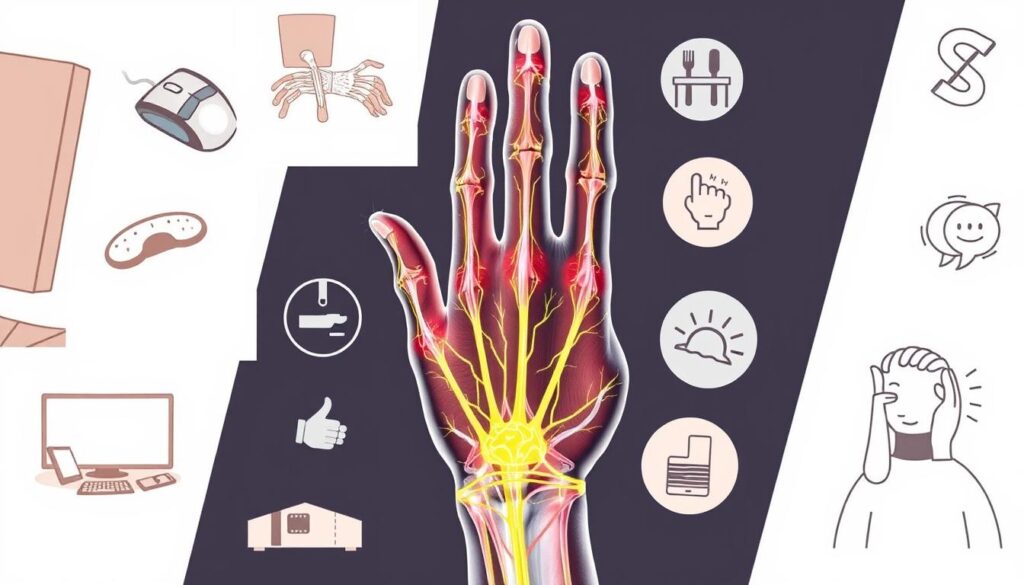
Finger numbness can be more than just annoying. It might signal underlying health issues. Recognizing the causes of hand numbness is vital for your well-being1.
Finger numbness can stem from various medical conditions. Diabetes is a major factor, affecting up to 50% of patients with nerve damage1.
Rheumatoid arthritis can cause tingling and burning in both hands. Your body uses these sensations to communicate important information1.
Nerve compression, infections, and vitamin deficiencies may lead to finger numbness. Ulnar nerve entrapment can cause numbness in specific fingers1.
Serious infections like Lyme disease or HIV can also trigger these symptoms1.
Key Takeaways
- Finger numbness can indicate multiple health conditions
- Nerve compression and medical disorders frequently cause hand numbness
- Some causes are treatable with proper medical intervention
- Early recognition of symptoms is crucial for effective management
- Not all finger numbness indicates a serious health problem
Understanding the Signs and Symptoms of Finger Numbness
Finger numbness can disrupt your daily life. It’s important to recognize the signs and know when to seek medical help. This strange sensation can be both puzzling and alarming.
Numb fingers may signal underlying health issues. The sensations can range from mild tingling to complete loss of feeling2. It’s more than just a temporary inconvenience.
Common Sensations and Warning Signs
Recognizing finger numbness symptoms helps understand potential health risks. Key warning signs include:
- Persistent tingling in fingers
- Burning or prickling sensations
- Weakness in the affected hand
- Difficulty gripping objects
When Numbness Becomes a Concern
Not all finger numbness is serious. However, some situations require immediate medical attention. Carpal tunnel syndrome can cause significant nerve compression2.
Persistent numbness might come from various sources:
Impact on Daily Activities
Finger numbness can make everyday tasks difficult. Tingling in fingers might affect typing, writing, or cooking. Some people experience weaker grip and reduced fine motor skills2.
“Understanding your body’s signals is the first step toward effective treatment and management.” – Medical Professionals
Persistent numb fingers should be checked by a doctor. It’s important to rule out serious health issues3. Don’t ignore this symptom.
Medical Conditions Behind Finger Numbness
Finger numbness can signal various health issues. Knowing its causes helps spot problems early. Numb fingers can stem from nerve compression or systemic disorders4.
Several medical conditions can lead to hand and finger numbness. Let’s explore some key culprits behind this symptom.
- Diabetes: High blood sugar can damage nerves over time, leading to peripheral neuropathy4
- Carpal Tunnel Syndrome: Computer-related activities and repetitive wrist movements can cause nerve compression45
- Pinched nerves in the arms or wrists
- Prolonged alcohol consumption
- Fibromyalgia
More serious conditions can also cause finger numbness. These include stroke, brain or spinal cord injuries, and multiple sclerosis.
Infections and vitamin B12 deficiency are other potential causes. Each requires different treatment approaches.
- Stroke
- Brain or spinal cord injuries
- Multiple sclerosis
- Infections
- Vitamin B12 deficiency
Persistent or sudden finger numbness should never be ignored. Seek medical attention if you experience ongoing symptoms or additional complications4.
Some jobs increase the risk of hand numbness. Meat-packing and assembly line work are examples5.
Medical conditions like rheumatoid arthritis can also cause numb fingers. Be aware of your risk factors5.
Treatment Options and Prevention Strategies
Finger numbness needs a thorough approach for relief and management. Understanding various treatments can help ease discomfort and prevent complications6.
Treating finger numbness starts with finding the right approach for your condition. The aim is to provide relief while addressing underlying causes.
Conservative Treatment Methods
Initial steps in managing finger numbness often include non-invasive approaches:
- Over-the-counter pain relievers to reduce discomfort
- Wearing supportive braces or splints6
- Applying hot and cold therapy
- Gentle finger numbness exercises to improve circulation
Medical Interventions
When simple methods don’t work, medical treatments become necessary7:
| Treatment Type | Description |
|---|---|
| Prescription Medications | Antiseizure drugs and antidepressants to manage nerve-related pain |
| Diagnostic Tests | Nerve conduction studies and electromyogram (EMG) to assess severity6 |
| Advanced Treatments | Lidocaine injections or surgical procedures in severe cases |
Lifestyle Modifications and Exercises
Preventing finger numbness involves proactive lifestyle changes:
- Ergonomic adjustments at work and home
- Regular breaks during repetitive activities
- Specific finger numbness exercises to strengthen hands and wrists
- Maintaining a healthy diet and addressing vitamin deficiencies7
Early intervention is key to preventing permanent nerve damage and ensuring optimal hand function.
Your treatment should be tailored to your age, conditions, and symptoms6. A healthcare professional can help create an effective plan for finger numbness relief.
Conclusion
Recognizing finger numbness is key to maintaining hand health. Various conditions can trigger this sensation. Neurologists use detailed medical history reviews and advanced tests for hand numbness evaluations8.
Treatment for finger numbness varies based on severity and cause. Options range from physical therapy to surgery. Mild cubital tunnel syndrome often responds well to conservative treatments9.
Daily habits impact finger numbness management. Improving typing posture or wearing a wrist brace can reduce nerve compression10. If self-help doesn’t work, seek professional help.
An occupational therapist can provide specialized insights and recommend targeted treatments10. Persistent numbness is your body’s alert signal. Understanding causes and seeking treatment helps maintain optimal hand health.
Stay proactive and listen to your body. Don’t hesitate to consult healthcare professionals for ongoing numbness. Early intervention can significantly improve your chances of recovery.
FAQ
What causes finger numbness?
Finger numbness can stem from various conditions. These include carpal tunnel syndrome, diabetes, nerve compression, and cervical radiculopathy. Raynaud’s phenomenon, rheumatoid arthritis, and vitamin B12 deficiency can also cause it.
Other potential causes are neurological conditions like multiple sclerosis. Infections such as Lyme disease may also lead to finger numbness.
When should I be worried about finger numbness?
Seek medical help if your finger numbness persists or worsens. It’s also crucial if you experience sudden weakness, confusion, or breathing difficulties.
Loss of coordination alongside numbness is another red flag. These symptoms could point to a stroke or severe nerve damage.
Can finger numbness be treated at home?
Some home treatments can help ease finger numbness. Wearing wrist braces and applying hot and cold therapy may provide relief.
Over-the-counter pain relievers and gentle hand stretches can also help. But if symptoms persist, consult a healthcare professional for proper diagnosis.
How can I prevent finger numbness?
Good posture and ergonomic devices can help prevent finger numbness. Take regular breaks during repetitive activities and do hand stretches.
Manage underlying health conditions like diabetes. Maintain a healthy lifestyle with proper nutrition and exercise to reduce risks.
Can diabetes cause finger numbness?
Yes, diabetic neuropathy can cause numbness in fingers and hands. High blood sugar can damage nerve fibers, leading to reduced sensation.
Proper diabetes management is key to preventing these symptoms. Regular blood sugar control helps avoid potential complications.
What medical treatments are available for finger numbness?
Medical treatments vary based on the underlying cause. Options include steroid injections, prescription medications, and physical therapy.
Nerve conduction studies may be performed for diagnosis. In severe cases, surgical interventions like carpal tunnel release might be necessary.
Are there specific exercises to help with finger numbness?
Yes, certain exercises can improve circulation and reduce nerve compression. Wrist flexor and extensor stretches can be beneficial.
Nerve gliding exercises and grip strengthening activities may help. Always consult a healthcare professional before starting any new exercise routine.
Source Links
- Finger Numbness: Causes, Diagnosis, and Treatment – https://www.healthline.com/health/finger-numbness
- Numbness in fingers: 6 possible causes – https://www.medicalnewstoday.com/articles/324456
- Numbness in hands Causes – https://www.mayoclinic.org/symptoms/numbness-in-hands/basics/causes/sym-20050842
- Why Are My Fingers Numb? – https://www.webmd.com/a-to-z-guides/why-are-my-fingers-numb
- Finger Numbness – https://newsinhealth.nih.gov/2020/03/finger-numbness
- Carpal Tunnel Syndrome – OrthoInfo – AAOS – https://orthoinfo.aaos.org/en/diseases–conditions/carpal-tunnel-syndrome/
- Peripheral Neuropathy – https://www.hopkinsmedicine.org/health/conditions-and-diseases/peripheral-neuropathy
- 6 Possible Reasons Your Hands are Numb – Premier Neurology & Wellness Center – https://premierneurologycenter.com/blog/6-possible-reasons-your-hands-are-numb/
- A 37-year-old man with numbness in the hand – https://pmc.ncbi.nlm.nih.gov/articles/PMC4435871/
- Tips and Tricks to Resolve Hand Numbness and Tingling – https://www.snhhealth.org/blog/april-2024/tips-and-tricks-to-resolve-hand-numbness-and-tingl

