
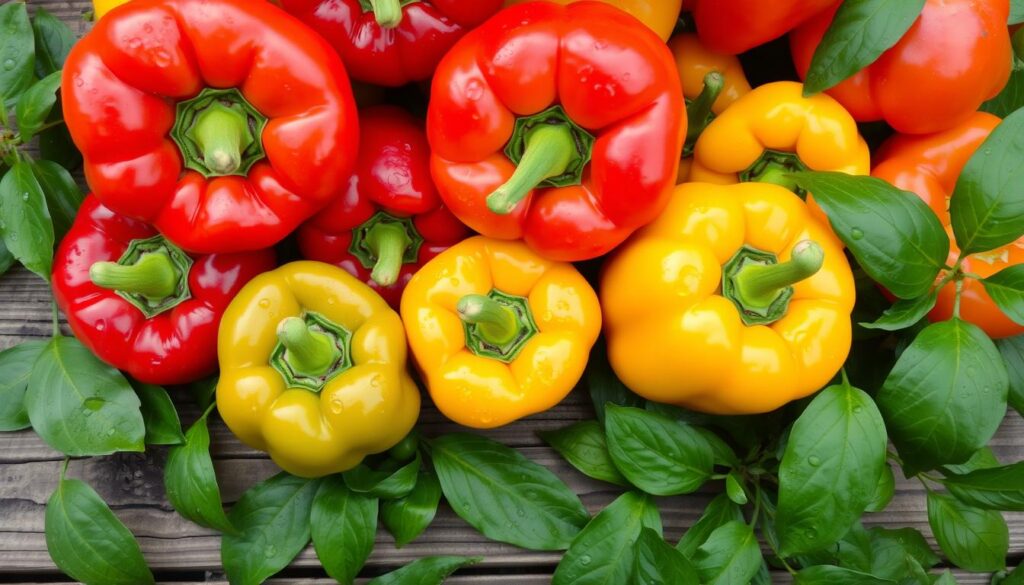
Bell peppers are colorful, versatile capsicums that can transform your meals. These sweet peppers are tasty and nutritious. They’re packed with essential vitamins and offer incredible health benefits1.
Bell peppers are a delicious way to boost your diet’s nutrition2. They come in a rainbow of colors, each with unique flavors. These vibrant veggies can elevate any dish with their crisp texture and rich taste1.
Your kitchen adventure with bell peppers can be both exciting and healthy. Each color offers distinct nutritional benefits3. From bright red to sunny yellow, these peppers are sure to spice up your cooking.
Key Takeaways
- Bell peppers are low-calorie, nutrient-dense vegetables
- Available in multiple colors with varying nutritional profiles
- Rich source of vitamins C, A, and antioxidants
- Versatile ingredient for multiple cooking methods
- Supports immune system and overall health
Understanding Bell Peppers: Colors, Varieties, and Selection
Bell peppers are vibrant and versatile veggies that change as they ripen. They start green and crisp, ending sweet and red. These colorful gems offer a fun culinary adventure for all cooks.
The Ripening Process of Bell Peppers
Bell peppers start as green, unripe versions of colorful varieties. Green peppers taste slightly bitter and cost less4. They change color as they mature.
Peppers go from green to yellow, then orange, and finally red5. This color shift affects flavor and nutrition. Red peppers are sweetest and most nutritious4.
In fact, red bell peppers contain three times more vitamin C than oranges4. That’s a lot of nutrition in one veggie!
Selecting the Perfect Bell Peppers
When choosing bell peppers for cooking, look for these key characteristics:
- Firm texture
- Smooth, unblemished skin
- Vibrant, rich color
- No soft spots or wrinkles
Sweet Pepper Varieties for Cooking with Bell Peppers
Different bell pepper colors offer unique flavor profiles perfect for various dishes:
- Green Bell Peppers: Mildly bitter, great for stir-fries5
- Red Bell Peppers: Sweetest, ideal for salads and roasting5
- Yellow Bell Peppers: Mild and sweet, perfect for stuffing5
- Orange Bell Peppers: Sweet and mild, excellent for grilling5
Pro tip: For long-term storage, consider dehydrating your bell peppers to prevent spoilage5.
The Health Benefits of Bell Peppers
Bell peppers are nutritional powerhouses that can transform your diet. These colorful veggies pack essential nutrients for your well-being6. Their benefits go beyond their vibrant looks.
Let’s explore the health perks of these versatile veggies:
- Vitamin C Boost: Red bell peppers provide an extraordinary 190% of the Daily Value of Vitamin C, which is nearly three times more than an orange6.
- Eye Health Protection: Zeaxanthin and lutein in bell peppers may help prevent macular degeneration6.
- Digestive Support: One cup of bell peppers contains 2.5 grams of dietary fiber, promoting healthy digestion7.
Bell Pepper Recipes offer more than just taste. These veggies provide amazing health benefits to boost your daily nutrition.
Eat the rainbow – each color of bell pepper brings unique nutritional advantages!
Different colored peppers have varied nutritional profiles. Red bell peppers contain 11 times more beta-carotene than green ones7. They support immune function and may help prevent heart disease6.
Bell peppers are great for managing blood sugar and supporting heart health. Their low-calorie content and high nutrient density make them perfect for balanced diets8.
Conclusion
Sweet peppers can turn ordinary meals into vibrant, nutritious experiences. Bell peppers offer a wide range of flavors and health benefits. They’re versatile and can be used in many cuisines9.
These colorful veggies are more than just tasty. One cup of chopped bell peppers has about 66 calories. They’re packed with vitamins A, C, and B610.
Bell peppers add great nutritional value to your diet. This applies to green, red, and yellow varieties10.
Sustainable food practices are key to preserving these nutritional powerhouses. The farming industry faces challenges like 40% crop losses. Understanding these issues can help reduce waste11.
You can enjoy bell peppers while supporting responsible production. This helps create more sustainable food systems11.
Bell peppers continue to inspire both home cooks and chefs. They have a rich history and amazing flavors. Keep exploring these sweet peppers in your cooking adventures9.
FAQ
What are bell peppers?
Bell peppers are versatile veggies that come in various colors and flavors. They’re packed with nutrients and low in calories. Unlike hot peppers, they have a sweet, mild taste.
Bell peppers can be enjoyed raw or cooked in many different dishes. They offer a range of health benefits for those who eat them regularly.
How do bell pepper colors differ?
Bell peppers change color as they ripen, starting green and ending red. Each color has a unique flavor profile. Green peppers are slightly bitter, while red peppers are the sweetest.
The color change affects their nutritional content too. Red peppers typically have the highest vitamin content among all varieties.
What are the main health benefits of bell peppers?
Bell peppers are incredibly nutritious. They’re an excellent source of vitamin C, providing 106% of the daily value per half cup.
They also contain vitamin A, which is important for vision and immune function. Bell peppers are rich in antioxidants that may help protect against various diseases.
How should I select and store bell peppers?
Choose firm peppers with smooth, unblemished skin. Avoid peppers with soft spots or wrinkled skin. Store fresh bell peppers in the refrigerator for up to five days.
Keep them in the crisper drawer to maintain their freshness. This will help prevent premature spoiling of your peppers.
What are some ways to use bell peppers in cooking?
Bell peppers are incredibly versatile! You can enjoy them raw in salads or stuff them with various ingredients. Try roasting, grilling, or adding them to stir-fries and soups.
They’re great for adding color, flavor, and nutrition to your meals. Use them in omelets, pasta dishes, salsa, or as a crunchy snack with dips.
Are bell peppers good for weight loss?
Yes! Bell peppers are low in calories and high in nutrients. They’re packed with fiber, which helps you feel full, and contain virtually no fat.
Their high water content and nutritional profile make them ideal for weight-loss diets. Adding bell peppers can boost the health factor of your meals.
Can I eat bell peppers if I have allergies?
Bell peppers are generally considered hypoallergenic and safe for most people. However, if you’re allergic to nightshade vegetables, consult a healthcare professional first.
As with any food, introduce new items carefully. Watch for any adverse reactions when trying bell peppers for the first time.
Source Links
- Bell peppers: Benefits, risks, cooking, and more – https://www.medicalnewstoday.com/articles/bell-peppers
- Exploring The Vibrant World Of Peppers With Pepper Say – https://digital-dev.lib.calpoly.edu/copage-westnews/exploring-the-vibrant-world-of-peppers-with-pepper-say.html
- Explore Sweet Bell Peppers – Pure Flavor® – https://www.pure-flavor.com/explore-sweet-bell-peppers/
- Bellpeppers & Differences Between Color Varieties – http://extension.msstate.edu/farm-and-family/audio/2019/bellpeppers-differences-between-color-varieties
- Understanding the Different Types of Bell Peppers – Kaspharyn Solutions – https://www.kaspharynsolutions.com/understanding-the-different-types-of-bell-peppers/
- What Happens to Your Body When You Eat Bell Peppers Regularly – https://www.eatingwell.com/bell-pepper-nutrition-8609906
- Surprising Health Perks of Peppers – https://www.webmd.com/diet/peppers-health-benefits
- 4 Ways Bell Peppers Can Boost Your Health – https://www.health.com/bell-peppers-benefits-8624590
- Bell Peppers – https://www.grocery.coop/fresh-from-the-source/bell-peppers
- The Nutritional Benefits of Bell Peppers – https://www.vitatree.com/blog/veggies/the-nutritional-benefits-of-bell-peppers
- Bell Peppers (Capsicum annum L.) Losses and Wastes: Source for Food and Pharmaceutical Applications – https://pmc.ncbi.nlm.nih.gov/articles/PMC8434037/

