
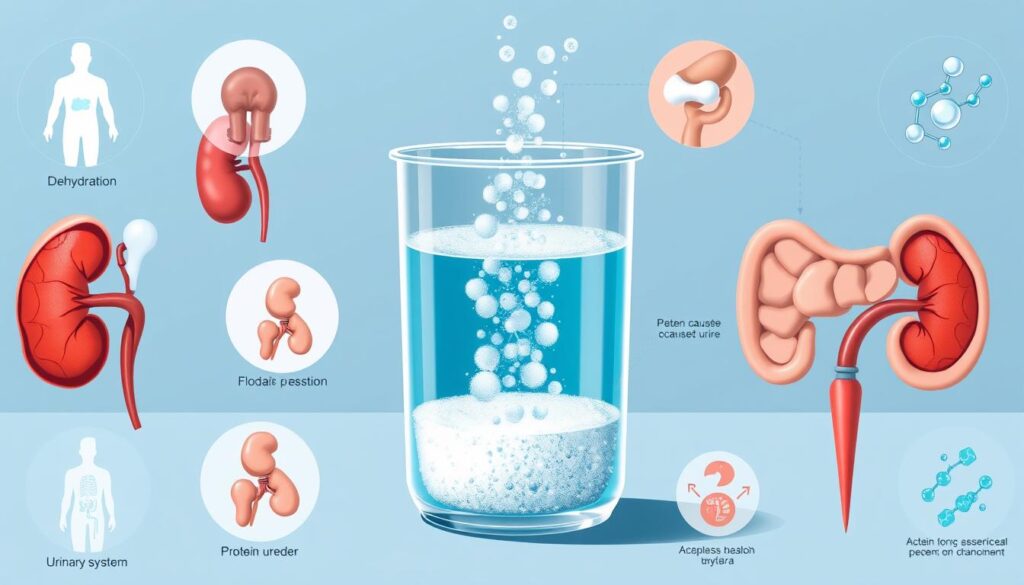
Ever spotted unusual foam in your urine? It might be your body’s way of signaling potential health issues. Occasional bubbles are usually harmless. But persistent foamy urine could hint at underlying medical conditions1.
Your urinary health offers vital clues about your overall wellness. Persistent foamy urine may indicate kidney problems or metabolic issues. These conditions often require professional medical evaluation2.
Understanding foamy urine causes helps you make smart health choices. It guides you on when to seek medical help3.
Kidney function is key in spotting health risks linked to foamy urine. Protein leaking into urine can cause swelling. This may signal kidney problems3.
Recognizing early symptoms can prevent further complications. It’s crucial for protecting your long-term health2.
Key Takeaways
- Occasional foamy urine is typically normal
- Persistent foam might indicate kidney issues
- Proteinuria can cause urine to appear foamy
- Regular hydration supports kidney health
- Consult healthcare professionals for persistent symptoms
Understanding Foamy Urine and Its Appearance
Seeing bubbles in your urine can be worrying. Not all foam is the same. Knowing the difference between normal bubbles and persistent foam helps assess urinary health.
Normal Bubbles vs. Persistent Foam
Normal urine bubbles vanish quickly and are clear. Persistent foam is white and stays after flushing. About one-third of patients with foamy urine have abnormal protein levels4.
Physical Characteristics of Foamy Urine
Foamy urine often looks like beer foam. Key signs include:
- White or cloudy appearance
- Bubbles that don’t quickly dissipate
- Consistent foam texture
Role of Surfactants in Urine
Urine surfactants are crucial for bubble formation. These organic compounds trap air and create foam. Only 16 out of 88 metabolites are found in human urine4.
Some of these metabolites contribute to foam formation. Surfactants have unique properties that allow them to trap air.
Understanding the nuanced characteristics of urine can provide valuable insights into your overall health.
Certain conditions can increase surfactant levels, causing foamy urine without significant protein. Metabolic disorders, bacterial overgrowth, and genetic mutations might contribute to this4.
Common Causes of Foamy Urine
Foamy urine can signal potential health issues. It’s not always serious, but knowing the causes helps identify problems. Let’s explore why your urine might be foamy.
Temporary and Benign Causes
Some causes of foamy urine are harmless. They don’t last long and aren’t a big worry.
- Dehydration, which concentrates urine and increases protein levels56
- Rapid urination with force, creating bubbles in the urine stream6
- Residual cleaning products in the toilet that react with urine6
Medical Conditions Leading to Foamy Urine
Some health issues can make your urine foamy. These conditions are more serious and need a doctor’s care.
- Kidney disease, which allows proteins to leak into urine56
- Diabetes, resulting in protein leakage and potential kidney damage56
- Urinary tract infections that may cause protein in urine6
Medication-Related Causes
Some medicines can make your urine foamy. These include:
- Hypertension medications like ACE inhibitors and ARBs56
- SGLT2 inhibitors that may affect kidney function5
A urine dipstick test can check protein levels. This test helps find the cause of foamy urine. If you often see foamy urine, talk to your doctor.
They can do a full check-up to find out what’s wrong. Don’t ignore this sign – it could be important.
Protecting your kidney health starts with understanding the potential causes of changes in your urine.
When to Seek Medical Attention for Foamy Urine
Knowing when to see a doctor for foamy urine is vital for kidney health. Occasional foamy urine might not be alarming. However, persistent foam could signal underlying health conditions needing evaluation.
Medical experts suggest seeing a doctor if you notice these symptoms:
- Frequent or persistent foamy urine7
- Swelling in legs or around eyes8
- Pain during urination8
- Blood in urine8
- Unexplained fatigue7
Your healthcare provider will likely perform several tests for a foamy urine diagnosis. These may include a comprehensive urine analysis to check protein levels and kidney function7. Blood work, imaging studies, or specialized kidney screenings might also be necessary8.
“Early detection of kidney-related issues can prevent serious complications”
Diabetes, high blood pressure, and kidney disorders can increase your risk of foamy urine. Stay proactive about your health. Seek timely medical advice to manage potential underlying issues effectively8.
Conclusion
Your urine’s appearance can reveal important information about your health. Foamy urine might be harmless or signal a health issue9. To treat it, you need to find out what’s causing it9.
You can prevent foamy urine by taking care of your health. Drink plenty of water, eat a balanced diet, and manage chronic conditions9. Keep an eye on your urine’s appearance regularly.
This helps catch health problems early through medical screening10. It’s important for both adults and children.
If you often have foamy urine or other symptoms, see a doctor10. They can check for underlying conditions and suggest the best treatment for you.
FAQ
What does foamy urine look like?
Foamy urine looks like beer foam and is white. It stays in the toilet bowl after flushing. Unlike regular bubbles, this foam doesn’t disappear quickly.
Is foamy urine always a sign of a serious medical condition?
Not always. Occasional foamy urine can result from dehydration or rapid urination. It might also be due to cleaning products in the toilet.
However, persistent foamy urine may signal health issues. These could include kidney disease, diabetes, or protein in the urine.
What medical conditions can cause foamy urine?
Several conditions can lead to foamy urine. These include kidney disease, diabetes, and urinary tract infections. High blood sugar levels can also cause this issue.
These conditions may cause protein to leak into your urine. This protein creates the foamy appearance.
When should I see a doctor about foamy urine?
Seek medical help if you have persistent foamy urine. This is especially important if you notice swelling in your legs or eyes.
A doctor can test your kidney function. They can also rule out other health issues.
Can medications cause foamy urine?
Yes, some medications can cause protein in urine. This may result in foamy urine. Blood pressure drugs like ACE inhibitors and ARBs can have this effect.
How is foamy urine diagnosed?
Diagnosis often starts with a urine dipstick test. This test checks for protein in your urine. If protein is found, your doctor may suggest more tests.
Further tests might include a 24-hour urine collection. Imaging studies like ultrasound or CT scan may also be needed.
Can lifestyle changes help prevent foamy urine?
Yes, certain habits can help prevent or reduce foamy urine. Stay hydrated and eat a balanced diet. If you have diabetes, manage it well.
Regularly check your urine’s appearance. This can help you spot potential issues early.
Is foamy urine a concern for children?
Foamy urine can occur in children, though it’s less common. If it persists, consult a pediatrician. They can check for health issues and ensure proper kidney function.
Source Links
- Is Foamy Urine a Sign of Kidney Disease? – https://www.freseniuskidneycare.com/thrive-central/foamy-urine-kidney-disease
- Understanding the Connection Between Foamy Urine and Kidney Disease – Texas Kidney Institute – https://texaskidneyinstitute.com/understanding-the-connection-between-foamy-urine-and-kidney-disease/
- When to See a Doctor for Foamy Urine: Symptoms Indicating a Serious Condition – Doral Healthcare & Wellness – https://doralhw.org/when-to-see-a-doctor-for-foamy-urine-symptoms-indicating-a-serious-condition/
- Foamy Urine: Is This a Sign of Kidney Disease? – https://pmc.ncbi.nlm.nih.gov/articles/PMC6832055/
- Foamy urine: Causes and treatment – https://www.medicalnewstoday.com/articles/322171
- Foamy Urine: What It Means and When to See a Doctor | Center for Urologic Care of Berks County – https://www.centerforurologiccare.com/patient-education/foamy-urine-what-it-means-and-when-to-see-a-doctor/
- Bubbles in Urine: Causes, Treatment, When to Get Help – https://www.afcurgentcare.com/blog/bubbles-in-urine-causes-treatment-when-to-get-help/
- Understanding Bubbles in Your Urine: Causes and Solutions – https://nextcare.com/health-resources/understanding-bubbles-in-your-urine-causes-and-solutions/
- What Causes Foamy Urine? Causes Explained – https://friendsdiaper.in/blogs/healthy-habits/foamy-urine?srsltid=AfmBOopyNvVQDAKhjbFZVpKs6cjzNASShLT7C8Gunm_cXSBxUKc9UmzH
- Foamy Urine Is Sometimes A Sign Of An Underlying Health Issue – https://www.womenshealthmag.com/health/a25308193/foamy-urine-causes/

