
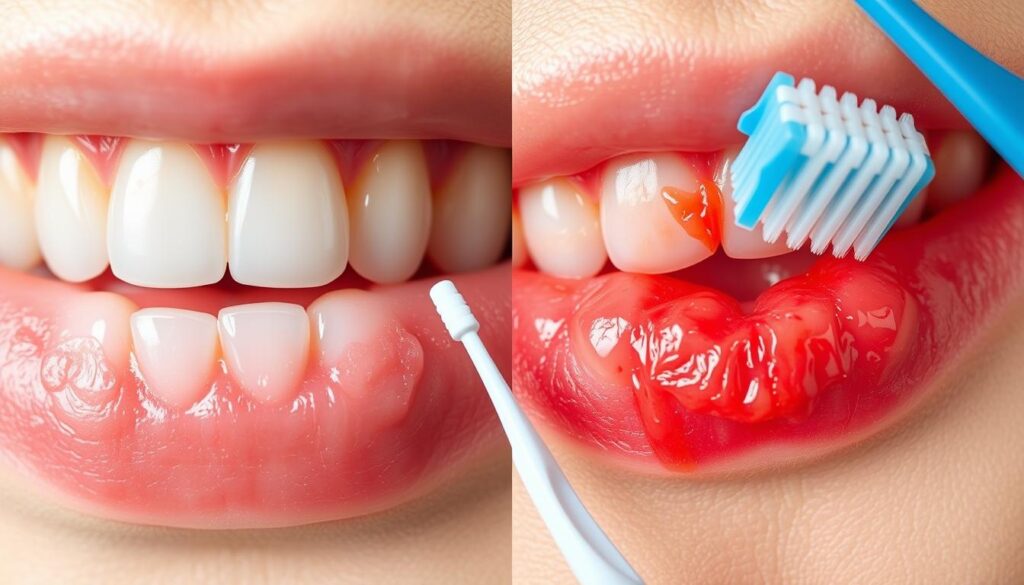
Gum disease can be frustrating, but knowing about gingivitis helps improve dental health. It’s a common condition affecting many adults. Gingivitis causes inflammation and discomfort around teeth12.
Plaque buildup is the main cause of this oral health issue. Bacteria gathering around teeth leads to gum irritation, redness, and bleeding2. Your daily oral care habits are key to preventing and reversing gingivitis1.
Several factors can raise your risk of getting gingivitis. These include poor oral care, smoking, and hormonal changes12. Certain medical conditions also play a role.
People with weak immune systems or chronic diseases need to watch their dental health closely1. Regular dental check-ups are crucial for maintaining healthy gums.
Key Takeaways
- Gingivitis is a common, reversible gum disease
- Regular brushing and flossing can prevent gum inflammation
- Bacterial plaque is the primary cause of gum problems
- Age and medical conditions impact gum health
- Professional dental checkups are essential for prevention
Understanding Gingivitis and Its Impact on Oral Health
Gingivitis is a common oral health issue that can affect your overall well-being. Your mouth contains many oral bacteria. These can quickly turn into harmful plaque if not managed properly3.
What Causes Gingivitis
Plaque buildup is the main cause of gum inflammation. This sticky film forms on teeth after eating sugars and starches. If not removed, it hardens into tartar4.
Tartar creates a perfect home for bacteria to grow. This irritates your gum tissues and can lead to gingivitis5.
Risk Factors for Developing Gum Disease
- Poor oral hygiene habits3
- Tobacco use
- Hormonal changes
- Nutritional deficiencies
- Certain medications
- Crowded or crooked teeth3
Early Warning Signs
Spotting gingivitis early can stop it from becoming periodontal disease. Look out for these key symptoms:
- Swollen, red gums
- Bleeding during brushing or flossing4
- Tender gum tissue
- Persistent bad breath
“Early detection and intervention are crucial in preventing advanced gum disease”4
Almost half of adults over 30 have some form of gum disease. Regular dental check-ups are vital for good oral health3.
Knowing these facts can help you keep your mouth healthy. It may also prevent more serious health problems3.
Common Symptoms of Gingivitis
Spotting early signs of gingivitis can prevent serious dental issues. Good gum health is vital for overall well-being. Knowing the warning signs helps avoid long-term problems.
Gingivitis often develops without notice. Many people don’t realize they have it. Only 10% of adults with gum disease recognize the symptoms6.
Key signs to watch for include:
- Gum discoloration: Red or purplish gums signaling inflammation6
- Bleeding gums during brushing or flossing6
- Halitosis (persistent bad breath)6
- Receding gums pulling away from teeth6
- Gum tenderness and swelling7
About 1 in 5 people experience gingivitis7. The condition usually doesn’t cause pain, making it easy to miss. If left untreated, it can lead to serious gum diseases.
“Early detection and proper oral hygiene can reverse gingivitis before it becomes a severe problem.”
| Symptom | Potential Significance |
|---|---|
| Red, swollen gums | Early inflammation sign |
| Bleeding during brushing | Indicates gum infection |
| Persistent bad breath | Potential bacterial buildup |
Better oral care can reverse early-stage gum disease6. Regular dental visits and proper brushing are your best defense. These habits help keep gingivitis at bay.
Professional Treatment and Home Care Options
Tackling gingivitis requires both professional dental care and consistent home routines. Multiple strategies are needed to prevent and manage gum inflammation. Your oral health journey involves a mix of professional and personal care.
Professional Dental Treatments
Professional dental treatments are vital for managing gingivitis. Dental cleaning and scaling remove plaque and tartar buildup8. Dentists use special tools, lasers, or ultrasonic devices for thorough scaling and root planing8.
- Professional cleaning removes bacterial products
- Scaling helps reduce gum bleeding
- Root planing prevents potential tooth loss
Home Care Remedies
Your daily oral hygiene routine is key to fighting gingivitis. Use an electric toothbrush and brush twice daily8. Replace your toothbrush every three months and floss daily8.
Preventive Measures
Preventing gingivitis involves several steps. Use antiseptic mouthwash to reduce bacterial growth. Avoid tobacco to increase treatment success rates8.
Regular dental check-ups allow early detection and intervention. Your dedication to good oral hygiene can effectively manage and prevent gingivitis9.
“Prevention is always better than cure when it comes to oral health.”
Conclusion
Grasping gingivitis is key for top-notch dental health. Your daily oral care routine is vital in stopping this common gum problem10. Spotting early signs and taking action can help manage and prevent gum disease11.
Prevention begins with daily habits. Brush, floss, and use mouthwash regularly to keep gingivitis at bay11. Nearly half of adults over 30 face gingivitis, so it’s crucial to focus on your oral health with expert advice11.
Your dedication to oral care can boost gum health. See your dentist often and eat a balanced diet. Address risk factors quickly to protect your smile from gum diseases1011.
Healthy gums lead to overall wellness. Invest in oral care now for a brighter, more confident smile later.
FAQ
What exactly is gingivitis?
Gingivitis is a mild form of gum disease. It causes gum inflammation due to plaque buildup on teeth. This leads to redness, swelling, and bleeding of the gums.
If not treated, gingivitis can worsen into serious periodontal disease. Regular dental care is crucial to prevent this progression.
What are the primary symptoms of gingivitis?
Key signs include swollen, red gums that bleed easily when brushing. You may also notice tender gums and persistent bad breath. Sometimes, gums appear bright red or purplish.
Mild cases might not cause discomfort. That’s why regular dental check-ups are important for early detection.
What causes gingivitis?
Plaque buildup on teeth is the main cause. Bacteria create a sticky film from sugars and starches in food. Without daily removal, plaque hardens into tartar.
Tartar irritates gum tissues and leads to inflammation. Good oral hygiene is key to preventing this process.
Who is most at risk for developing gingivitis?
Risk factors include poor oral hygiene, smoking, and older age. Dry mouth, poor nutrition, and certain medications also increase risk. People with weak immune systems are particularly vulnerable.
Hormonal changes can also make some individuals more prone to gingivitis. Regular dental check-ups help catch early signs.
How can I prevent gingivitis?
Maintain excellent oral hygiene to prevent gingivitis. Brush twice daily, preferably with an electric toothbrush. Floss daily and use antiseptic mouthwash.
Schedule regular dental check-ups for professional cleaning. Quitting smoking and eating a balanced diet also help prevent gum disease.
What treatments are available for gingivitis?
Professional treatments include scaling to remove plaque and tartar. At home, improve your oral care routine with proper brushing and flossing.
Use antiseptic mouthwash regularly. With diligent oral hygiene, gingivitis can often be reversed. Consult your dentist for personalized advice.
Can gingivitis lead to more serious conditions?
Yes, untreated gingivitis can progress to periodontitis, a severe gum disease. This can lead to tooth loss and damage supporting tissues and bones.
The infection can spread beneath the gum line. Early detection and treatment are vital to prevent these serious complications.
How do I know if my gum inflammation is serious?
Watch for consistently bleeding gums during brushing. Swollen or dark red gums are also warning signs. Tender gums or persistent bad breath should prompt a dental visit.
A professional examination can determine the severity. Your dentist will recommend appropriate treatment based on their findings.
Source Links
- Gingivitis – Symptoms and causes – https://www.mayoclinic.org/diseases-conditions/gingivitis/symptoms-causes/syc-20354453
- Gingivitis – https://www.medicalnewstoday.com/articles/241721
- How Gingivitis Impacts Your Overall Health: Modern Age Dentistry: Dentists – https://www.modernagedentistry.com/blog/beyond-your-gums-how-gingivitis-impacts-your-overall-health
- Gum Disease vs. Gingivitis: Understanding the Stages | Dr Kissel – https://implant-periodontist-nyc.com/gum-disease-vs-gingivitis-understanding-the-stages/
- Gingivitis – UF Health – https://ufhealth.org/conditions-and-treatments/gingivitis
- Gingivitis Signs & Symptoms (Gum Disease) | Listerine® – https://www.listerine-me.com/gingivitis/signs-and-symptoms-of-gingivitis
- Gingivitis – https://www.healthdirect.gov.au/gingivitis
- Gingivitis – Diagnosis and treatment – https://www.mayoclinic.org/diseases-conditions/gingivitis/diagnosis-treatment/drc-20354459
- Non-Surgical Gum Disease Treatment Options – https://draugustine.com/non-surgical-gum-disease-treatment-options/
- Gingivitis – StatPearls – NCBI Bookshelf – https://www.ncbi.nlm.nih.gov/books/NBK557422/
- All What You Need To Know About Gingivitis – Dion Health – https://www.dionhealth.com/blog/all-what-you-need-to-know-about-gingivitis/

