
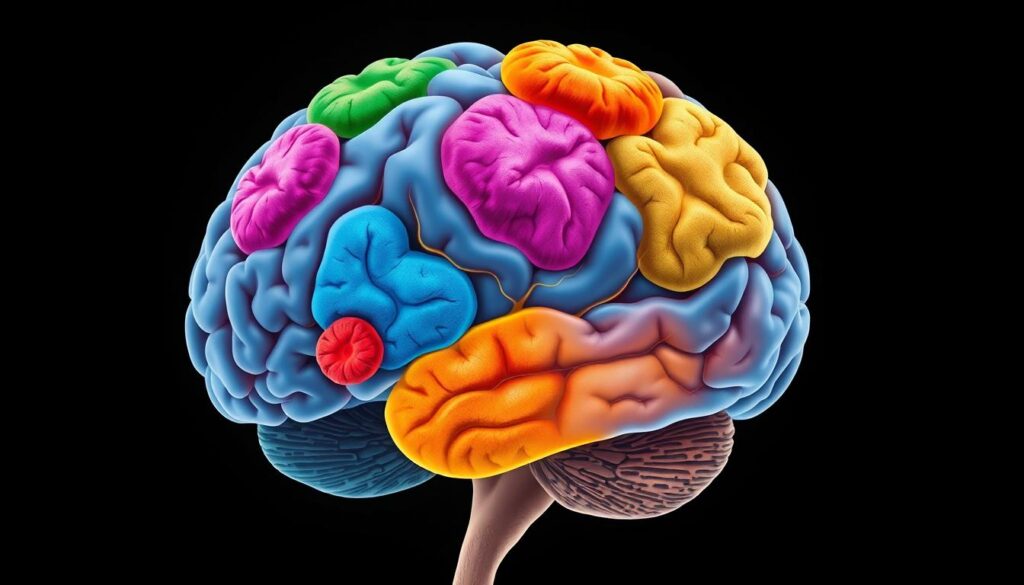
Gliomas are brain tumors that start in glial cells. These cells protect and support nerve cells in your brain1. They make up about one-third of all brain tumors1.
The risk of getting a glioma depends on various factors. Adults between 45 and 65 years old are most likely to develop them2. However, gliomas can affect people of any age2.
Gliomas can be slow-growing or aggressive brain cancers. Some develop slowly and aren’t cancerous. Others can quickly spread through healthy brain tissue2.
Knowing these differences is vital for proper treatment. Each type of glioma requires specific medical care.
Key Takeaways
- Gliomas represent about 33% of all brain tumors
- Most common in adults aged 45-65
- Can occur at any age with varying characteristics
- Ranges from slow-growing to aggressive tumors
- Requires specialized medical attention
What is Glioma and Its Types?
Gliomas are brain tumors that grow from glial cells. These cells support nerve cells in the brain and spinal cord3. Gliomas make up about 33% of all brain tumor diagnoses3.
They’re a major concern for doctors and patients. In the U.S., six out of 100,000 people get diagnosed with gliomas each year3.
Defining Glioma
Gliomas start in glial cells and can behave in different ways. Some grow slowly, while others are very aggressive4.
Types of Gliomas
- Astrocytoma: The most common type, representing nearly half of all primary brain tumors1
- Oligodendroglioma: A rarer form, accounting for 2-4% of primary brain tumors1
- Ependymoma: A less frequent tumor type, especially in children1
- Glioblastoma: The most malignant of brain tumors1
Differences Among Glioma Subtypes
| Glioma Type | Prevalence | Typical Age Group | Aggressiveness |
|---|---|---|---|
| Astrocytoma | ~50% of brain tumors | Various ages | Variable |
| Oligodendroglioma | 2-4% of brain tumors | Young to middle-aged adults | Low to moderate |
| Glioblastoma | Most malignant type | Older adults | Extremely high |
| Ependymoma | 2-3% of brain tumors | Children | Variable |
Understanding the specific type of glioma is crucial for determining the most appropriate treatment approach. Your doctors will look at the tumor’s location, grade, and genes. This helps them create a treatment plan just for you4.
Early detection and accurate diagnosis are key to managing gliomas effectively.
Recognizing the Signs and Symptoms of Glioma
Glioma symptoms vary based on tumor location and size. Knowing these signs can help you spot potential warnings. Timely medical attention is crucial if you notice these symptoms.
Common Signs of Glioma
Brain tumors often have subtle yet important symptoms. Persistent headaches are usually the first sign. These headaches often worsen in the morning or with certain movements5.
Seizures are another critical warning sign. They can occur in various forms:
- Arm and leg movements
- Loss of consciousness
- Numbness or tingling sensations
- Strange smells or sensations
Symptoms Based on Tumor Location
Glioma symptoms differ depending on the affected brain region:
| Brain Region | Potential Symptoms |
|---|---|
| Frontal Lobe | Personality changes, difficulty concentrating, weakness on one body side6 |
| Temporal Lobe | Memory loss, seizures, difficulty hearing or speaking6 |
| Parietal Lobe | Spatial awareness problems, coordination issues6 |
Cognitive and Vision Changes
Cognitive changes can be worrying. You might have mood swings, confusion, or sudden behavioral shifts5.
Vision problems are also important symptoms. These could include blurred vision, double vision, or partial vision loss6.
When to Seek Medical Help
Seek help if you have persistent or worsening symptoms like:
- Recurring headaches
- Unexplained seizures
- Significant cognitive changes
- Vision problems
Always consult a healthcare professional for a comprehensive evaluation. Early detection can significantly impact treatment outcomes.
These symptoms may indicate glioma, but they’re not definitive proof. Professional medical assessment is vital for accurate diagnosis5.
Treatment Options for Glioma
Glioma treatment requires understanding your options. Neurosurgery is crucial for managing brain tumors. Skilled surgeons aim to remove tumors while preserving brain function.
Radiation and chemotherapy are key strategies for glioma treatment. Doctors may suggest combining these approaches. The FDA approved Vorasidenib for low-grade diffuse gliomas with specific mutations.
Comprehensive glioma treatment involves a team of specialists working together. This approach ensures the best possible care for patients.
New therapies are expanding treatment options. Immunotherapy research shows promise in fighting cancer. Keytruda® and Opdivo® are being tested to boost immune responses7.
Clinical trials explore innovative approaches to glioma treatment. Survival rates vary from 12-18 months for high-grade tumors to 5-7 years for low-grade gliomas8.
Your treatment journey includes more than medical care. Support resources can help you face cancer challenges. Each patient’s path is unique, so stay informed and proactive.
FAQ
What exactly is a glioma?
A glioma is a brain tumor that grows from glial cells. These cells support and protect nerves in your brain or spinal cord. Gliomas make up about 33% of all brain tumors.
What are the main types of gliomas?
The main types are astrocytomas, oligodendrogliomas, and ependymomas. Astrocytomas are the most common, making up nearly half of brain tumors. Glioblastoma is the most aggressive form of astrocytoma.
What symptoms should I watch for if I suspect a glioma?
Key symptoms include persistent headaches, especially in the morning. Seizures, nausea, vomiting, confusion, and memory loss are also common signs.
Personality changes and vision problems like blurred or double vision may occur. If these symptoms persist, especially neurological changes, see a doctor right away.
How is a glioma diagnosed?
Doctors use neurological exams and advanced imaging like MRI and CT scans. A biopsy is often needed to determine the tumor’s specific traits and grade.
What treatment options are available for gliomas?
Treatment usually involves surgery to remove the tumor, radiation therapy, and chemotherapy. New treatments like targeted therapies and immunotherapies are being developed through clinical trials.
Can gliomas be cured?
The outlook depends on the tumor’s type, grade, location, and genetic traits. Low-grade gliomas can often be managed effectively. High-grade gliomas like glioblastoma are harder to treat.
Who is most at risk for developing a glioma?
Gliomas can affect people of all ages. They’re more common in adults between 45 and 65 years old. Some genetic conditions and radiation exposure may increase risk.
How do gliomas differ from other brain tumors?
Gliomas start in the brain’s glial cells, unlike tumors that spread from other body parts. They are primary brain tumors graded from 1 to 4 based on growth rate.
Source Links
- Gliomas – https://www.hopkinsmedicine.org/health/conditions-and-diseases/gliomas
- Glioma – Symptoms and causes – https://www.mayoclinic.org/diseases-conditions/glioma/symptoms-causes/syc-20350251
- Types of Glioma | Expert Surgeon – https://www.aaroncohen-gadol.com/en/patients/glioma/types/overview
- What Is a Glioma Brain Tumor: Everything You Need to Know – https://tischbraintumorcenter.duke.edu/blog/what-glioma-brain-tumor-everything-you-need-know
- Glioblastoma Symptoms – https://www.mdanderson.org/cancer-types/glioblastoma/glioblastoma-symptoms.html
- Signs & Symptoms – National Brain Tumor Society – https://braintumor.org/brain-tumors/diagnosis-treatment/signs-symptoms/
- Glioma Treatment – https://www.mskcc.org/cancer-care/types/glioma/glioma-treatment
- Treatment of Adult Gliomas: A Current Update – https://pmc.ncbi.nlm.nih.gov/articles/PMC9833488/

