
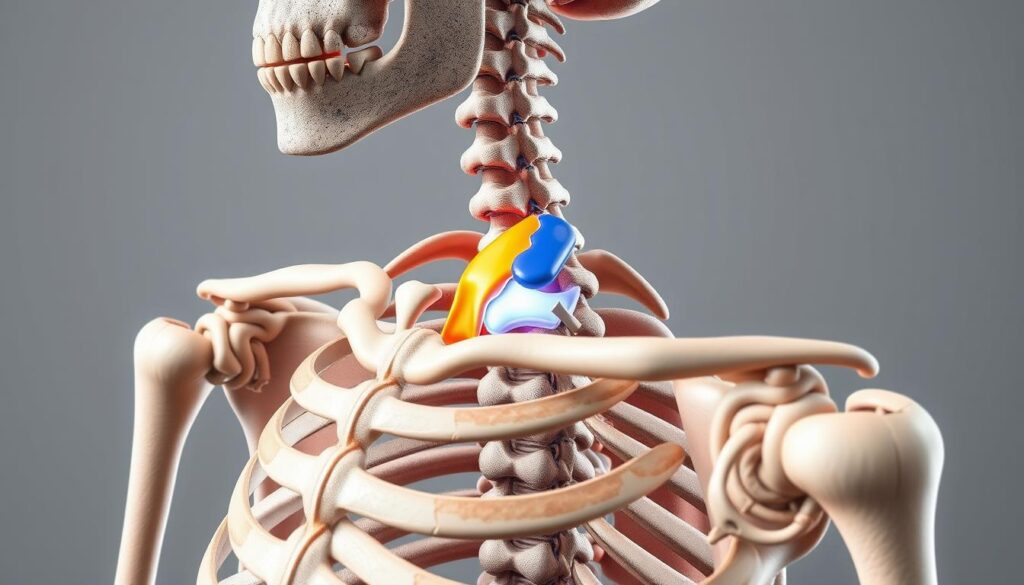
A broken collarbone, or clavicle fracture, can be a painful injury that affects your daily life. Clavicle fractures are surprisingly common1. Understanding this injury is crucial for proper recovery2.
Broken collarbones can happen to anyone, from newborns during birth to teenagers playing sports. The injury occurs most often in younger people2.
These fractures typically result from falls, sports impacts, or traffic accidents2. The risk changes throughout different life stages.
Most clavicle fractures heal well with proper medical care. Complications can occur, but they are relatively rare2.
Quick medical attention is key to ensuring a smooth recovery. It helps prevent potential long-term issues2.
Key Takeaways
- Clavicle fractures are common injuries affecting people of all ages
- Most broken collarbones heal successfully with proper treatment
- Early medical intervention is critical for optimal recovery
- Different age groups experience varying healing timelines
- Comprehensive understanding can help manage expectations during healing
Understanding Broken Collarbone Injuries
A broken collarbone is a major bone fracture that affects shoulder mobility. The clavicle is crucial for upper body support and movement. It can significantly impact your daily activities.
Clavicle fractures are common and affect people of all ages3. These injuries can range from minor cracks to complex breaks. Some fractures involve multiple bone fragments4.
Common Causes of Collarbone Fractures
Understanding how these injuries happen is key to recovery. Collarbone fractures often result from various incidents.
- Direct blows to the shoulder
- Falls onto an outstretched arm
- Sports-related collisions
- Vehicle accidents
Anatomy of the Collarbone
Your collarbone is a critical structural element in your upper body. It connects the shoulder blade to the breastbone. Its unique S-shape helps transfer force and stabilize the shoulder.
Who’s Most at Risk?
Some groups have a higher chance of breaking their collarbone. Let’s look at who’s most vulnerable.
| Age Group | Fracture Risk |
|---|---|
| Children and Teenagers | Highest Risk |
| Young Adults | Moderate Risk |
| Athletes | Elevated Risk |
“Understanding your risk is the first step in preventing serious shoulder injuries.” – Sports Medicine Expert
Most collarbone fractures occur in the middle part of the bone5. These injuries can be painful but often heal well. Proper medical care and rehab are essential for recovery4.
Recognizing the Signs and Symptoms of a Broken Collarbone
A broken collarbone is a painful injury that needs quick attention. Knowing the signs helps you decide when to see a doctor. The symptoms can vary, but there are key things to look out for.
Spotting a broken collarbone means watching for specific body signals. Pain management begins with noticing these symptoms:
- Immediate sharp pain in the shoulder area6
- Inability to raise your arm without significant discomfort6
- Visible swelling or bruising around the collarbone
- A grinding or crackling sensation when attempting to move the shoulder6
This injury can happen during sports like football, wrestling, and ice hockey7. It can also occur from everyday accidents. Falling from playground equipment or being in a car crash can break your collarbone7.
“Prompt recognition and proper diagnosis are crucial for effective healing and preventing long-term complications.” – Sports Medicine Specialist
Doctors diagnose a broken collarbone through a full exam. They check for lumps, blood flow, and nerve damage. X-rays help find the exact break location and how bad it is6.
Most broken collarbones aren’t serious. However, it’s important to see a doctor for proper treatment. In rare cases, the injury could affect nearby nerves or blood vessels6.
Treatment Options and Recovery Timeline
Healing a broken collarbone requires a smart approach. Your recovery depends on injury severity and health. Broken collarbone treatment involves several key stages.
Immediate care is crucial for collarbone fractures. Your doctor will recommend steps for optimal healing. Pain management and protection are top priorities.
Immediate Care Steps
Sling immobilization is critical for recovery8. Children typically wear a supportive sling for 3-4 weeks. Adults may need it for 6-8 weeks8.
Conservative Treatment Methods
Most collarbone fractures heal without surgery. Physical therapy becomes essential for recovery9. Your rehab usually follows a specific progression.
- Weeks 1-2: Pain and swelling management
- Weeks 3-6: Gradual sling removal and initial physical therapy
- Weeks 7-12: Intensified therapy to restore motion and strength9
When Surgery Might Be Necessary
Severe fractures may require surgical intervention. Children and teens rarely need surgery, as they heal faster10. Surgeons might use plates, screws, or rods to stabilize the bone.
Patience is key during your recovery. Following medical advice can significantly impact your healing process.
Healing timelines vary by age. Children typically heal in 3-6 weeks. Adults may need 6-12 weeks10.
A nutrient-rich diet can boost your recovery9. Consult your doctor for personalized advice on healing your broken collarbone.
Conclusion
Clavicle fractures can be tough, but knowing what to expect helps. Most broken collarbones heal well with proper care. Orthopedic treatment can greatly improve your healing process11.
Recovery times vary, with full motion usually returning in 6-9 months. Your healing depends on the fracture’s location and treatment method. Clavicle fractures make up 45-50% of shoulder girdle injuries12.
About 48.6% of patients may have reduced shoulder function after treatment. However, active rehab can minimize long-term effects12. Surgery is rare but can help in complex cases.
Research shows surgery can reduce nonunion risks and nerve complications13. Your doctor will choose the best treatment based on your injury and health.
Patience and following medical advice are crucial for recovery. Stay in touch with your healthcare team. Stick to your rehab plan to confidently return to normal activities.
FAQ
How long does it take for a broken collarbone to heal?
Healing time varies based on age and fracture severity. Children typically heal in 4-5 weeks. Adults usually take 10-12 weeks, with complete healing taking up to 4 months.
Factors like fracture location and overall health can impact recovery time.
What are the most common causes of a broken collarbone?
Common causes include falls onto the shoulder or outstretched arm, sports injuries, and traffic accidents. Teenagers and children face higher risks.
The vulnerability changes throughout different life stages. Even infants can experience a broken collarbone during birth.
How can I tell if I’ve broken my collarbone?
Look for increased pain when moving your shoulder, visible swelling, tenderness, bruising, and a noticeable bump. You might hear grinding sounds when moving your arm.
Difficulty moving your shoulder is another sign. Seek immediate medical attention for severe pain or numbness.
What’s the initial treatment for a broken collarbone?
Immediate care involves immobilizing your arm and shoulder and applying ice for 20-30 minutes. Most fractures are treated with a sling or figure-of-8 splint.
Your healthcare provider will recommend pain management and limited movement during initial healing.
Will I need surgery for my broken collarbone?
Surgery is rarely needed. Most collarbone fractures heal well with conservative treatment. However, surgery might be considered for improper healing or visible deformities.
High-performance athletes may also require surgery. Your doctor will determine the best treatment based on your injury.
Can I prevent future collarbone fractures?
You can’t completely prevent accidents, but you can reduce risks. Use proper protective gear during sports and maintain good bone health.
Be cautious during high-risk activities. Strengthening shoulder and upper body muscles can provide additional support.
When can I return to my normal activities after a collarbone fracture?
Return to full activities depends on fracture severity and your healing process. Most people resume normal activities within 4-6 months.
Contact sports and high-impact activities may take longer. Always follow your healthcare provider’s guidance and complete recommended physical therapy.
Source Links
- Clavicle Fractures – https://www.hopkinsmedicine.org/health/conditions-and-diseases/clavicle-fractures
- Broken collarbone – Symptoms and causes – https://www.mayoclinic.org/diseases-conditions/broken-collarbone/symptoms-causes/syc-20370311
- Clavicle Fracture (Broken Collarbone) – OrthoInfo – AAOS – https://orthoinfo.aaos.org/en/diseases–conditions/clavicle-fracture-broken-collarbone/
- Understanding a Clavicle Fracture – https://www.saintlukeskc.org/health-library/understanding-clavicle-fracture
- Broken Collarbone Symptoms & Treatment | Aurora Health Care – https://www.aurorahealthcare.org/services/orthopedics/conditions/clavicle-fracture
- Broken Collarbone | HealthLink BC – https://www.healthlinkbc.ca/health-topics/broken-collarbone
- Broken Collarbone (Clavicle Fracture) | Rady Children’s Hospital – https://www.rchsd.org/health-article/broken-collarbone-clavicle-fracture/
- Collarbone Fractures: Treatment Options and Recovery Tips – https://www.centerfororthosurgery.com/collarbone-fractures-treatment-options-and-recovery-tips/
- A Broken Collarbone: Treatment Options and Recovery Tips – https://totalorthopaedic.com.sg/2024/08/16/dealing-with-a-fractured-collarbone-treatment-options-and-recovery-tips/
- Broken collarbone – Diagnosis and treatment – https://www.mayoclinic.org/diseases-conditions/broken-collarbone/diagnosis-treatment/drc-20370316
- Effective Treatment for Broken Collarbone | Coastline Orthopaedic Associates – https://coastlineortho.com/broken-collarbone/
- Functional outcomes of conservatively treated clavicle fractures – https://pmc.ncbi.nlm.nih.gov/articles/PMC3093795/
- Operative versus non-operative treatment for clavicle fracture: a meta-analysis – https://pmc.ncbi.nlm.nih.gov/articles/PMC3728389/

