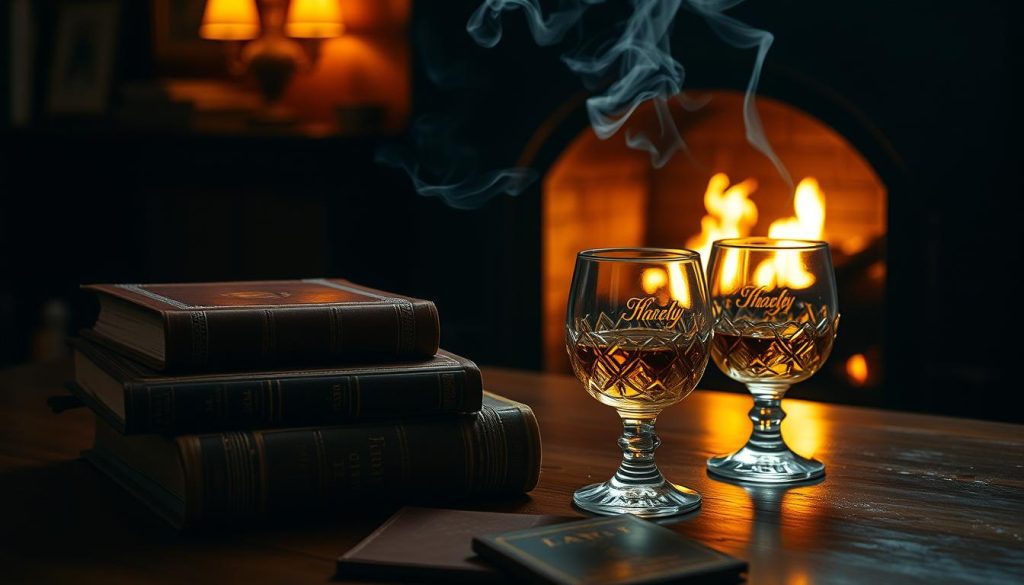
Scotch whisky inspires writers, artists, and cultural icons. It sparks memorable moments and witty quips. Mark Twain said, “Too much good whiskey is barely enough,” capturing Scotch’s enduring appeal1.
Scotch represents more than just drinking. It embodies rich traditions of craftsmanship and storytelling. Legendary figures have turned simple sips into profound reflections1.
Lou Reed’s declaration, “What I really love is my scotch,” shows a deep personal connection. Many share this feeling about this exceptional beverage1.
Whisky has inspired creativity for generations. It’s a cultural touchstone that sparks conversation and humor. Stars and literary giants have been moved by Scotch2.
George Bernard Shaw called it “liquid sunshine.” This poetic description captures Scotch’s ability to brighten moments and lift spirits2.
Key Takeaways
- Scotch whisky has inspired countless memorable quotes
- The spirit represents more than just a beverage – it’s a cultural icon
- Famous personalities have celebrated Scotch’s unique character
- Single malt whisky sparks creativity and conversation
- Scotch transcends simple drinking to become a form of artistic expression
Famous Authors and Their Love for Scotch
Literature and Scotch whisky share a rich history spanning generations. Writers find inspiration in this amber liquid from Scotland’s renowned distilleries. They capture its essence in their works, celebrating its unique character3.
The literary world sees Scotch as more than just a drink. It’s a cultural experience reflecting creativity, tradition, and passion. From smoky Highland malts to smooth Lowland expressions, Scotch has captivated countless literary minds3.
Mark Twain’s Whisky Wisdom
Mark Twain was a legendary whisky enthusiast with remarkable wit. His love for Scotch led to unique drinking habits. He often enjoyed the spirit before breakfast, dinner, and bedtime4.
“Too much of anything is bad, but too much good whiskey is barely enough.”
- Twain’s daily whisky consumption became legendary
- He transitioned from bourbon to Scotch around 1873
- His preferred mixture: 3 parts Scotch to 1 part lemon juice
William Faulkner’s Perspective on Single Malt
William Faulkner saw Scotch as more than just a drink. For him, it was a companion to creativity. The complex flavors of single malt whiskies inspired and comforted him3.
Literary Giants and Their Scotch Stories
Scotch whisky became a cultural touchstone for creative minds. Historical figures like King James IV and Queen Victoria celebrated this remarkable spirit. It became deeply embedded in Scottish cultural narratives3.
The bond between literature and Scotch keeps evolving. Great writing and exceptional whisky share key qualities. Both offer depth, complexity, and the power to transport us elsewhere.
Hollywood Legends and Their Iconic Scotch Moments
Hollywood’s golden age was deeply linked to Scotch whisky. These moments have become part of film history. Whisky’s importance shines through legendary actors who made it their trademark5.
Humphrey Bogart’s famous last words were about Scotch and Martinis. His love for whisky was clear both on and off screen5.
- The Maltese Falcon (1941) showcased Bogart’s whisky-loving persona
- Early Hollywood films frequently featured whisky as a symbol of sophistication
- Aging whisky paralleled the timeless nature of Hollywood’s golden era
The film industry’s view of Scotch changed over time. In the 60s and 70s, whisky often showed up with complex characters5.
Easy Rider was a good example. Jack Nicholson played a whisky-drinking lawyer that fit the changing times5.
By the 1980s, Hollywood’s ties to whisky had shifted. Alcohol was less common in films. But movies like Bull Durham still praised whisky’s cultural role5.
Scotch whisky’s aging process is like these film moments. Both are complex, nuanced, and unforgettable.
Conclusion
Scotch is more than just a drink. It’s a cultural treasure rooted in Scotland’s history. Distilleries craft liquid art passed down through generations6.
Strict regulations ensure every sip tells a story of tradition and excellence6. Scotch whisky reflects the creativity and passion of its admirers. It has captured imaginations worldwide, from literary giants to Hollywood legends7.
Single malt Scotch intrigues with its complex flavor profiles. Some whiskies age for over a decade, developing remarkable depth7. This reflects the patience of Scottish craftsmen.
Johnny Carson joked about happiness being a rare steak, whisky, and a loyal dog. This captures Scotch’s essence as more than just a beverage. It’s an experience that brings people together6.
Each Scotch bottle carries centuries of expertise and passion. It connects us to a rich cultural heritage. Raise a glass to this inspiring spirit that continues to delight whisky lovers everywhere.
FAQ
What makes Scotch whisky unique?
Scotch whisky’s uniqueness stems from strict production rules and its Scottish origin. Single malt Scotch uses 100% malted barley from one distillery. It offers distinct flavors, from smooth and fruity to peaty and smoky.
How long is Scotch typically aged?
Scotch whiskies age for at least three years. Premium single malts often age 10-25 years. Aging in oak casks enhances flavor, color, and complexity.
Longer aging typically results in a more refined spirit.
What’s the difference between single malt and blended Scotch?
Single malt Scotch comes from one distillery using only malted barley. Blended Scotch mixes single malt and grain whiskies from different distilleries. Single malts are often seen as purer and more distinctive.
Why are Islay whiskies so distinctive?
Islay whiskies are known for their intense, peaty flavor. The island’s coastal location and peat bogs create smoky, maritime characteristics. Distilleries like Laphroaig and Ardbeg produce bold, medicinal flavors.
How should I properly taste Scotch?
Use a tulip-shaped glass to taste Scotch. Observe the color, smell the aroma, and take small sips. Let the whisky coat your palate, noting its complexity.
Adding water can release more flavors and reduce alcohol intensity. This helps you appreciate the whisky’s nuanced characteristics.
What food pairs well with Scotch?
Light, fruity Speyside whiskies go well with seafood and mild cheeses. Peaty Islay whiskies pair with strong blue cheeses and smoked meats. Match the whisky’s intensity with complementary food flavors.
Are there different regions of Scotch production?
Scotland has several distinct whisky regions. Speyside offers fruity, complex flavors. Islay is known for peaty, smoky tastes. The Highlands provide diverse flavors.
The Lowlands produce lighter, floral whiskies. Campbeltown is known for maritime, robust flavors. Each region’s unique methods influence the whisky’s taste.
Source Links
- TOP 25 SCOTCH QUOTES (of 153) | A-Z Quotes – https://www.azquotes.com/quotes/topics/scotch.html
- 10 Whisky Quotes Scotch Lovers Need to Know – https://topwhiskies.com/blogs/whisky-blog/10-whisky-quotes-scotch-lovers-need-to-know?srsltid=AfmBOooeQIaV1jfxJj2k2q3wNjYWYB6pvkSW9jqp7PjzUGe9yQk3OsRc
- Famous whisky drinkers | Scotch Whisky – https://scotchwhisky.com/magazine/people/famous-whisky-drinkers/
- Authors and Whisky: Mark Twain’s love affair with Scotch – Whisky Foundation – https://www.whiskyfoundation.com/2017/10/17/authors-and-whisky-mark-twain-love-affair-scotch/?srsltid=AfmBOoo7QRobG23juciVMRDbyqUqml_HQuaVrb0n0igk2z6I2Gs0Dzd_
- Hollywood’s golden age: Whisky in the movies – https://www.whiskymag.com/articles/hollywoods-golden-age-whisky-in-the-movies/
- What is the difference between scotch and whiskey? – TE Stillhouse – https://townsendstillhouse.com/blog/what-is-the-difference-between-scotch-and-whiskey/
- Whiskey Vs. Scotch: What You Should Know – https://oakandeden.com/blogs/journal/whiskey-vs-scotch-what-you-should-know?srsltid=AfmBOor4RlPVdNuGpTnFYVXr25YRclZbdaNWuK6h6I4UNfmSyf0aicGA