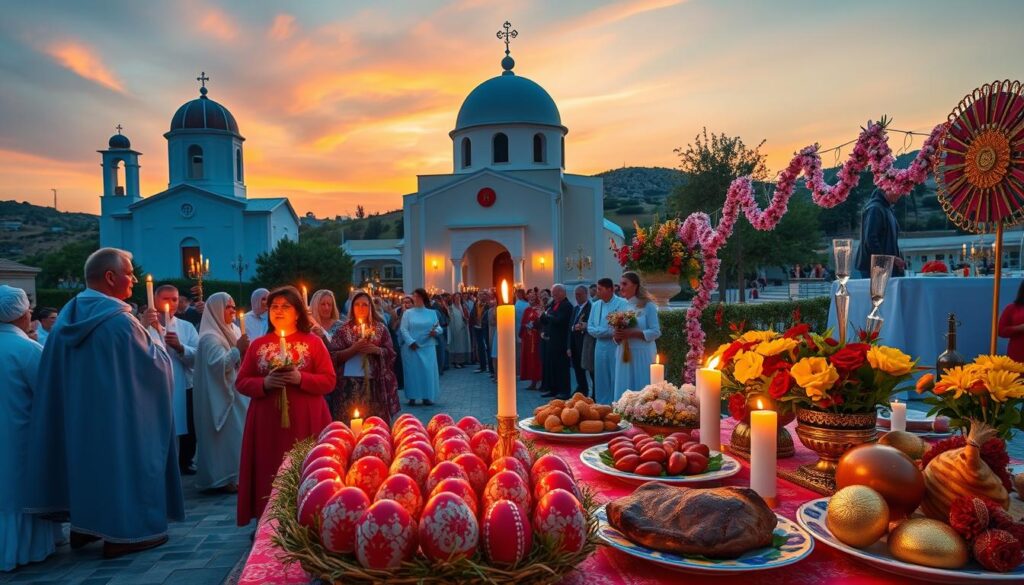
Greek Orthodox Easter is a profound spiritual journey. It blends ancient traditions with spiritual renewal. This unique celebration differs from typical holiday festivities.
Orthodox Easter usually occurs later than other Christian celebrations. It follows a distinct calendar calculation. This special holiday, Pascha, represents more than just a single day.
Greek Orthodox believers engage in a 40-day fasting period before Easter Sunday1. This journey involves spiritual preparation and reflection. It connects communities through shared religious experiences.
Key Takeaways
- Greek Orthodox Easter follows the Julian calendar, resulting in a different celebration date
- The holiday involves a comprehensive 40-day fasting period
- Pascha represents both spiritual renewal and cultural heritage
- Religious observances blend with family traditions
- Unique customs distinguish Orthodox Easter from Western Christian celebrations
The Significance of Greek Orthodox Easter
Greek Orthodox Easter is a profound spiritual journey. It connects ancient traditions with deep religious meaning. This sacred time invites exploration of a rich cultural experience.
Orthodox Christians celebrate Easter using a unique approach. They follow the Julian calendar, setting their date apart from Western traditions2. Every four years, Eastern Orthodox Easter aligns with Western celebrations2.
Understanding the Traditions
Greek Orthodox Easter traditions involve intricate practices. These prepare believers for the resurrection celebration:
- Great Lent spans 40 days of spiritual reflection and fasting3
- Participants observe strict dietary restrictions
- Community gatherings play a critical role in celebrations
The Symbolism Behind the Holiday
Easter eggs hold profound symbolic significance in Greek Orthodox traditions. Red-dyed eggs represent Christ’s blood shed for humanity’s redemption32. These eggs carry deep spiritual meaning beyond decoration.
| Tradition | Symbolic Meaning |
|---|---|
| Red-Dyed Eggs | Christ’s Sacrifice |
| Fasting | Spiritual Preparation |
| Resurrection Service | Triumph of Life |
Key Differences from Other Easter Celebrations
Greek Orthodox Easter decorations and rituals differ from Western traditions. The Julian calendar dictates that Easter follows the first full moon after Passover2.
This unique approach creates a distinct celebration. It honors ancient spiritual practices in a meaningful way.
“Easter is not merely a date, but a profound spiritual journey of renewal and hope.”
Preparation for Easter Sunday
Greek Orthodox Easter prep transforms your holiday approach. It starts with Clean Monday, kicking off a deep spiritual change during Lent4.
The Lenten Journey
The 40-day Lenten season sees Greek families embracing spiritual discipline. They fast, pray, and make big diet changes. Many skip animal products and focus on spiritual growth4.
People create special Easter decorations during this time. They also prepare traditional Easter candy and plan family brunches.
- Prepare traditional Easter candy
- Clean and decorate home spaces
- Plan family Easter brunch
Holy Week Preparations
Holy Week brings intense spiritual prep. Families join church services and ready their homes. Many use this time for deep thought and prayer5.
Traditional Easter Culinary Preparations
Greek Easter food prep is an art form. Key dishes include:
| Dish | Description | Preparation Time |
|---|---|---|
| Tsoureki | Sweet bread | 3-4 hours |
| Magiritsa | Lamb offal soup | 2-3 hours |
| Red-Dyed Eggs | Symbolic Easter eggs | 1 hour |
“Preparation is not just about food, but about spiritual renewal and family connection.”
Easter prep should mix spiritual practices with family traditions. Add in some tasty treats to make your celebration truly special5.
Celebrating the Resurrection
Easter Sunday marks a joyous celebration in Greek Orthodox traditions. It honors Christ’s resurrection, a moment of spiritual triumph. Families and communities come together for meaningful rituals and festive activities.
The Midnight Resurrection Service
On Holy Saturday, churches fill with people holding white candles. The sight is breathtaking, a display of light and faith. At midnight, the priest announces “Christos Anesti” (Christ is Risen).
This moment symbolizes the resurrection. The Holy Light spreads through the crowd. It represents spiritual awakening and divine hope.
The Feast of Pascha
After the service, families break their fast with traditional foods. The Pascha feast includes:
- Magiritsa soup
- Whole roasted lamb
- Red-dyed Easter eggs
- Special Easter bread
Popular Easter Games and Activities
Greek Easter celebrations include exciting traditions. The egg-cracking game (tsougrisma) adds fun competition to gatherings. Many families prepare Easter baskets with treats and decorated eggs.
The resurrection of Jesus gives hope to weary hearts in a dark world6.
| Easter Activity | Description |
|---|---|
| Egg Cracking | Players tap colored eggs to see whose remains uncracked |
| Easter Parade | Community celebration with traditional music and dancing |
| Family Gathering | Shared meal and storytelling |
Easter Sunday’s true essence is a spiritual celebration. It focuses on resurrection and renewal, not commercialism7.
Customs and Unique Practices
Greek Orthodox Easter is full of lively traditions that unite communities. Intricate decorations transform homes and churches into festive spaces. The cultural richness of these celebrations creates lasting memories8.
Red-dyed eggs are central to Greek Easter customs. They represent Christ’s blood and rebirth. Families design these eggs with amazing creativity, making complex patterns and unique shades8.
During celebrations, you might play the egg-cracking game. People try to crack each other’s eggs. The winner is believed to receive good luck9.
Local festivals often feature traditional music and dance. Some towns host Easter parades with colorful bands and floats. These events bring joy to people of all ages910.
Family gatherings are the heart of these celebrations. Many return to ancestral villages to share meals and stories. Greek Orthodox Easter is more than a party. It’s a deep connection to cultural heritage8.
FAQ
When is Greek Orthodox Easter celebrated?
Greek Orthodox Easter follows the Julian calendar, making its date variable each year. It often falls later in spring than Western Easter. In 2025, it will be on April 20, and in 2026, on April 12.
What are the key traditions during Greek Orthodox Easter?
Key traditions include fasting during Lent and decorating the Epitaphios with flowers. People join the midnight Resurrection service and dye eggs red. Families prepare special foods like tsoureki and roasted lamb.
Elaborate meals, egg-cracking games, and community celebrations are common. These activities bring families and communities together during this special time.
What is the significance of the red-dyed eggs?
Red-dyed eggs symbolize Christ’s blood and rebirth. People play tsougrisma, tapping eggs against each other. The person whose egg stays uncracked is believed to have good luck.
How do Greeks prepare for Easter?
Preparation starts with Clean Monday, marking the beginning of the 40-day Lent. Many Greeks avoid animal products during this time. Holy Week involves daily church services and cooking traditional foods.
Families prepare their homes and cook special dishes like magiritsa soup and tsoureki. These preparations help create a festive atmosphere for the upcoming celebration.
What happens during the Resurrection celebration?
At midnight on Holy Saturday, people gather at churches with white candles. The priest announces “Christos Anesti” (Christ is Risen). Families then share the Holy Light and return home.
They break their fast with magiritsa soup and play the egg-cracking game. This marks the joyous beginning of Easter celebrations.
What foods are traditional during Greek Orthodox Easter?
Traditional Easter foods include tsoureki (sweet bread) and red-dyed eggs. Magiritsa soup, made with lamb offal, is a popular dish. Whole roasted lamb on a spit is often the centerpiece.
Other dishes may include dolmadakia (stuffed grape leaves) and special Easter cookies. These foods add to the festive spirit of the celebration.
How do Greek families celebrate Easter Sunday?
Easter Sunday is filled with family gatherings, feasting, and celebration. Many families return to their ancestral villages for the occasion. A large meal centered around roasted lamb is typical.
People play traditional games and join local festivals. These events often feature music, dancing, and various community activities.
What makes Greek Orthodox Easter different from Western Easter?
Greek Orthodox Easter follows the Julian calendar, resulting in a different date. It emphasizes religious symbolism, community gatherings, and elaborate church services. The celebrations are deeply rooted in religious and cultural traditions.
Source Links
- How Do Greeks Celebrate Easter? Greek Easter Traditions | Omilo | Omilo – https://omilo.com/greek-easter-nafplion/
- A Tale of Two Easters: Celebrating My Greek Culture – https://fargomom.com/a-tale-of-two-easters-celebrating-my-greek-culture/
- Orthodox Easter: Why are there two Easters? – https://www.bbc.co.uk/newsround/48067272
- Prepare Your Heart for Easter | Cru – https://www.cru.org/us/en/blog/life-and-relationships/holidays/prepare-heart-for-easter.html
- How to Prepare for Easter – https://info.thecrossingchurch.com/blog/how-to-prepare-for-easter
- Why Do We Celebrate Jesus’ Resurrection on Easter? – https://www.christianity.com/wiki/holidays/why-do-we-celebrate-jesus-resurrection-on-easter.html
- What is Easter Sunday? | GotQuestions.org – https://www.gotquestions.org/Easter-Sunday.html
- You Probably Haven’t Heard of These Easter Traditions From Around the World – https://www.womansday.com/life/travel-tips/g2175/easter-traditions/
- 20 Easter Traditions for Families – https://www.signupgenius.com/home/easter-traditions.cfm
- 10 Popular Easter Traditions in the USA – https://www.gkhair.com/blogs/all-blog-posts/10-popular-easter-traditions-in-the-usa?srsltid=AfmBOoqopHNN84Xu1Sm4kZlulZbqkqtcrkm93aMZQM_SwEp8TMcxxvfv