
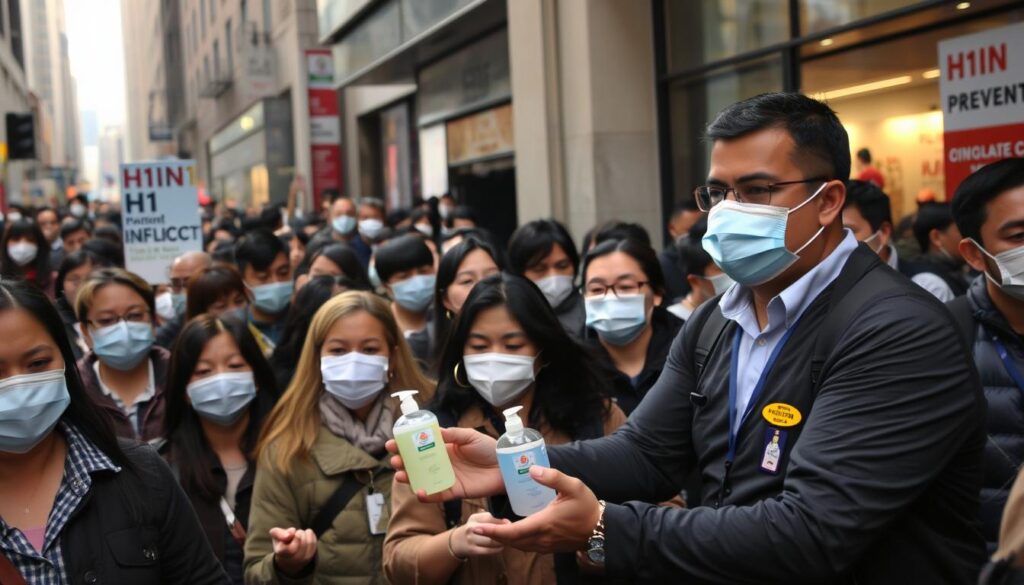
The H1N1 Influenza Update provides vital info on the ongoing public health emergency. Millions across the U.S. are affected by this global crisis1. CDC data shows 3.1 million illnesses, 37,000 hospitalizations, and 1,500 flu-related deaths this season1.
The swine flu pandemic continues to spread, with influenza A viruses leading the charge. A(H1N1)pdm09 makes up 43.5% of these viruses, while A(H3N2) accounts for 56.4%1. Knowing these facts can help you stay safe during this tough time.
Viral mutations are a big worry, as influenza viruses keep changing2. These viruses often mutate and mix, making ongoing checks vital for public health2.
Key Takeaways
- CDC reports 3.1 million flu illnesses this season
- H1N1 remains a significant viral strain
- Five pediatric deaths reported recently
- Vaccination is crucial for prevention
- Stay informed about current flu trends
Understanding H1N1 Influenza
H1N1 influenza, or swine flu, is a serious respiratory illness. It can greatly affect human health. Learning about this virus helps protect you and your family.
What is H1N1 Influenza?
H1N1 is a type of influenza A virus that started in pigs. It can spread among humans too. In 2009, it became a global pandemic.
The virus caused about 284,400 deaths worldwide3. It’s now one of the seasonal flu strains. Getting vaccinated is key to preventing it3.
How Does H1N1 Spread?
H1N1 spreads through tiny droplets in the air. An infected person can pass it on by coughing, sneezing, or talking. The virus travels to others nearby.
- Direct contact with respiratory droplets
- Touching contaminated surfaces
- Close proximity to infected individuals
Symptoms to Watch For
Knowing H1N1 symptoms early helps you get proper care. Look out for these signs:
- Fever
- Persistent cough
- Sore throat
- Body aches
- Fatigue
“Prevention is always better than cure when it comes to influenza.”
Some people have higher risks of complications. These include those with weak immune systems, chronic illnesses, or certain ages. The CDC suggests yearly flu shots for everyone over six months old3.
| Risk Group | Potential Complications |
|---|---|
| Children under 2 | Higher hospitalization risk |
| Adults over 65 | Increased severity of symptoms |
| Pregnant women | Higher risk of respiratory complications |
| Individuals with obesity | Greater chance of severe illness |
Keep up with health news. Practice good hygiene. Ask doctors for advice. These steps help protect you from H1N1 and other flu types.
Current H1N1 Influenza Statistics
H1N1 Influenza data is vital for pandemic readiness. Recent stats offer key insights into infection rates across the U.S. tracking flu developments.
Latest Infection Rates Nationwide
CDC reports reveal crucial flu virus trends. In Week 51, labs confirmed 1,132 total viruses, with 1,110 being influenza A.
Of 818 subtyped influenza A viruses, the breakdown shows interesting patterns:
Who is Most at Risk?
The flu vaccine is key to protecting vulnerable groups. Globally, 9% of people get the flu yearly, totaling 1 billion infections4.
In the U.S., about 20% of the population catches the flu each year4.
| High-Risk Groups | Potential Impact |
|---|---|
| Young Children | Higher susceptibility to severe symptoms |
| Older Adults | Increased risk of complications |
| Pregnant Women | Potential immune system changes |
| Individuals with Chronic Conditions | Greater likelihood of hospitalization |
Staying informed and taking preventive measures are key to protecting yourself and your community during flu season.
CDC estimates over 3.1 million illnesses from flu this season1. They also report 37,000 hospitalizations and 1,500 deaths.
These numbers stress the need for pandemic prep and yearly flu shots.
Prevention and Treatment Options
Protecting yourself from H1N1 influenza requires a proactive approach. Annual vaccination is your best defense against potential infection5. Your doctor can recommend suitable antiviral medications for your health needs6.
Good hygiene is crucial for staying healthy. Wash hands often, avoid sick people, and cover your mouth when coughing. The Centers for Disease Control and Prevention suggests specific antiviral treatments for flu6.
Doctors may prescribe these drugs early to reduce severity and complications6. High-risk individuals should be extra careful during health emergencies.
Antiviral drugs like Oseltamivir, Zanamivir, Peramivir, and Baloxavir can be crucial treatments6. Seek medical help for severe symptoms like breathing trouble or chest pain5.
Also, get immediate care if flu symptoms worsen after initial improvement5. These steps can help manage H1N1 influenza effectively.
FAQ
What is H1N1 influenza?
H1N1 influenza, or swine flu, is a type A virus causing respiratory disease. It spread from pigs to humans and transmits through respiratory droplets. This virus caused global health concerns during the 2009 pandemic.
How can I prevent getting H1N1 influenza?
The best prevention is getting an annual flu shot. The CDC recommends vaccination for everyone six months and older. Wash your hands often and cover your mouth when coughing or sneezing.
Avoid close contact with sick people. A healthy lifestyle and strong immune system can also protect you.
What are the typical symptoms of H1N1 influenza?
Symptoms include fever, cough, sore throat, and body aches. You may also experience headache, chills, fatigue, and a runny nose. Some people may have vomiting and diarrhea.
If you notice these symptoms during flu season, rest and stay hydrated. Consult a healthcare professional for proper care.
Who is most at risk for severe H1N1 complications?
High-risk groups include young children, older adults, and pregnant women. People with chronic conditions or weak immune systems should be extra careful. Take special precautions if you have respiratory issues.
What treatments are available for H1N1 influenza?
Doctors can prescribe antiviral medications like oseltamivir and zanamivir. These work best when started early. Rest, drink plenty of fluids, and use over-the-counter meds for symptoms.
Always talk to your doctor for personalized medical advice. They can recommend the best treatment plan for you.
When should I seek medical attention?
Get help if you have trouble breathing or chest pain. Seek care for sudden dizziness, confusion, or severe vomiting. Watch for flu symptoms that improve but return with fever and worse cough.
These could be signs of a serious condition. Don’t hesitate to get professional medical help.
How does H1N1 spread?
H1N1 spreads through respiratory droplets when an infected person coughs or sneezes. You can get it by touching contaminated surfaces, then your face. Practice social distancing and good hygiene to reduce transmission.
Source Links
- Weekly US Influenza Surveillance Report: Key Updates for Week 51, ending December 21, 2024 – https://www.cdc.gov/fluview/surveillance/2024-week-51.html
- An update on swine-origin influenza virus A/H1N1: a review – https://pmc.ncbi.nlm.nih.gov/articles/PMC7088521/
- H1N1 flu (swine flu) – Symptoms and causes – https://www.mayoclinic.org/diseases-conditions/swine-flu/symptoms-causes/syc-20378103
- Influenza Update: A Review of Currently Available Vaccines – https://pmc.ncbi.nlm.nih.gov/articles/PMC3278149/
- Influenza (Seasonal) – https://www.who.int/news-room/fact-sheets/detail/influenza-(seasonal)
- H1N1 flu (swine flu) – Diagnosis and treatment – https://www.mayoclinic.org/diseases-conditions/swine-flu/diagnosis-treatment/drc-20378106

