
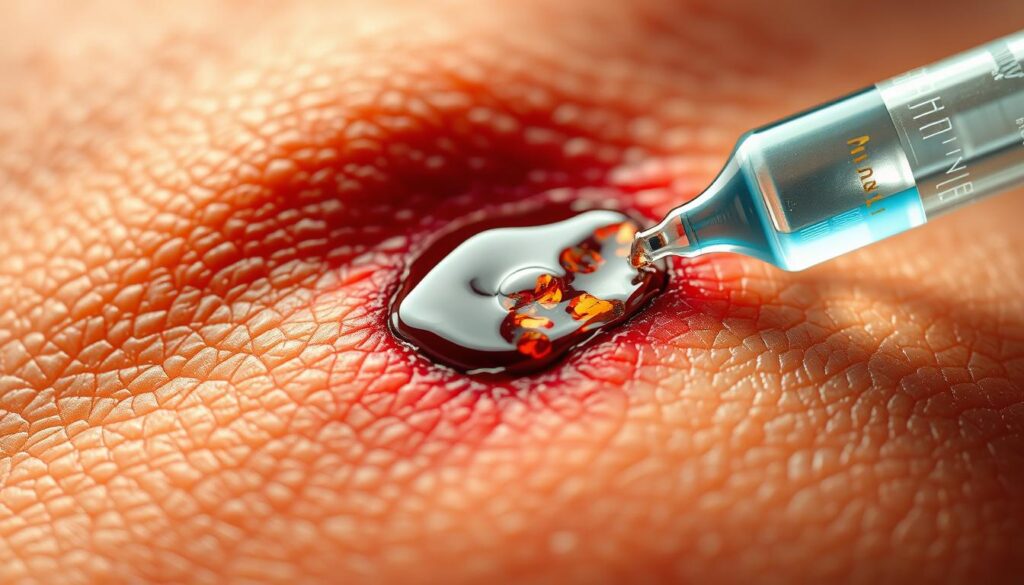
Wound healing is a major medical challenge. Millions struggle with complex skin injuries. Synthetic melanin offers a groundbreaking solution for tissue repair1.
In the US, 6.5 million patients face chronic wound issues. This drives researchers to explore new biomaterials for faster healing1.
Synthetic melanin can boost your body’s natural healing. It’s a versatile material with antibacterial and regenerative properties2.
Nanomaterials like polydopamine (PDA) are highly biocompatible. They have strong antibacterial abilities, making them powerful in wound care2.
Medical experts are turning to synthetic melanin for wound healing. Its unique properties help kill bacteria and speed up tissue repair.
Key Takeaways
- Synthetic melanin offers advanced wound healing solutions
- Nanomaterials provide powerful antibacterial protection
- Photothermal properties support faster tissue regeneration
- Synthetic melanin can target bacterial infections effectively
- Innovative biomaterials are transforming wound care strategies
Understanding Synthetic Melanin
Synthetic melanin is a game-changing biomaterial with huge potential. It mimics natural melanin but offers improved capabilities for health and protection. This innovative substance could revolutionize medical and protective applications.
What is Synthetic Melanin?
Synthetic melanin is an artificial version of the pigment in human skin, hair, and eyes. It’s engineered to optimize protective and regenerative properties. Scientists can control its synthesis precisely for specific uses3.
How is Synthetic Melanin Produced?
Scientists create synthetic melanin using polydopamine. They stir an alkaline aqueous solution of dopamine to generate it. This method allows for tailored melanin biomaterials with specific characteristics4.
- Precise chemical engineering
- Controlled molecular structure
- Customizable protective properties
The Role of Melanin in the Body
Synthetic melanin offers extraordinary body protection. It shields skin from harmful UV radiation and neutralizes dangerous free radicals. This amazing substance also supports wound healing processes3.
The synthetic melanin developed by Northwestern University researchers has shown remarkable potential in accelerating healing and providing protection.
Synthetic melanin outperforms natural human melanin in some ways. It can scavenge more radicals per gram than its natural counterpart. It also stays stable on the skin’s surface, providing long-lasting protection43.
| Property | Synthetic Melanin | Natural Melanin |
|---|---|---|
| Radical Scavenging | Higher Capacity | Standard Capacity |
| UV Protection | Enhanced | Standard |
| Skin Stability | Remains on Surface | Absorbed Quickly |
Major research institutions are exploring synthetic melanin’s potential. The U.S. Department of Defense and National Institutes of Health are leading the charge. They’re investigating applications from skin protection to advanced medical treatments3.
The Importance of Wound Healing
Wound care affects millions worldwide. It’s crucial to understand skin repair and tissue regeneration. This knowledge helps manage healing for yourself and others.
The body’s wound healing ability is remarkable. It involves multiple complex interactions. Skin repair relies on intricate cellular mechanisms working together5.
Why Wound Healing Matters
Proper healing prevents infections and minimizes long-term complications. Your body’s natural process involves key components:
- Protection against harmful pathogens
- Restoration of skin integrity
- Minimizing potential scarring
- Maintaining overall health
Factors Affecting Wound Healing
Several factors can influence tissue regeneration efficiency:
| Factor | Impact on Healing |
|---|---|
| Age | Slower healing in older individuals |
| Nutrition | Proper nutrients accelerate recovery |
| Underlying Health Conditions | Diabetes, immune disorders can impede healing |
Common Wound Healing Challenges
Some people face difficulties with wound care, especially those with chronic conditions. Synthetic melanin shows promise in addressing these challenges6.
“Healing is a matter of time, but it is sometimes also a matter of opportunity.” – Hippocrates
Skin repair involves complex cellular interactions. Melanocytes play a crucial role in this system. There’s about one melanocyte for every 36 keratinocytes in the epidermis5.
How Synthetic Melanin Aids Wound Healing
Synthetic melanin offers new solutions for skin repair and regeneration. It’s a potential game-changer in wound healing therapies. Medical researchers have found remarkable properties in this innovative material.
Mechanisms of Action in Wound Repair
Synthetic melanin boosts your skin’s healing process in several ways. It protects and regenerates damaged skin quickly. The material works through critical mechanisms to speed up tissue repair.
- Radical scavenging capabilities
- Protective antioxidant properties
- Enhanced cellular regeneration
Antioxidant Properties of Synthetic Melanin
Synthetic melanin has impressive antioxidant potential. It acts like a radical sponge, removing harmful factors from your skin. This creates an ideal environment for wound healing.
By neutralizing reactive oxygen species, synthetic melanin protects skin from oxidative stress7. This protection is crucial for faster skin recovery.
“Synthetic melanin acts like a protective shield, removing harmful radicals and promoting faster skin recovery.”
Enhancing Cell Regeneration
Synthetic melanin can speed up tissue repair in damaged skin. It increases superoxide dismutase activity, which neutralizes harmful reactive oxygen species8. This process helps reduce inflammation in the affected area.
Synthetic melanin supports faster healing of various wounds. These include damage from chemical exposure, UV rays, or radiation7. Its versatility makes it a promising treatment option.
| Healing Benefit | Synthetic Melanin Impact |
|---|---|
| Radical Neutralization | Highly Effective |
| Inflammation Reduction | Significant Improvement |
| Tissue Regeneration Speed | Accelerated Recovery |
Synthetic melanin opens up exciting possibilities in wound healing therapies. Scientists are exploring innovative applications for this material. Patients can look forward to more advanced and efficient healing treatments.
Applications of Synthetic Melanin in Medicine
Synthetic melanin is changing medical innovations, especially in wound care. Researchers have found amazing potential for these advanced biomaterials. They’re making waves across various medical fields.
Synthetic melanin particles (SMPs) show great promise in healing strategies. They’re bringing new hope to wound care and treatments. These particles are changing how we approach medical care.
Current Medical Uses
Synthetic melanin shows amazing abilities in wound care and treatments. It can speed up healing, reduce skin swelling, and help the immune system.
Future Potential in Wound Care
New research shows big benefits of synthetic melanin particles in wound healing. These tiny particles can greatly improve healing rates. They do this in several ways.
Regulatory Considerations
Doctors are carefully looking at synthetic melanin’s potential. They focus on safety, how well it works, and long-term effects. Researchers are doing big studies to make rules for using it in medicine.
“Synthetic melanin represents a breakthrough in regenerative medicine, offering unprecedented healing capabilities.” – Medical Research Consortium
| Particle Type | Surface Area | Scavenging Activity |
|---|---|---|
| SMPHi | 190 m2/g | 90% (DPPH Assay)9 |
| SMLo | 20 m2/g | 80% (DPPH Assay)9 |
Synthetic melanin is leading the way in new wound care methods. It promises faster healing and shorter recovery times. This could change how we treat wounds in the future.
Comparing Synthetic Melanin to Natural Melanin
Natural and synthetic melanin have unique traits in wound healing and medical uses. Both types offer fascinating properties for ongoing research. Let’s explore their differences and potential applications.
Natural and synthetic melanin have key differences affecting their medical uses. Synthetic melanin allows for controlled production and consistent properties11. This makes it valuable for specific research needs.
Key Differences in Melanin Comparison
- Natural melanin occurs in multiple forms (eumelanin, pheomelanin)
- Synthetic melanin is typically produced as polydopamine
- Synthetic versions offer easier modification and functionalization
Pros and Cons of Each Melanin Type
| Characteristic | Natural Melanin | Synthetic Melanin |
|---|---|---|
| Biocompatibility | Higher natural compatibility | Engineered for specific applications |
| Production Consistency | Variable | Highly controlled |
| Wound Healing Potential | Limited extraction | Precise photothermal properties12 |
Efficacy in Wound Healing
Synthetic melanin particles show impressive wound healing abilities. Studies found they speed up skin injury healing in mice. They also reduce inflammation11.
High-surface-area synthetic melanin particles yielded promising results. They decreased skin damage and boosted wound healing efficiency12. These findings open new doors for medical treatments.
The future of wound care might lie in these innovative synthetic melanin technologies.
Comparing melanin types reveals exciting possibilities. Both natural and synthetic sources may lead to groundbreaking medical treatments. The potential for healing is vast and promising.
Case Studies: Synthetic Melanin in Action
Synthetic melanin research has opened exciting new pathways in wound healing. This innovative material shows remarkable potential to transform patient outcomes. Researchers are exploring its capabilities in medical treatments.
Clinical trials have revealed groundbreaking insights into synthetic melanin’s healing properties. The material shows unique abilities in managing skin injuries. It also demonstrates effectiveness in reducing inflammation13.
Success Stories from Clinical Trials
Recent studies highlight synthetic melanin’s impressive potential in medical applications:
- Topical melanin cream reduced skin damage and inflammation13
- Treatments showed increased healing rates for open sores13
- Potential protection against toxins like nerve gas and heavy metals13
Patient Experiences
“The synthetic melanin treatment changed my wound healing experience dramatically.” – Anonymous Clinical Trial Participant
Patients reported significant improvements in wound closure and reduced scarring. The cream’s ability to quiet the immune system has been particularly promising. It also shows potential to initiate healing13.
Research from advanced melanin studies suggests applications beyond wound care. These include radiation burn treatment and skin protection14.
Results are encouraging, but researchers stress the need for more clinical trials. This will help fully understand synthetic melanin’s long-term effectiveness and safety in medical treatments13.
The Science Behind Synthetic Melanin
Synthetic melanin is a game-changer in biomedical research. It offers new insights into cell regeneration and protection. Scientists are exploring its potential through innovative approaches.
Research Breakthroughs in Melanin Science
Recent studies reveal the amazing abilities of synthetic melanin nanoparticles. These engineered molecules can transform medical treatments. They show remarkable free radical scavenging capacity, even better than natural human melanin15.
- Synthetic melanin cream demonstrated exceptional healing properties
- Nanoparticles can quiet inflammatory immune responses
- Accelerated skin tissue repair observed in laboratory studies
Innovative Production Techniques
Scientists have made big strides in synthetic melanin production. They’ve developed new methods for creating melanin analogs. These methods use precursors like tyrosine, L-DOPA, and dopamine16.
The innovative techniques include:
- Oxidation of melanogenic precursors
- Utilization of advanced oxidation agents
- Exploration of novel polymerization methods
“Synthetic melanin represents a new frontier in regenerative medicine, offering unprecedented potential for healing and protection.” – Biomedical Research Institute
The healing power of synthetic melanin is amazing. When applied to skin, it helps radical scavenging enzymes recover. This stops inflammatory protein production and starts a cycle of repair15.
Expert Perspectives
Experts highlight the transformative potential of synthetic melanin. Research in npj Regenerative Medicine shows its impact on wound healing. It also reveals its potential for tissue regeneration15.
The future of synthetic melanin looks promising, with potential applications spanning multiple medical disciplines.
Future Innovations in Synthetic Melanin
Melanin innovations are pushing biotechnology and wound healing boundaries. Researchers are exploring groundbreaking approaches to revolutionize medical treatments. These advancements promise to transform regenerative medicine.
Emerging Technologies in Synthetic Melanin
Scientists are developing cutting-edge technologies for wound healing strategies. Synthetic melanin research is uncovering remarkable potential for medical applications.
Recent breakthroughs include advanced production methods and novel functionalization techniques. Smart wound dressing technologies are also emerging as promising innovations.
- Advanced production methods for more efficient synthetic melanin
- Novel functionalization techniques for targeted healing
- Smart wound dressing technologies
Synthetic melanin from Northwestern University shows exceptional healing capabilities. Burns treated with it were up to 50% smaller. Healing time reduced from over 16 days to just 10-12 days17.
Collaborative Research Frontiers
The future of synthetic melanin depends on strategic collaborations. Academic institutions, research centers, and biotech companies are joining forces. These partnerships drive innovation in critical areas.
| Research Focus | Potential Impact |
|---|---|
| Personalized Wound Healing | Tailored treatments based on individual skin characteristics |
| Multi-functional Biomaterials | Combining synthetic melanin with therapeutic agents |
| Advanced Delivery Systems | Improved absorption and effectiveness of wound treatments |
Melanin’s antioxidant properties are particularly exciting. Research shows it can reduce reactive oxygen species generation. It also inhibits inflammatory responses18.
These characteristics make synthetic melanin powerful in regenerative medicine. It’s becoming a key tool in advanced wound healing technologies.
The future of wound healing is being rewritten by the innovative applications of synthetic melanin.
How to Incorporate Synthetic Melanin in Care
Synthetic melanin offers promising wound care options. It can speed up healing and reduce skin swelling. Healthcare pros must assess wound types and patient needs carefully.
The surface area of synthetic melanin particles matters in treatment. High surface area particles heal better. These treatments can lower inflammation and boost wound repair.
Patients should team up with their doctors to understand the benefits. Synthetic melanin can fight harmful radicals and protect skin. Always talk to your doctor about your specific wound care plan.
Recommendations for Healthcare Professionals
Medical experts should keep up with new synthetic melanin research. Learning about its properties helps improve patient care. Understanding how it fights radicals is key to better treatments.
Tips for Patients Seeking Treatment
Be ready to share your full medical history. Follow wound care instructions closely. Your doctor will create a treatment plan just for you.
FAQ
What is synthetic melanin?
Synthetic melanin is a man-made biomaterial that copies natural melanin’s properties. It’s usually created as polydopamine (PDA). This versatile material has excellent photothermal properties for various medical uses.
Synthetic melanin can help with wound healing and fighting bacteria. It’s being studied for many medical applications.
How does synthetic melanin help with wound healing?
Synthetic melanin uses light to activate its healing powers. It kills bacteria and helps new tissue grow. It also protects against harmful substances during healing.
Is synthetic melanin safe for medical use?
Synthetic melanin is considered safe and works well with the body. Ongoing studies are checking its long-term safety in wound care. Researchers are still testing it for other medical treatments.
How is synthetic melanin different from natural melanin?
Synthetic melanin can be made with consistent properties. It’s easier to change for specific uses. Natural melanin may work better with the body.
However, synthetic melanin offers more control over its bacteria-fighting and light-activated properties.
What are the current medical applications of synthetic melanin?
Synthetic melanin is being tested for cancer treatment using light therapy. It’s also used to fight bacteria and help wounds heal. Researchers are excited about using it in advanced wound dressings.
They’re also looking into using it for targeted medical treatments.
Can synthetic melanin completely replace traditional wound care methods?
Synthetic melanin can’t fully replace traditional wound care yet. It’s being developed to work with current healing methods. This combo could speed up healing and reduce problems.
How is synthetic melanin produced?
Synthetic melanin, like polydopamine (PDA), is made by mixing dopamine in a special solution. This process creates melanin-like materials with consistent properties. These materials are suitable for medical use.
Are there any limitations to using synthetic melanin in wound healing?
Synthetic melanin shows promise, but needs more testing to understand long-term effects. Making it consistently and in high quality is challenging. Researchers are working on tailoring it for different wound types.
Source Links
- Current Biomaterials for Wound Healing – https://pmc.ncbi.nlm.nih.gov/articles/PMC10741152/
- Melanin as a Photothermal Agent in Antimicrobial Systems – https://pmc.ncbi.nlm.nih.gov/articles/PMC11354747/
- Synthetic melanin: The ultimate skin care solution for sunburns and wounds – – https://www.manuscriptedit.com/scholar-hangout/synthetic-melanin-the-ultimate-skin-care-solution-for-sunburns-and-wounds/
- New Synthetic Melanin Could Be A Highly Effective Sunscreen Booster – https://www.forbes.com/sites/williamhaseltine/2023/11/17/new-synthetic-melanin-could-be-a-highly-effective-sunscreen-booster/
- WO2003051331A1 – Methods for treating wounds using melanin and related substances – https://patents.google.com/patent/WO2003051331A1/en
- Topical application of synthetic melanin promotes tissue repair – https://ouci.dntb.gov.ua/en/works/4gw6Mzq4/
- ‘Super melanin’ heals skin injuries from sunburn, chemical burns – https://news.northwestern.edu/stories/2023/11/super-melanin-heals-skin-injuries-from-sunburn-chemical-burns/
- Synthetic melanin accelerates wound healing – https://www.drugdiscoverynews.com/synthetic-melanin-accelerates-wound-healing-15904
- Topical application of synthetic melanin promotes tissue repair – npj Regenerative Medicine – https://www.nature.com/articles/s41536-023-00331-1
- Synthetic melanin nanoparticles boost wound healing and tissue repair in skin – https://www.news-medical.net/news/20231105/Synthetic-melanin-nanoparticles-boost-wound-healing-and-tissue-repair-in-skin.aspx
- Synthetic melanin nanoparticles for wound healing – https://www.nih.gov/news-events/nih-research-matters/synthetic-melanin-nanoparticles-wound-healing
- Topical application of synthetic melanin promotes tissue repair – https://pmc.ncbi.nlm.nih.gov/articles/PMC10622536/
- ‘Super Melanin’ Heals Skin Injuries from Sunburn, Chemical Burns – https://www.mccormick.northwestern.edu/news/articles/2023/11/super-melanin-heals-skin-injuries-from-sunburn-chemical-burns/
- Melanin and Melanin-Like Hybrid Materials in Regenerative Medicine – https://pmc.ncbi.nlm.nih.gov/articles/PMC7466405/
- Synthetic Melanin Cream Improves Skin Healing after Chemical and UV-Induced Injuries | Sci.News – https://www.sci.news/medicine/synthetic-melanin-cream-12416.html
- Melanin and Melanin-Like Hybrid Materials in Regenerative Medicine – https://www.mdpi.com/2079-4991/10/8/1518
- New “super melanin” protects and heals skin – https://www.freethink.com/health/synthetic-melanin
- Natural Melanin: Current Trends, and Future Approaches, with Especial Reference to Microbial Source – https://pmc.ncbi.nlm.nih.gov/articles/PMC9002885/

