
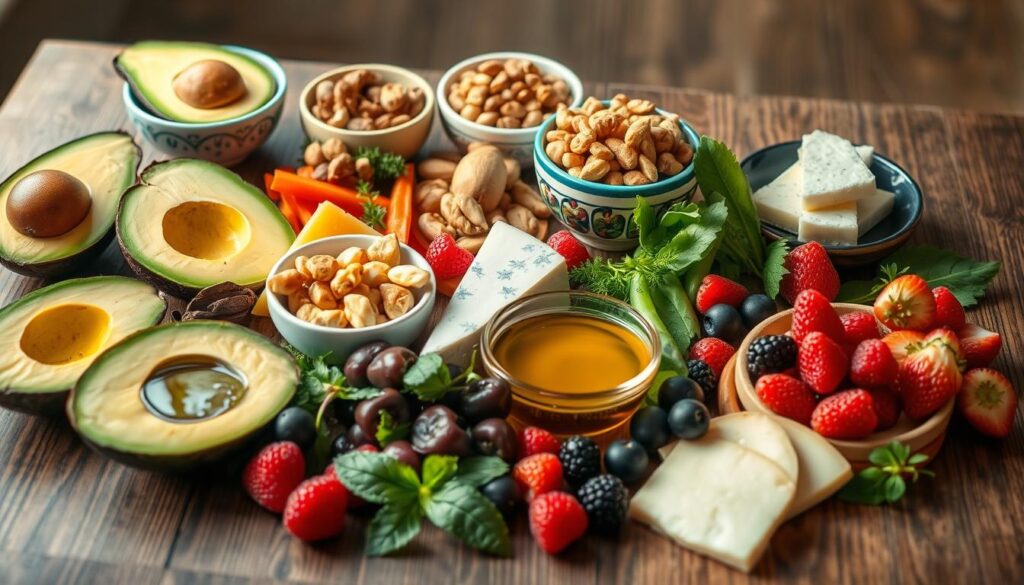
The right healthy high-fat foods can boost your nutrition and energy. Your body needs good fats for essential nutrients and overall wellness. A smart high-fat diet focuses on nutrient-dense options that fuel your performance1.
Healthy fats are vital for cell growth, hormone production, and nutrient absorption. Avocados, nuts, and seeds are nutritional powerhouses. Avocados contain 80% heart-healthy monounsaturated fats, making them an excellent choice1.
Great nutrition starts with knowing which fats benefit your body. Foods like salmon, walnuts, and olive oil can lower cholesterol and support metabolic health1.
Chia, flaxseed, and hemp seeds are rich in omega-3 fatty acids. These seeds promote overall wellness and are easy to add to your diet1.
Key Takeaways
- Choose nutrient-dense healthy high-fat foods
- Focus on monounsaturated and omega-3 fats
- Balance fat intake with overall nutritional needs
- Prioritize whole food sources of good fats
- Support metabolic and heart health through smart fat choices
Understanding the Power of Healthy High-Fat Foods
Nutrition can be tricky, especially when it comes to fats. Some fats are vital for your health. Let’s explore healthy fats and why they matter for your body.
Types of Beneficial Fats
Your body needs various healthy fats to work well. The main types are monounsaturated fats (MUFAs) and polyunsaturated fats (PUFAs).
- Monounsaturated fats (MUFAs)
- Polyunsaturated fats (PUFAs), including omega-3 fatty acids
These fats can boost your cholesterol levels. PUFAs lower bad cholesterol (LDL) and raise good cholesterol (HDL)2. MUFAs work similarly, possibly cutting heart disease risks2.
Why Your Body Needs Good Fats
Healthy fats are key for many body functions. Studies show they can help in several ways.
- Lower heart disease risk
- Improve blood cholesterol levels
- Help control blood sugar
- Reduce inflammation
- Support gut health
“Food is not just calories, it’s information that tells your body how to respond.” – Anonymous
Role in Nutrient Absorption
Unsaturated fats help absorb fat-soluble vitamins A, D, E, and K. Your body needs these fats to use these vital nutrients well.
| Fat Type | Key Benefits | Daily Recommendation |
|---|---|---|
| Omega-3 Fatty Acids | Heart health, brain function | 5-10% of daily calories3 |
| Monounsaturated Fats | Cholesterol management | Flexible, focus on quality sources |
Many people don’t eat enough healthy fats4. Add omega-3s from fatty fish, walnuts, and flaxseeds to boost your health4.
Top Plant-Based Sources of Healthy Fats
Plant-based fats can boost your nutrition and overall health. Avocados are nutritional powerhouses, containing 80% fat by calories. These creamy fruits offer monounsaturated fats that can improve your cholesterol profile5.
Nuts are excellent high-fat snacks with unique benefits. Almonds and walnuts have unsaturated fats that can lower cholesterol5.
Pistachios are heart-healthy. Brazil nuts and cashews provide essential minerals.
- Almonds and walnuts contain high levels of unsaturated fats that can reduce cholesterol5
- Pistachios offer heart-healthy fat profiles
- Brazil nuts and cashews provide essential minerals
Seeds are also rich in plant-based fats. Chia seeds contain 11 grams of fat per ounce. Most of this fat is heart-healthy omega-3 fatty acids6.
These tiny seeds also provide protein and anti-inflammatory benefits5.
“Healthy fats are not just calories – they’re critical nutrients that support your body’s essential functions.”
Here are more nutrient-dense plant-based fat options:
- Olive oil with powerful anti-inflammatory properties6
- Cacao nibs containing 50% healthy unsaturated fats5
- Hemp seeds providing balanced fat and protein profiles7
Adding these plant-based fats to your diet can boost heart health. They can also improve nutrient absorption and provide long-lasting energy.
Essential Animal-Based Fat Sources
Animal-based fats can boost your nutrition strategy. Your body needs a mix of healthy fats for wellness. These fats provide key nutrients for overall health.
Exploring Fatty Fish Options
Fatty fish are nutrition powerhouses packed with omega-3s. Salmon and mackerel have great fat profiles. A 6 oz serving of salmon has about 22g of fat8.
The American dietary guidelines suggest eating fish for better health. Fish offers many benefits to your diet.
- Salmon: Rich in omega-3 fatty acids
- Mackerel: High fat content with beneficial nutrients
- Sardines: Compact nutrition powerhouses
Dairy and Lean Meat Choices
Full-fat dairy and lean meats are great fat sources. Whole milk yogurt has about 8g of fat per cup. Chicken thighs offer around 10g of fat8.
Choose quality proteins that give you good nutrition9. This ensures you get the most from your food.
Optimal Portion Recommendations
Moderation is crucial when eating animal-based fats. The American Heart Association suggests limiting saturated fat to 5-6% of daily calories9.
Focus on balanced portions and different protein types. This helps maintain a healthy diet approach.
Choose wild-caught fish and grass-fed meats for superior nutritional profiles.
Strategic Fat Consumption
Your fat intake should focus on quality, not quantity. Pick lean meats and eat fatty fish twice a week. Balance your full-fat dairy intake.
This approach gives you essential nutrients without too much saturated fat9. It’s a smart way to manage your diet.
Conclusion
Balancing your diet with healthy fats is easier than you think. Learn how different fats affect your body to plan nutritious meals. Aim for a sustainable approach that supports your overall wellness10.
Include various fat sources in your diet. Keep your total fat intake between 20% to 35% of daily calories10. Smart choices can make a big difference in your health.
Try adding nutrient-rich fatty foods to your meals. Avocados, nuts, and fatty fish provide omega-3s and heart-healthy fats11. Focus on quality over quantity when selecting foods.
Studies show that a balanced high-fat diet can improve body composition. It may decrease fat mass and support lean muscle growth12. Choose your fat sources wisely to optimize your nutritional intake.
Your body needs a mix of nutrients to thrive. Don’t shy away from trying different healthy fat sources. With smart planning, your diet can boost your overall wellness.
FAQ
What are healthy high-fat foods?
Healthy high-fat foods are packed with essential unsaturated fats. These include avocados, nuts, seeds, fatty fish, olive oil, and full-fat dairy. They support cell growth and brain function.
These foods provide important nutrients and help you feel satisfied. They’re crucial for overall health and well-being.
How do healthy fats benefit my body?
Healthy fats support cell growth, brain development, and hormone production. They help absorb fat-soluble vitamins and maintain healthy cholesterol levels. These fats also reduce inflammation and contribute to heart health.
Additionally, they provide essential nutrients and keep you feeling full longer. This can aid in weight management and overall wellness.
What are the best plant-based sources of healthy fats?
Top plant-based healthy fat sources include avocados, nuts, and seeds. Olives and plant oils like olive and avocado oil are also great options.
These foods offer a mix of healthy fats, fiber, and minerals. They support your overall health and wellness in various ways.
How much fatty fish should I eat?
Experts suggest eating two servings of fatty fish weekly. Wild-caught salmon, mackerel, sardines, and tuna are rich in omega-3 fatty acids.
Choose wild-caught fish when possible. This maximizes omega-3 content and minimizes mercury exposure.
Can high-fat foods help me lose weight?
Moderate consumption of healthy high-fat foods can support weight management. They help you feel fuller longer and stabilize blood sugar levels.
The key is portion control and choosing quality fat sources. Include these as part of a balanced diet for best results.
Are all fats created equal?
Not all fats are the same. Unsaturated fats are considered healthy, while trans fats can be harmful. Focus on healthy fats from avocados, nuts, seeds, olive oil, and fatty fish.
Limit processed and fried foods to reduce unhealthy fat intake. Balance is key for optimal health benefits.
How can I incorporate more healthy fats into my diet?
Use olive oil for cooking and add avocado to salads. Snack on nuts and seeds, and choose fatty fish twice weekly.
Make salad dressings with olive oil and add chia seeds to smoothies. Top meals with sliced avocado for extra healthy fats.
Source Links
- What Are Healthy Fats? 8 High-Fat Foods for Your Diet – https://www.verywellhealth.com/healthy-fats-7498653
- Choosing Healthy Fats: A Guide to Types, 11 Food Tips, and More – https://www.healthline.com/health/food-nutrition/healthy-fats-guidelines
- What Types of Fat Are in Foods? – https://www.webmd.com/obesity/types-fat-in-foods
- Eating healthy fats has many benefits – https://www.uclahealth.org/news/article/eating-healthy-fats-has-many-benefits
- allplants | Healthy Fats for Vegans – https://allplants.com/blog/lifestyle/healthy-fats-for-vegans
- 9 High Fat Foods That Are Actually Super Healthy – https://www.healthline.com/nutrition/10-super-healthy-high-fat-foods
- The 10 Best Plant-Based Sources Of Healthy Fat | Myvegan – https://www.myvegan.com/blog/nutrition/plant-based-sources-of-healthy-fat/
- Animal Fats: The Complete Guide – https://functional-bodybuilding.com/blogs/articles/animal-fats
- Learn the facts about fat – https://www.mayoclinic.org/healthy-lifestyle/nutrition-and-healthy-eating/in-depth/fat/art-20045550
- A healthy approach to dietary fats: understanding the science and taking action to reduce consumer confusion – https://pmc.ncbi.nlm.nih.gov/articles/PMC5577766/
- 12 super healthy high fat foods – https://continentalhospitals.com/blog/12-super-healthy-high-fat-foods/
- Study: Balanced high-fat diet improves body composition, inflammation – Vanderbilt Medicine – https://medschool.vanderbilt.edu/vanderbilt-medicine/study-balanced-high-fat-diet-improves-body-composition-inflammation/

