
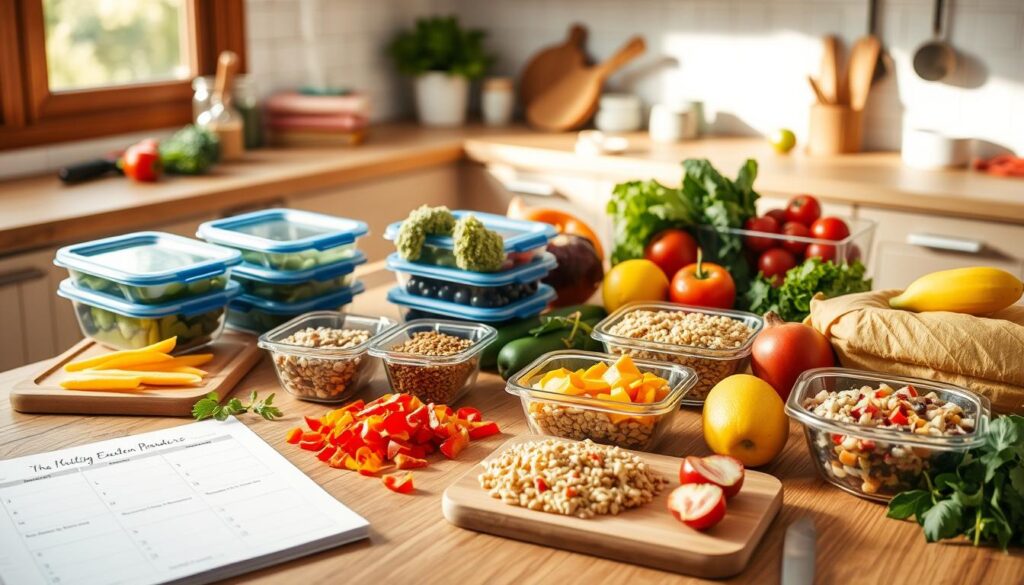
Healthy meal planning is a smart way to reach your wellness goals. It helps you create nourishing meals that fuel your body. With this approach, you can change your eating habits and boost your health12.
Busy lives often lead to quick, unhealthy takeout meals. These choices can be high in calories and low in nutrients1. Planning your meals lets you make better food choices for your health needs.
Focus on foods rich in vitamins, minerals, and balanced nutrients2. This approach helps you create meals that are both tasty and good for you.
Meal prep is a powerful tool for clean eating. It saves money, helps control weight, and cuts down on meal-time stress1. Learning about portion sizes is key to making well-balanced meals3.
Key Takeaways
- Develop a proactive approach to nutrition through strategic meal planning
- Prioritize nutrient-dense foods for optimal health benefits
- Learn to control portion sizes for better dietary management
- Reduce stress and save money through effective meal preparation
- Create a balanced diet that supports your overall wellness goals
Understanding Nutrition Fundamentals and Portion Control
Grasping nutrition basics is key to achieving optimal health. It’s about fueling your body with the right nutrients. This approach supports your weight management goals4.
Essential Daily Nutrients for Optimal Health
Your body needs a balanced mix of macronutrients and micronutrients. Macronutrients include:
- Carbohydrates for energy
- Proteins for muscle repair
- Fats for hormone production
Balancing these macronutrients is crucial for your body’s health. Adding protein and fat to fiber-rich carbs makes meals more satisfying4.
Mastering Serving Sizes and Portion Management
Portion control is vital for effective calorie tracking. U.S. dietary guidelines suggest filling half your plate with fruits and vegetables5.
The other half should contain proteins and grains. Learning to read nutrition labels helps manage your dietary intake better.
Progress — not perfection — is key in developing healthy eating habits4.
Calculating Your Individual Caloric Needs
Your caloric needs depend on factors like age, gender, and activity level. A registered dietitian can offer personalized nutrition advice5.
Hydration is an essential part of healthy eating. Water remains the best way to stay hydrated. It supports your overall nutritional goals4.
Healthy Meal Planning: Creating Your Weekly Strategy
A solid meal prep strategy can boost your nutrition and save time6. Set aside a day to plan and prepare meals. This will make your weekly meal planning easier and less stressful6.
Consider these key strategies for meal planning:
- Plan meals for Monday-Friday, leaving weekends flexible6
- Count the exact number of meals needed for the week
- Shop from your pantry and freezer first to minimize expenses6
Grocery shopping becomes more efficient with strategic ingredient selection. Pick recipes that work well in big batches. Stews and casseroles store perfectly in refrigerators and freezers6.
“Meal planning is a form of self-care that helps reduce stress and save money” – Nutrition Experts
Cooking Tips for successful meal prep include:
- Select time-efficient recipes
- Prepare proteins and grains in advance
- Use proper storage techniques
| Meal Prep Component | Recommended Approach |
|---|---|
| Vegetables | Choose seasonal, fresh produce |
| Proteins | Batch cook lean meats |
| Grains | Prepare multiple servings |
Get your family involved in meal planning for diverse ideas. This makes the process more fun6. These strategies will turn meal prep into an efficient routine7.
Conclusion
Healthy eating habits need commitment and smart planning. Your journey through nutritious recipes can change how you relate to food. Meal planning creates a lifestyle that supports your wellness goals8.
By planning your meals, you can make smarter food choices. This saves time and cuts down on stress8. Research shows that 57% of people plan meals at least sometimes9.
Those who plan their meals enjoy more food variety. They also have better health outcomes. Studies link meal planning to lower risks of being overweight or obese9.
Think of meal planning as a health and money investment. It helps you waste less food and control portions. You might even save money by buying in bulk8.
Urban farming and community food projects are creating new ways to eat healthier10. Remember, meal planning gets better with practice. Start small, stay flexible, and watch your eating habits improve.
FAQ
What is healthy meal planning, and why is it important?
Healthy meal planning is preparing nutritious meals in advance. It saves time, money, and stress while ensuring balanced nutrition. This approach helps control portions, incorporate various nutrients, and support overall health goals.
How do I start meal planning if I’m a beginner?
Begin by planning 2-3 dinners per week. Discuss food preferences with your family and collect healthy recipes. Choose a specific day for meal planning and grocery shopping.
Focus on simple, versatile recipes that can be prepared in bulk. These meals should be easy to store for later use.
What are the key components of a balanced diet?
A balanced diet includes carbohydrates, proteins, fats, vitamins, and minerals. Follow U.S. dietary guidelines by filling half your plate with fruits and vegetables. The other half should consist of lean proteins and whole grains.
How can I manage portion sizes effectively?
Use the plate method: fill half with vegetables, a quarter with lean protein, and a quarter with whole grains. Read nutrition labels and use measuring tools to control portions.
Be mindful of the difference between serving size and portion size. This awareness helps maintain a balanced diet.
What are some budget-friendly meal planning strategies?
Buy seasonal produce and purchase ingredients in bulk to save money. Reduce food waste by planning meals around sales. Batch cooking and preparing meals in advance saves time and money.
How do I calculate my daily caloric needs?
Caloric needs vary based on age, gender, activity level, and health goals. Consult a nutritionist or use online calculators for your specific needs.
These tools consider your demographics and lifestyle to determine ideal daily calorie intake. This information helps create a personalized meal plan.
What are the best meal prep techniques?
Cook proteins and grains in advance. Prepare snacks and side dishes for easy access. Use proper storage methods to keep food fresh.
Invest in good containers and label your prepared meals. Rotate your menu to keep things interesting and prevent food fatigue.
How can I make meal planning more sustainable year-round?
Adapt your meal planning to seasonal produce and changing nutritional needs. In spring and summer, focus on lighter, fresher meals.
Fall and winter call for heartier, warming dishes. Experiment with seasonal ingredients to keep your meals nutritious and exciting.
Source Links
- Meal Prep Guide – https://nutritionsource.hsph.harvard.edu/meal-prep/
- Healthy Meal Plan: Your Guide to Better Nutrition – TasteGia – https://tastegia.com/healthy-meal-plan-your-guide-to-better-nutrition/
- Healthy meals start with planning – https://www.mayoclinic.org/healthy-lifestyle/nutrition-and-healthy-eating/in-depth/healthy-meals/art-20546806
- Healthy Eating 101: Nutrients, Macros, Tips, and More – https://www.healthline.com/nutrition/how-to-eat-healthy-guide
- Nutrition and healthy eating Nutrition basics – https://www.mayoclinic.org/healthy-lifestyle/nutrition-and-healthy-eating/basics/nutrition-basics/hlv-20049477
- Meal Planning For Beginners (Meal Plan Template Inside!) – https://workweeklunch.com/meal-planning-for-beginners/
- Healthy Weekly Meal Plan Guide- A beginner’s guide to create meal plans – https://www.theculinarypeace.com/healthy-weekly-meal-plan-beginners-guide/
- Health benefits of meal planning – https://www.beaumont.org/health-wellness/blogs/health-benefits-of-meal-planning
- Meal planning is associated with food variety, diet quality and body weight status in a large sample of French adults – https://pmc.ncbi.nlm.nih.gov/articles/PMC5288891/
- Conclusion | Healthy Food Policy Project – https://healthyfoodpolicyproject.org/local-planning-and-the-food-system/conclusion

