
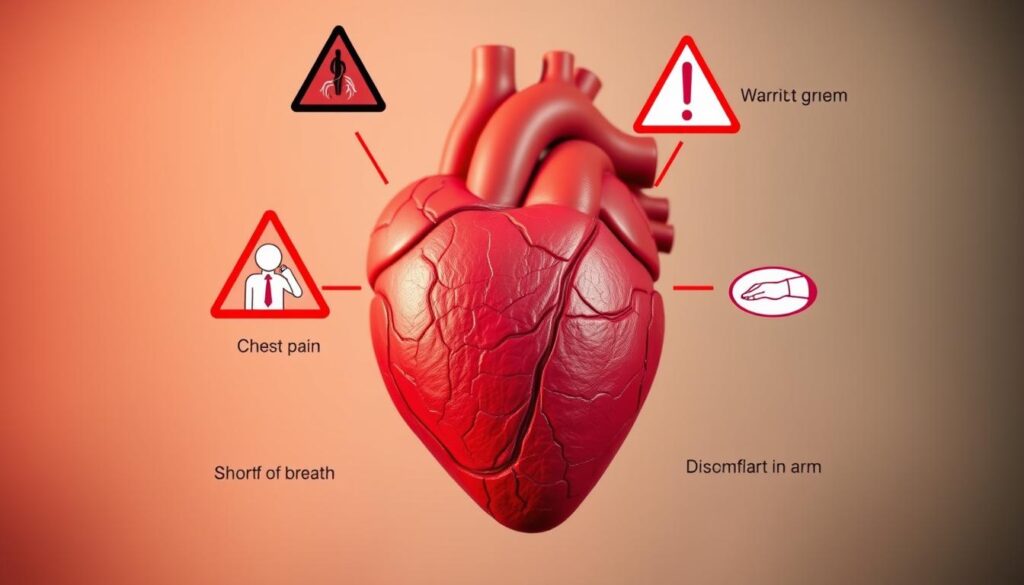
Your heart needs constant care and attention. Heart attacks are serious and can strike unexpectedly. In the U.S., someone has a heart attack every 40 seconds1.
Knowing the warning signs and risk factors can save lives. Coronary artery disease (CAD) is the main cause of heart attacks1. Many Americans have at least one key risk factor.
These include high blood pressure, high cholesterol, or smoking1. Recognizing these risks is vital for heart health and preventing emergencies.
Heart attack symptoms can vary between people. Women may experience unusual symptoms like tiredness, nausea, or vomiting1. Knowing these signs helps you act fast in critical situations.
Key Takeaways
- Heart attacks can occur every 40 seconds in the United States
- Coronary artery disease is the leading cause of heart attacks
- Risk factors include high blood pressure, cholesterol, and smoking
- Symptoms can differ between men and women
- Prompt recognition and response are crucial for survival
Understanding What a Heart Attack Is
A heart attack is a critical cardiovascular event that can strike unexpectedly. It threatens your life and well-being. Knowing about this condition is vital for prevention and early intervention2.
The Anatomy of a Heart Attack
During a heart attack, your coronary arteries become blocked. This stops blood flow to the heart muscle. It often happens when cholesterol-containing plaques narrow the arteries2.
Types of Heart Attacks
Heart attacks come in different forms. Medical professionals recognize several types:
- ST-elevation myocardial infarction (STEMI)
- Non-ST elevation myocardial infarction (NSTEMI)
- Unstable angina
- Spontaneous coronary artery dissection (SCAD)
Critical Risk Factors
Various factors can increase your risk of a heart attack. Key risks include:
- Advanced age
- Tobacco use
- High blood pressure
- Obesity
- Diabetes
- Family history of heart disease
“Knowledge is the first step in preventing a heart attack. Understanding your personal risk factors can be life-saving.” – Cardiovascular Health Expert
Arrhythmia and other issues can occur during or after a heart attack. Quick medical help is crucial3. In the United States, someone has a heart attack every 40 seconds4.
Spotting signs early and knowing your risks are key. A healthy lifestyle is your best defense against heart attacks2.
Recognizing the Warning Signs
Knowing cardiac symptoms can save lives. Heart health needs awareness of subtle body signals. Quick action is vital when spotting heart attack signs5.
Common Symptoms to Watch For
Chest pain is the main sign of heart issues6. This discomfort might feel like:
- Pressure or squeezing in the chest
- Tightness that radiates to shoulders or arms
- Sharp or burning sensations
Less Common Signs You Might Overlook
Some heart attack symptoms can be subtle. Shortness of breath, sudden tiredness, and dizziness might signal heart trouble6. Watch for:
- Unexplained anxiety
- Nausea or indigestion
- Sudden sweating
- Palpitations
Differences in Symptoms for Men and Women
Women’s heart attack signs often differ from men’s. Men usually have chest pain. Women might have more subtle warnings5:
| Women’s Unique Symptoms | Potential Indication |
|---|---|
| Jaw or neck pain | Cardiac distress |
| Extreme fatigue | Heart strain |
| Shortness of breath | Reduced heart function |
Remember, your body speaks volumes about your heart health. Listen carefully and act quickly if something feels unusual.
Immediate medical attention is crucial if you experience persistent symptoms or suspect a heart attack6.
Taking Action: What to Do if You Suspect a Heart Attack
Heart attacks require immediate action. Quick response can save lives7. Most fatal heart attacks occur within two hours of symptoms starting7.
Recognizing the Urgency of Your Symptoms
Heart attack symptoms can vary. Be alert for these warning signs:
- Persistent chest pain lasting more than 3-5 minutes
- Chest pressure or discomfort
- Breathing difficulties
- Dizziness and nausea
- Unresponsiveness
Calling for Emergency Help
If you think it’s a heart attack, call 911 right away8. Don’t drive yourself to the hospital. Quick professional help boosts survival chances with prompt medical response.
Steps to Take While Waiting for Help
While waiting for emergency services, follow these steps:
- Have the person sit or lie down in a comfortable position
- Loosen any tight clothing
- If prescribed and recommended, take nitroglycerin
- Consider taking aspirin (300mg) if not allergic8
Remember, your quick action can save a life during a cardiac emergency.
If someone’s unconscious and you know CPR, start chest compressions immediately. The American Red Cross suggests 100-120 compressions per minute for hands-only CPR7.
| Action | Purpose |
|---|---|
| Call 911 | Get professional Emergency Care |
| Begin CPR | Maintain blood circulation |
| Use AED if available | Restore heart rhythm |
Preparation can make all the difference in a cardiac emergency. Take a First Aid and CPR course to be ready for critical moments7.
Preventing Heart Attacks: Tips for a Healthy Heart
Your heart health journey starts with key strategies to reduce cardiac event risks. Regular exercise can lower blood pressure and cholesterol levels. Aim for 150 minutes of moderate-intensity physical activity weekly.
Lifestyle Changes to Consider
A heart-healthy diet is crucial for cardiac rehabilitation. Try a Mediterranean-style diet rich in whole grains, fruits, vegetables, and fish. Choose monounsaturated and polyunsaturated fats from olive oil and fish.
Limit saturated fat intake to less than 6% of daily calories9. These dietary changes can greatly improve your heart health.
Importance of Regular Check-Ups
Regular medical screenings are vital for optimal heart health. Keep your LDL cholesterol below 70 mg/dL and blood pressure under 120/80 mm Hg10. A 5% to 10% weight loss can dramatically reduce heart disease risk.
Schedule an annual check-up with your healthcare provider to monitor your heart health. This helps catch potential issues early.
Managing Stress and Mental Health
Stress management is crucial for heart health. Get 7 to 9 hours of sleep nightly10. Limit alcohol consumption to support your overall well-being.
These lifestyle changes can help prevent heart attacks. They’re key steps towards maintaining optimal cardiac health.
FAQ
What exactly is a heart attack?
A heart attack happens when blood flow to the heart is blocked. This is often due to plaque buildup in coronary arteries. The blockage can damage heart muscle, disrupting normal function and causing serious problems.
What are the most common symptoms of a heart attack?
Common symptoms include chest pain that feels like pressure, tightness, or squeezing. This pain can spread to other parts of the upper body. Other signs are cold sweat, fatigue, lightheadedness, nausea, and shortness of breath.
Do heart attack symptoms differ between men and women?
Yes, women often have less typical symptoms than men. Men usually experience classic chest pain. Women might have subtle signs like anxiety, nausea, vomiting, and unusual tiredness.
Women may also feel pain in their shoulder or jaw. They’re more likely to have shortness of breath and fatigue without chest pain.
What should I do if I suspect I’m having a heart attack?
Call 911 or your local emergency number right away. Don’t try to drive yourself to the hospital. Take nitroglycerin if prescribed.
Consider taking aspirin if recommended, but don’t delay calling for help. If someone’s unconscious, check for breathing and pulse. Perform CPR if you’re trained.
What are the main risk factors for a heart attack?
Key risk factors include age, smoking, high blood pressure, and high cholesterol. Obesity, diabetes, lack of exercise, and an unhealthy diet also increase risk.
Other factors are stress, family history, illegal drug use, and certain medical conditions. These include metabolic syndrome and autoimmune disorders.
How can I prevent a heart attack?
Adopt a heart-healthy lifestyle to prevent heart attacks. Quit smoking, maintain a healthy weight, and eat lots of fruits and vegetables.
Exercise regularly, manage stress, and control existing health conditions. Regular check-ups with your doctor are crucial for monitoring heart health.
What is cardiac rehabilitation?
Cardiac rehabilitation is a supervised program for people recovering from heart attacks or procedures. It includes physical activity, education on healthy living, and stress management techniques.
The program also offers counseling to support both physical and mental recovery. It’s designed to help patients regain strength and improve heart health.
Are there different types of heart attacks?
Yes, there are different types of heart attacks. These include ST-elevation myocardial infarction (STEMI) and non-ST elevation myocardial infarction (NSTEMI).
Doctors classify these based on specific changes in an electrocardiogram (ECG). Other causes can include coronary artery spasms, certain infections, and spontaneous coronary artery dissection (SCAD).
Source Links
- About Heart Attack Symptoms, Risk, and Recovery – https://www.cdc.gov/heart-disease/about/heart-attack.html
- Heart attack-Heart attack – Symptoms & causes – Mayo Clinic – https://www.mayoclinic.org/diseases-conditions/heart-attack/symptoms-causes/syc-20373106
- What Is a Heart Attack? – https://www.nia.nih.gov/health/heart-health/what-heart-attack
- What is a Heart Attack? – https://www.heart.org/en/health-topics/heart-attack/about-heart-attacks
- Recognizing a Heart Attack – My HealtheVet – https://www.myhealth.va.gov/mhv-portal-web/ss20200401-heart-attack
- Warning signs and symptoms of heart disease Information | Mount Sinai – https://www.mountsinai.org/health-library/selfcare-instructions/warning-signs-and-symptoms-of-heart-disease
- Heart Attack: Symptoms, Causes, How To Help | Red Cross – https://www.redcross.org/take-a-class/resources/learn-first-aid/heart-attack?srsltid=AfmBOoqvbFGu2QyqkGEwp_u1OC8MJEZPz3L68l4fSYoEhVxU5H-QcBot
- Heart attack – https://www.nhs.uk/conditions/heart-attack/
- 8 steps to a heart-healthy diet – https://www.mayoclinic.org/diseases-conditions/heart-disease/in-depth/heart-healthy-diet/art-20047702
- Lifestyle Changes to Prevent a Heart Attack – https://www.heart.org/en/health-topics/heart-attack/life-after-a-heart-attack/lifestyle-changes-for-heart-attack-prevention

