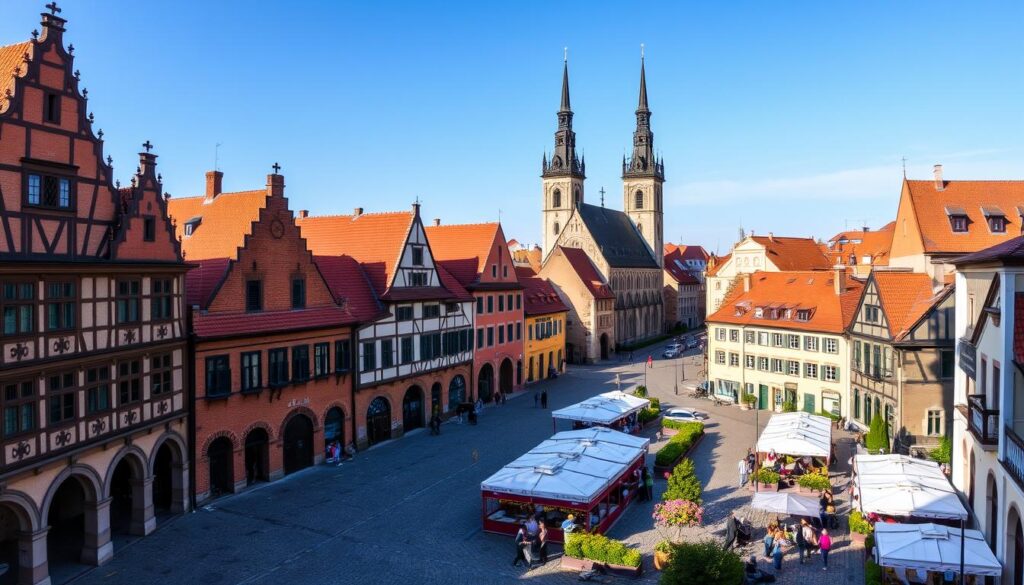
Poland’s historical centers showcase centuries of cultural heritage and architectural wonders. These urban landscapes feature medieval streets and UNESCO World Heritage Sites. They invite you to explore stunning Polish cultural heritage that has endured through time1.
Each city reveals a unique story of resilience and change. Kraków boasts royal chambers, while Gdańsk showcases its maritime legacy. These places have survived invasions, wars, and political shifts.
Poland’s historical centers are more than just stone museums. They’re vibrant spaces where past and present blend seamlessly. Every cobblestone street holds tales of remarkable events.
Ancient buildings whisper stories of extraordinary people. These individuals shaped Poland into the remarkable nation it is today.
Key Takeaways
- Explore centuries of Polish cultural heritage
- Discover UNESCO World Heritage Sites
- Experience diverse medieval architecture
- Witness remarkable historical preservation
- Understand Poland’s resilient historical narrative
Discovering the Charm of Kraków’s Historical Center
Kraków shines as a Polish historical gem. This UNESCO site enchants with its rich culture and stunning architecture2. Millions flock to its magical streets yearly, exploring centuries of Polish heritage2.
A Walk Through the Main Market Square
Europe’s largest medieval town square awaits in Kraków. The Main Market Square offers an immersive historical experience3. You’ll see marvels like the 14th-century Cloth Hall and St. Mary’s Basilica.
Local walking tours usually last three hours. This gives ample time to explore this remarkable location3.
- Explore medieval architectural details
- Discover historical landmarks
- Experience authentic Polish urban culture
Exploring Wawel Castle
Wawel Castle sits proudly on Wawel Hill, symbolizing Polish statehood. This royal home shows off various architectural styles and houses important art collections3.
The castle complex includes historic Wawel Cathedral. Polish monarchs were traditionally crowned here3.
“Wawel Castle represents the heart of Polish royal history and cultural heritage.”
The Unique Atmosphere of Kazimierz District
Kazimierz, once the Jewish quarter, blends Jewish and Christian heritage. It boasts historic synagogues, churches, and a lively cultural scene2.
This district offers a deep look into Kraków’s multicultural past. Most visitors spend 2-3 days exploring these rich historical centers2.
To maximize your experience, consider these travel tips:
- Wear comfortable walking shoes for cobblestone paths3
- Join early morning walking tours for a peaceful exploration3
- Budget your time to explore each historical site thoroughly
Kraków’s historical center offers a journey through time. History buffs and culture lovers alike will find it unforgettable2.
Unveiling Gdańsk’s Rich Maritime Heritage
Gdańsk’s history echoes through its cobblestone streets and landmarks. This Baltic Sea gem offers a unique view of Poland’s vibrant culture4.
The Iconic Long Market
The Long Market (Długi Targ) showcases Gdańsk’s Old Town medieval charm. It’s a spectacular street filled with history and beauty4.
- The famous Neptune Fountain
- Colorful merchant houses showcasing architectural brilliance
- Bustling cafes and shops that tell stories of centuries past4
St. Mary’s Church: A Gothic Masterpiece
St. Mary’s Church dominates Gdańsk’s skyline as a grand architectural marvel. It’s one of the world’s largest brick churches4.
Climb its tower for stunning views of the historic city landscape. The panorama stretches far across Gdańsk’s beautiful surroundings.
The European Solidarity Centre
The European Solidarity Centre is a must-visit interactive museum. It showcases the movement that changed Poland’s history4.
Here, you’ll learn about Solidarity’s role in ending communist rule. The impact of this movement spread across Europe.
“Gdańsk is not just a city, it’s a living museum of resilience and hope.” – Local Historian
| Attraction | Unique Feature |
|---|---|
| Gdańsk Crane | Symbol of maritime heritage4 |
| Westerplatte | First WWII battle site4 |
| Amber Museum | Showcases local gemstone culture4 |
Gdańsk’s thousand-year maritime history shines through its streets. The city’s spirit has endured conflicts and flourished4.
Experiencing Warsaw’s Blend of Modern and Historical
Warsaw showcases resilience and rebirth. The city’s landscape tells a powerful story of survival after World War II5. It blends historical reconstruction with modern innovation, capturing Polish culture’s essence.
The Royal Route: A Journey Through Time
The Royal Route offers a journey through Warsaw’s rich history. This historic pathway connects several significant landmarks. It includes the Royal Castle, Łazienki Park, and Wilanów Palace.
- Royal Castle
- Łazienki Park, covering 76 hectares in the city center5
- Wilanów Palace
The Frédéric Chopin Monument in Łazienki Park is a must-see. It hosts free piano concerts every Sunday during summer5.
The Old Town Reconstruction
Warsaw’s Old Town represents human determination. World War II reduced 80% of the city to rubble5. It was rebuilt using 18th-century paintings as references.
Today, this area is a UNESCO World Heritage Site. It showcases the city’s remarkable restoration efforts6.
The Impact of WWII on the City
The Warsaw Uprising of 1944 was a critical moment. German forces decimated the city as retaliation against the Polish Resistance5. Despite challenges, Warsaw transformed into a modern metropolis.
“Warsaw is not a city that can be easily defeated. It rises, rebuilds, and continues to shine.” – Anonymous
Warsaw blends historical sites like the Warsaw Barbican5 with modern marvels. The Varso Tower, Europe’s tallest building7, stands out. The city symbolizes resilience, innovation, and cultural pride.
Other Notable Historical Centers in Poland
Poland’s historical centers showcase the country’s rich cultural tapestry. Cities like Wrocław, Toruń, and Lublin offer fascinating glimpses into Poland’s diverse heritage. These places reveal stunning architectural landscapes that tell stories of medieval knights and Renaissance brilliance8.
Wrocław’s Market Square: A Cultural Hub
Wrocław’s market square is a testament to architectural beauty. The Wrocław Market Square features Gothic structures and colorful townhouses that captivate visitors. The city’s Centennial Hall, a UNESCO site, boasts the world’s largest reinforced concrete dome8.
Toruń: The Birthplace of Copernicus
Toruń offers a remarkable journey through medieval history. It’s the birthplace of astronomer Nicolaus Copernicus and a well-preserved medieval gem. Toruń’s Old Town showcases stunning architecture unchanged since the 14th century8.
Lublin’s Renaissance Architecture
Lublin Castle represents Poland’s architectural evolution magnificently. The city’s Renaissance structures provide an immersive experience of Polish cultural development. Lublin offers a unique view of Poland’s architectural and cultural heritage9.
FAQ
What makes Poland’s historical centers unique?
Poland’s historical centers are rich in cultural heritage. They feature medieval architecture and UNESCO World Heritage sites. These cities have shown remarkable resilience through various historical challenges.
Kraków, Gdańsk, and Warsaw offer immersive journeys through time. They boast well-preserved market squares, Gothic castles, and cobblestone streets. These elements tell stories of Polish history and cultural diversity.
Is Kraków’s Old Town worth visiting?
Kraków’s historical center is a UNESCO World Heritage site. It features Europe’s largest medieval town square. The 14th-century Cloth Hall and St. Mary’s Basilica are must-see attractions.
Wawel Castle is another stunning landmark in Kraków. The Kazimierz district blends Jewish and Christian heritage. History buffs will find Kraków a fascinating destination.
What historical significance does Gdańsk have?
Gdańsk is a crucial historical city with rich maritime heritage. It reflects Hanseatic League influences and played a key role in modern Polish history. The European Solidarity Centre honors the movement that helped end communism.
Gdańsk’s unique architecture is a sight to behold. The Long Market and St. Mary’s Church, the world’s largest brick church, are popular attractions.
How was Warsaw’s Old Town restored after World War II?
Warsaw’s Old Town shows Polish resilience. It was rebuilt after near-total destruction in World War II. The reconstruction used 18th-century paintings by Bernardo Bellotto as reference.
Now a UNESCO World Heritage site, the Old Town features the Market Square. St. John’s Cathedral is another notable landmark. The area blends historical reconstruction with modern urban development.
Are there other interesting historical centers in Poland?
Poland offers several fascinating historical centers beyond major cities. Wrocław has a beautiful Gothic market square. Toruń, Nicolaus Copernicus’ birthplace, boasts medieval architecture.
Lublin showcases Renaissance and Baroque styles. Each city provides unique insights into Poland’s diverse cultural heritage. They offer visitors glimpses into various historical experiences.
What are some must-see historical attractions in Poland?
Top historical attractions include Wawel Castle in Kraków and the European Solidarity Centre in Gdańsk. Warsaw’s Royal Castle and the Wieliczka Salt Mine are also popular.
Malbork Castle, the world’s largest brick castle, is worth a visit. The Auschwitz Concentration Camp Memorial offers sobering insights. These sites reveal Poland’s complex and resilient history.
When is the best time to visit Poland’s historical centers?
Late spring (May-June) or early autumn (September-October) are ideal for visiting. The weather is mild and tourist crowds are smaller during these times. Summer can be busy and warm.
Winter offers a magical atmosphere, especially around Christmas markets. Each season provides a unique perspective on Poland’s historical cities. Choose based on your preferences and travel style.
Source Links
- 10 Historic Sites, Landmarks and Monuments to See in Poland – https://www.historyhit.com/guides/historic-sites-in-poland/
- Visit Poland – https://evendo.com/locations/poland/warta-mouth-national-park/landmark/visit-poland
- Historic Centre of Kraków – https://worldheritagesites.net/krakow-poland/
- Exploring Gdansk: Unveiling the Maritime Charms, History, and Amber Treasures – https://pg.world/articles/shore_excursions_gdansk_8
- The Ultimate City Guide To Visiting Warsaw, Poland – Where in the World is Tosh – http://www.whereintheworldistosh.com/2020/12/21/the-ultimate-city-guide-to-visiting-warsaw-poland/
- Warsaw, a city of contrasts – https://northtrotter.com/2015/10/23/warsaw-a-city-of-contrasts/
- Warsaw’s Modern Side: A Thriving Hub of Art, Food, and Innovation – Guidester – https://www.guidester.com/warsaw-modern-side/
- Poland’s UNESCO World Heritage Sites | Poland at War Tours – https://polandatwartours.com/what-are-polands-unesco-world-heritage-sites/
- List of World Heritage Sites in Poland – https://en.wikipedia.org/wiki/List_of_World_Heritage_Sites_in_Poland