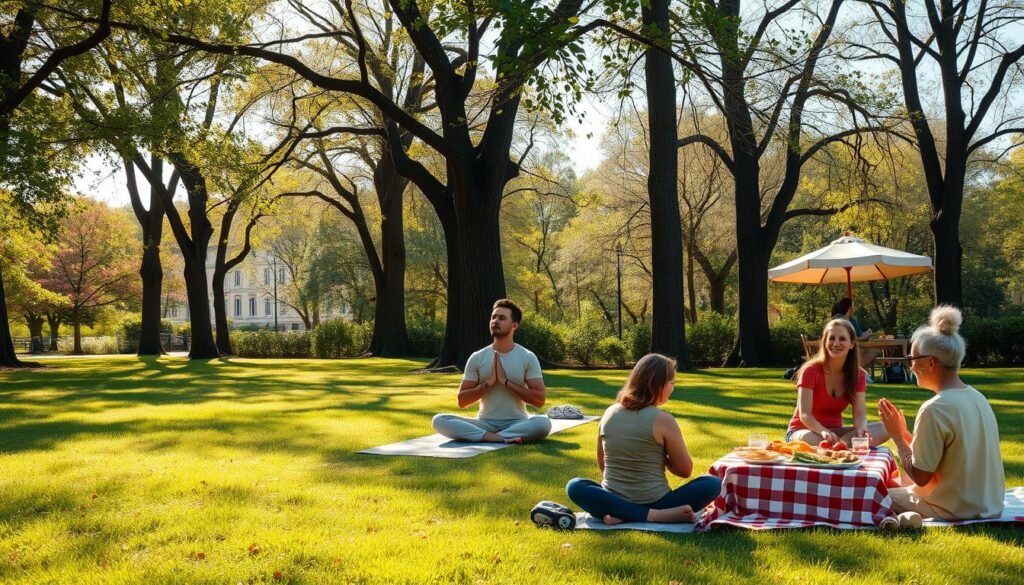
Everyday mindfulness is a powerful way to live with present moment awareness. It transforms daily experiences and reduces stress12. Mindful living isn’t about perfection, but about connecting with your thoughts, emotions, and surroundings1.
Mindfulness helps you process experiences more accurately and build resilience. It can improve your mental health, relationships, and overall happiness13. With mindfulness, you can navigate your day with increased clarity and intention.
Start your mindful journey with simple practices. Set daily intentions and pause to observe your thoughts12. This approach helps you savor life’s moments and manage stressful situations effectively2.
Key Takeaways
- Mindfulness reduces stress and increases overall well-being
- Present moment awareness improves mental clarity
- Conscious presence helps manage emotional responses
- Everyday mindfulness can be practiced through simple techniques
- Mindful living leads to improved relationships and happiness
Understanding Everyday Mindfulness
Mindfulness transforms your daily life experience. It fosters attentive observation of inner and outer experiences with genuine curiosity4. This practice invites you to engage each moment through intentional focus and nonjudgmental acceptance.
What is Mindfulness?
Mindfulness is a fundamental human capability. It helps you navigate life with clarity and balance4. It involves cultivating awareness of your present moment experiences without judgment.
Your emotional intelligence grows as you observe your thoughts and feelings compassionately. This practice enhances your ability to respond to life’s challenges with greater ease.
- Awareness of current experiences
- Non-reactive observation of thoughts
- Acceptance of present moment sensations
Benefits of Mindfulness
Mindfulness offers remarkable benefits across multiple life domains. Research shows it can significantly reduce stress, especially during challenging times like the pandemic5.
People who practice mindfulness experience improved mental health and enhanced work performance. They also report better overall well-being6.
| Area of Impact | Potential Benefits |
|---|---|
| Mental Health | Stress reduction, emotional regulation |
| Professional Life | Increased creativity, better concentration |
| Physical Well-being | Improved stress response, relaxation |
Common Misconceptions
Many believe mindfulness requires hours of meditation or is only for spiritual practitioners. In reality, it’s accessible to everyone and can be practiced in short moments.
You can transform your daily experiences by developing intentional focus4. This simple practice can lead to profound changes in your life.
“Mindfulness is about being fully awake in our lives.” – Jon Kabat-Zinn
Practical Ways to Incorporate Mindfulness
Mindfulness can change how you handle life’s challenges. Simple stress reduction techniques are powerful tools for modern living. They’re easier to use than you might think.
Mindful Breathing Techniques
Breathing is your go-to meditation practice. It anchors you in the present moment. Focus on your breath to start.
- Take five deep breaths before beginning any task
- Practice conscious presence during stressful moments
- Use breath as a natural stress relief mechanism
Mindfulness in Daily Activities
Turn everyday moments into chances for awareness. Mindful practices can easily fit into your day7:
| Activity | Mindful Approach |
|---|---|
| Eating | Focus on taste, texture, and eating slowly |
| Walking | Pay attention to each step and body movement |
| Working | Practice single-tasking with full attention |
“Mindfulness isn’t about perfection, it’s about paying attention”
Using Mindfulness Apps
Tech can boost your meditation practices. Many apps offer guided sessions to reduce anxiety and improve focus8. These digital tools make conscious presence easier, especially for beginners9.
Consistent practice is vital. Try to make mindfulness part of your daily routine. Aim for about six months to see real benefits7.
Overcoming Challenges to Mindfulness
Mindfulness isn’t always easy. You’ll face obstacles that test your commitment. Stress can create barriers, leading to restlessness and negative thoughts10. Recognizing these challenges is crucial for developing a strong practice.
Attentive observation demands patience and effort. Many struggle with distractions during their practice11. When your mind wanders, gently refocus without self-criticism. Mindfulness techniques can boost your emotional regulation skills10.
Build a sustainable routine with supportive environments. Create a quiet space at home and set reminders. Explore community resources to strengthen your practice11.
Every moment of awareness is a small win. Your skills will improve over time. This will help you manage stress and boost focus12. Learn more about overcoming mindfulness challenges.
FAQ
What exactly is mindfulness?
Mindfulness means being fully present in the moment without judgment. It’s about paying attention to your thoughts and feelings with openness. By practicing mindfulness, you can observe experiences without getting caught up in them.
How can I incorporate mindfulness into my daily routine?
You can easily add mindfulness to your everyday life through simple practices. Try mindful breathing during coffee or focus on your food while eating. Set small daily intentions and gradually expand your mindful moments.
Even short 1-2 minute practices can make a big difference in your awareness. Take a few moments to observe your surroundings during your daily walk.
Do I need to meditate for hours to practice mindfulness?
Not at all! You can practice mindfulness in short moments throughout your day. Focus on your breath for a few seconds or pay attention while washing dishes.
The key is consistency and bringing your attention to the present moment. Even a minute or two of mindfulness can be beneficial.
What are the main benefits of practicing mindfulness?
Mindfulness offers many benefits, including less stress, better emotional control, and improved focus. It helps you become more aware of your thoughts and feelings.
Regular practice can help you respond better to situations and improve relationships. It creates space for conscious decision-making and breaks automatic reactive patterns.
How do I handle distractions during mindfulness practice?
Distractions are normal in mindfulness practice. When your mind wanders, gently bring your attention back without judging yourself. Think of your thoughts like passing clouds – notice them without getting caught up.
Each time you refocus, you’re strengthening your mindfulness skills. This process helps build your ability to stay present.
Can mindfulness help with stress and anxiety?
Yes, mindfulness is great for managing stress and anxiety. It teaches you to observe thoughts without feeling overwhelmed. Techniques like mindful breathing and body scans can calm your nervous system.
Over time, mindfulness builds emotional resilience. It helps you develop a more balanced approach to life’s challenges.
Do I need any special equipment to practice mindfulness?
No special equipment is needed for mindfulness. Your breath, body, and the present moment are all you need. Some people use apps, guided meditations, or join online communities for support.
A meditation cushion or quiet space can be helpful, but they’re optional. The most important thing is your willingness to be present and aware.
Source Links
- How to Make Mindfulness Your Way of Life – https://www.verywellmind.com/mindfulness-exercises-for-everyday-life-3145187
- Benefits of Mindfulness – HelpGuide.org – https://www.helpguide.org/mental-health/stress/benefits-of-mindfulness
- 6 Ways Mindfulness Can Improve Your Daily Life – https://www.mentalhealth.com/library/6-ways-mindfulness-can-improve-your-daily-life
- Everyday Mindfulness with Jon Kabat-Zinn – https://www.mindful.org/everyday-mindfulness-with-jon-kabat-zinn/
- Everyday Mindfulness: 6 Tips for Mindful Living – https://psychcentral.com/health/everyday-mindfulness
- MF3424 Everyday Mindfulness, Fact Sheet – https://bookstore.ksre.ksu.edu/pubs/everyday-mindfulness-fact-sheet_MF3424.pdf
- Can mindfulness exercises help me? – https://www.mayoclinic.org/healthy-lifestyle/consumer-health/in-depth/mindfulness-exercises/art-20046356
- 10 Simple Ways to Practice Mindfulness In Our Daily Life – https://moniquetallon.com/10-simple-ways-to-practice-mindfulness-in-our-daily-life/
- Promote Mindfulness – https://www.cdc.gov/mental-health-action-guide/strategies/promote-mindfulness.html
- How to Overcome Obstacles to Mindfulness – https://www.intelligentchange.com/blogs/read/how-to-overcome-obstacles-to-mindfulness?srsltid=AfmBOorwMNoLrVka9c8zHF_lfYKkZcExuJxAIrKxh0vajG1J0yN7PgdS
- How To Incorporate Mindfulness Into Your Daily Life – Windmoor Healthcare – https://windmoor.com/blog/how-to-incorporate-mindfulness-into-your-daily-life/
- Mindfulness for Your Health – https://newsinhealth.nih.gov/2021/06/mindfulness-your-health