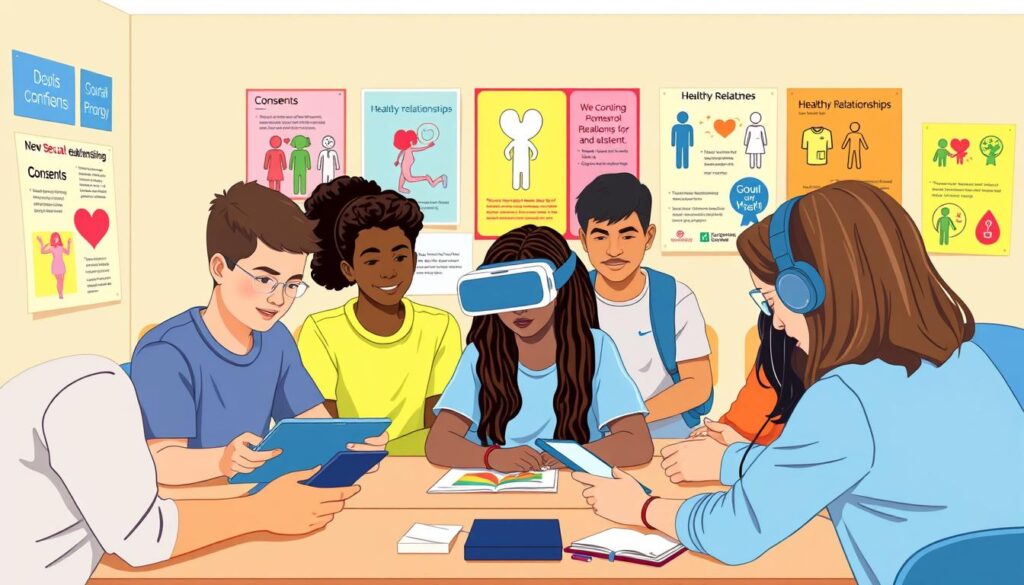
Sexual education is changing fast. It’s moving beyond old-school ideas to cover more complex human experiences. Young people want lessons that include everyone and challenge outdated beliefs.
Modern sex ed goes deeper than just biology. Technology has changed how we get information about sex. This brings new chances to learn, but also risks of false info.
Good sex ed now needs to cover many areas. It should teach about consent and healthy relationships. It must also help people think critically about sexual health.
Students need to learn communication skills1. They should question gender stereotypes too. These lessons help create stronger, more respectful relationships.
Key Takeaways
- Embrace comprehensive and inclusive sexual education approaches
- Recognize technology’s role in information dissemination
- Focus on consent and communication skills
- Challenge traditional gender stereotypes
- Develop critical thinking about sexual health
Traditional Sexual Education vs Contemporary Approaches
Sexual education has changed a lot in recent years. It now tackles complex issues for young people. Digital tools have made learning about sex and health more interesting.
Historical Development of Sex Education
Early sex ed focused on basic biology and disease prevention. In the U.S., these programs started in the early 1900s to protect public health2. New technology has changed how we learn about sex.
Limitations of Traditional Methods
Old-school sex ed had some big problems. It didn’t cover sexual diversity well. It assumed everyone was straight. It didn’t teach much about emotions or healthy relationships.
- Limited scope of sexual diversity
- Heteronormative framework
- Minimal focus on emotional intelligence
- Insufficient information about consent and healthy relationships
“The future of sex education lies in comprehensive, inclusive, and technologically integrated approaches.”
Current Challenges in Implementation
Modern sex ed faces tricky issues. About 39.5% of high school students say they’re sexually active3. This shows we need better ways to teach. Online platforms offer new options for learning outside the classroom2.
| Traditional Approach | Contemporary Approach |
|---|---|
| Biological focus | Holistic understanding |
| Limited diversity representation | Inclusive perspectives |
| Lecture-based learning | Interactive digital platforms |
New tech in sex ed is breaking down barriers. It’s making learning more fun and easy for young people everywhere.
Modern Evolution of Sexual Education Content
Sexual education has transformed significantly. It now embraces future growth and modern development strategies. These go beyond traditional risk reduction approaches4.
Today’s sexuality education offers a holistic view of personal development. It addresses complex aspects of human relationships and sexual health5.
Key modernization strategies have emerged to create more comprehensive learning experiences:
- Expanding beyond biological fundamentals
- Integrating emotional intelligence and communication skills
- Emphasizing consent and healthy relationship dynamics
- Promoting sexual well-being and personal empowerment
The new approach reflects a nuanced understanding of adolescent needs. Research has identified effective curriculum-based programs that positively impact young people’s sexual behavior5.
These programs now focus on:
- Comprehensive knowledge transfer
- Skill-building for healthy relationships
- Emotional and psychological preparedness
“Education is not just about information, but transformation of understanding.” – Sexual Health Expert
Despite progress, challenges remain. Adolescents’ access to formal sex education has declined, especially among specific demographic groups6.
This highlights the need for robust, inclusive, and adaptive sexual education approaches4. Modern sexual education aims to be informative, empowering, and responsive to social changes.
It prioritizes comprehensive understanding, personal agency, and healthy relationships. These elements are crucial for a well-rounded sexual education experience.
Digital Transformation and Technology Integration
Tech advancements are changing sexual education. Digital platforms revolutionize how youth access info on sexual health and relationships7.
Tech progress offers new chances for inclusive sexual education. Digital transformation reshapes learning, making info more engaging and personal7.
Online Resources and Digital Tools
Modern sexual education uses various digital platforms to reach students better:
- Interactive mobile applications
- Comprehensive online learning modules
- Anonymized consultation platforms
- Multimedia educational content
Social Media’s Educational Impact
Social media is now a strong tool for sexual education. It allows for:
- Real-time information sharing
- Community support networks
- Destigmatization of sexual health topics
Virtual Learning Environments
| Technology | Educational Benefit |
|---|---|
| Virtual Reality | Immersive learning experiences |
| AI Chatbots | Personalized sexual health guidance |
| Interactive Webinars | Expert-led remote education |
Digital changes make sexual education more reachable and fun. It can now fit each person’s learning needs better.
“Technology opens doors to understanding that were previously closed.” – Sexual Health Educator
Conclusion
Sexual education is changing fast. New strategies use technology and holistic learning. This shift brings more inclusive and accurate content for diverse needs.
Digital platforms are making sex ed more accessible. Interactive online resources offer age-appropriate insights on relationships and consent. These trends move beyond risk-reduction to empowering experiences.
Teamwork is key in advancing sexual education. Schools, communities, and parents must create comprehensive learning spaces. Supporting youth sex ed helps develop confident, respectful adults.
Modern sex ed goes beyond just facts. It fosters understanding and respect. It prepares people for healthy relationships. Your involvement shapes a more caring approach to sexual learning8.
FAQ
How has sexual education evolved in the United States?
Sexual education has expanded beyond risk reduction and pregnancy prevention. It now covers consent, gender stereotypes, and diverse identities. Modern approaches promote healthy relationship skills and create inclusive learning environments for young people.
What are the key challenges in modern sexual education?
Educators face cultural resistance and the need to address diverse youth populations. They must combat online misinformation and develop age-appropriate content. Balancing scientifically accurate information with inclusive programming remains a challenge.
How has technology impacted sexual education?
Digital technologies have revolutionized access to sexual health information. Online resources offer unprecedented knowledge, but also expose youth to inaccurate content. New educational tools create engaging learning experiences through virtual environments and social media.
What topics are now included in modern sexual education?
Modern curricula cover healthy relationships, consent, and sexual pleasure. They address communication skills and challenge gender stereotypes. The focus has shifted to positive sexuality and preparing youth for healthy adult relationships.
Why is comprehensive sexual education important?
Comprehensive sex ed supports young people’s overall development. It helps them understand their bodies and develop healthy relationship skills. This education enables informed decisions about sexual health and supports emotional and physical well-being.
What are the international guidelines for sexual education?
UNESCO provides technical guidance for developing comprehensive sexuality education programs. These guidelines cover relationships, gender, health skills, and sexual behavior. They promote a holistic approach that supports young people’s positive sexual development.
How can parents and educators collaborate on sexual education?
Effective sex ed requires teamwork between schools, parents, and community organizations. This approach reinforces consistent, positive messages about sexuality. Parents can maintain open communication and provide age-appropriate resources to support formal education.
Source Links
- 40 Years of Sexuality Education: What’s Changed? – https://www.etr.org/blog/40-years-of-sexuality-education-whats-changed/
- Sex Education in the Spotlight: What Is Working? Systematic Review – https://pmc.ncbi.nlm.nih.gov/articles/PMC7967369/
- Development of Contextually-relevant Sexuality Education: Lessons from a Comprehensive Review of Adolescent Sexuality Education Across Cultures – https://pmc.ncbi.nlm.nih.gov/articles/PMC6406865/
- The History of Sexuality Education – https://rethinkingschools.org/articles/the-history-of-sexuality-education/
- PDF – https://www.plannedparenthood.org/uploads/filer_public/da/67/da67fd5d-631d-438a-85e8-a446d90fd1e3/20170209_sexed_d04_1.pdf
- The State of Sex Education in the United States – https://pmc.ncbi.nlm.nih.gov/articles/PMC5426905/
- The evolution of digital transformation: Then vs. now – Davies Technology Solutions – https://technology.davies-group.com/technology/digital-innovation/blog/the-evolution-of-digital-transformation-then-vs-now/
- 4 Conclusion | Science, Evolution, and Creationism – https://nap.nationalacademies.org/read/11876/chapter/5