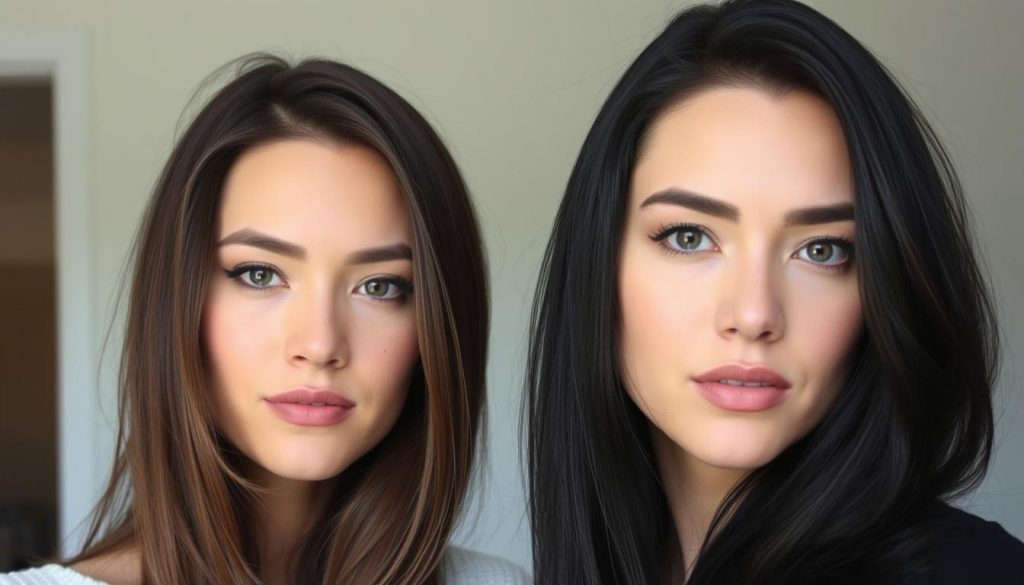
Figuring out your exact hair color can be challenging. Many struggle to tell dark brown from black, especially in different lighting. These subtle differences aren’t always easy to spot.
Knowing your true hair color matters for dyeing or describing yourself. Hair color levels range from 1 (black) to 10 (lightest blonde). Dark brown is usually level 3, while pure black is level 2.
Natural hair color can shift over time. This can make it harder to identify your exact shade.
Lighting greatly affects how we see hair color. What looks black in dim light might show brown tones in bright sunlight. Sun exposure can change natural hair color, especially near the hairline.
Key Takeaways
- Hair color levels range from 1 (black) to 10 (lightest blonde)
- Lighting dramatically impacts hair color perception
- Natural hair color can change with age and sun exposure
- Dark brown and black hair have subtle but distinct differences
- Professional color assessment can provide definitive answers
Understanding Hair Color Levels and Classifications
Hair color blends science and art. Colorists use a system to classify hair shades from deep black to light blonde2. This helps stylists and customers navigate the world of hair color accurately.
The Professional Hair Level System
The hair level system is a universal scale for hair colors. It uses numbered levels to represent shade intensity. Natural hair colors fall into four main groups: black, brown, blonde, and red2.
- Level 1: Deepest black
- Level 2: Darkest brown
- Level 3: Dark brown
- Level 4-5: Medium brown shades
- Level 6-7: Light brown tones
- Level 8-9: Blonde ranges
- Level 10: Lightest blonde
Understanding Color Melanin Content
Hair color science revolves around melanin. Over 95% of melanin in dark hair is eumelanin2. This pigment determines the depth of brunette and ebony shades.
Melanin concentration is key when choosing hair dye. It helps predict color results for different hair types.
The Universal Color Scale
Colorists use advanced techniques to change hair color. Permanent hair coloring uses oxidation dyes to create various shades3. These complex chemical reactions produce a wide spectrum of colors.
“Color is a power which directly influences the soul” – Wassily Kandinsky
Hair color is both personal and scientific. It mixes art and chemistry to help people express their style. Your chosen shade can reflect your unique personality.
Dark Brown vs Black Hair: Key Differences and Characteristics
Dark brown and black hair have subtle differences. These rich shades require careful examination to distinguish between them. Exploring these nuances can be an exciting journey of self-discovery.
The Root Examination Method
Your true hair color starts at the roots. The hair closest to your scalp shows your most accurate natural color.
When checking your roots, look for natural pigmentation near the scalp. Notice subtle color changes in different lighting. Pay attention to your hair’s underlying tone.
Sunlight Testing Technique
Natural light is the best way to reveal hair color. Dark brown hair often shows golden or reddish highlights in sunlight.
Black hair usually keeps a deep, uniform look. It may have blue-like reflections when exposed to direct sunlight4.
Professional Color Assessment Tips
Hair experts suggest a thorough approach to identify hair color. They offer valuable insights for determining your shade.
| Assessment Method | Dark Brown Characteristics | Black Hair Characteristics |
|---|---|---|
| Color Intensity | Softer, variable tones | Pure, deep color5 |
| Skin Tone Compatibility | Warm skin tones preferred | Suits all skin tones5 |
| Hair Highlights | Visible in different lights | Minimal reflection |
Pro tip: Still unsure? Ask a professional colorist. They can give you a definitive assessment of your natural hair color4.
Conclusion
Dark brown and black hair colors have subtle differences. Dark brown hair has rich brown undertones, giving it a glossy look. It suits many skin tones and enhances individual beauty67.
Professional color analysis can help find your ideal hair shade. It ensures the color matches your seasonal palette. Hair color should complement your skin tone and personal style6.
Brown and black are popular hair colors. They offer a natural, classic appearance. Before dyeing your hair, consult a professional colorist76.
Your undertone, eye color, and preferences matter when choosing hair color. The most important thing is feeling confident in your choice. Your comfort with the color is key7.
To learn more about hair color nuances, explore this comprehensive guide on dark brown hair. It can help you make informed decisions about your natural hair color.
FAQ
What’s the difference between dark brown and black hair?
Dark brown hair shows brown hues in natural light. Black hair appears completely dark without visible brown tones. The difference lies in color undertones and light reflection.
How can I tell if my hair is actually black or very dark brown?
Use the sunlight test to check your hair color. Dark brown hair reveals warm brown undertones in direct sunlight. True black hair stays consistently dark without brown reflections.
Examining your roots close to the scalp gives the most accurate color assessment.
What is the Hair Level System for hair color?
The Hair Level System classifies hair colors from Level 1 (black) to Level 10 (lightest blonde). Black hair is Level 1. Dark brown hair usually falls between Levels 2-3.
Can lighting really change how my hair color appears?
Yes, lighting dramatically affects hair color perception. What looks black indoors might show rich brown tones in bright sunlight. Natural daylight, indoor lighting, and camera flash all impact appearance.
How do professionals assess hair color accurately?
Stylists use color charts and compare hair to standard samples. They examine hair in various lighting conditions. Root examination, sunlight testing, and professional tools help determine accurate color.
Does my natural hair color matter when choosing hair dye?
Knowing your exact hair color is crucial for selecting the right dye. Understanding your true shade ensures more accurate and predictable results when coloring or highlighting.
Can hair color change as I get older?
Hair color naturally evolves with age, often becoming darker or lighter. Genetics, hormonal changes, and health can influence your hair’s pigmentation over time.
Are there genetic factors that influence hair color?
Hair color is primarily determined by genetics. Melanin in hair follicles dictates whether you’ll have black, dark brown, or lighter hair. Genes inherited from parents play a significant role in natural hair color.
Source Links
- What Color Is My Hair? Color Levels Guide | Madison Reed – https://www.madison-reed.com/blog/dear-color-crew-what-level-is-my-hair?srsltid=AfmBOoo6J1QRzDom0uCUekxVekxOF8nZ8u2IARwJGXKa1fCXiL-DBHR6
- Human hair color – https://en.wikipedia.org/wiki/Human_hair_color
- PDF – https://allstarce.com/wp-content/uploads/2015/06/Hair-Coloring.pdf
- Dark Brown vs Black Hair, The Main Difference Between The Two? – https://www.klaiyihair.com/blogs/blog/dark-brown-vs-black-hair-the-main-difference-between-the-two?srsltid=AfmBOopR7WVuq8nr-IcQ3Rt_M-FFHGXO9RdyZBLW8fA2qeW3WlDJxf5E
- Brown Vs Black Hair:Which is Better? – https://m.iseehair.com/blog/brown-vs-black-hair-which-is-better/
- Dark Brown Hair Color: Comprehensive Guide for Autumn and Winter Color – https://fourseasons.studio/blogs/news/exploring-dark-brown-hair魅?srsltid=AfmBOopNPBGtQCo3mcSTXqoVdFZBWGsTsNFmHWJA7_vfx5Wd3DThKL-f
- Brown Vs. Black Hair: Which Shade Suits You Best? – https://curlyme.com/blogs/curlyme-hair/brown-vs-black-hair?srsltid=AfmBOoq8YoW6OuUGa-wpJp3kHjZy_W5umbpXsXEZQZOZq0yYD_E77e2D