
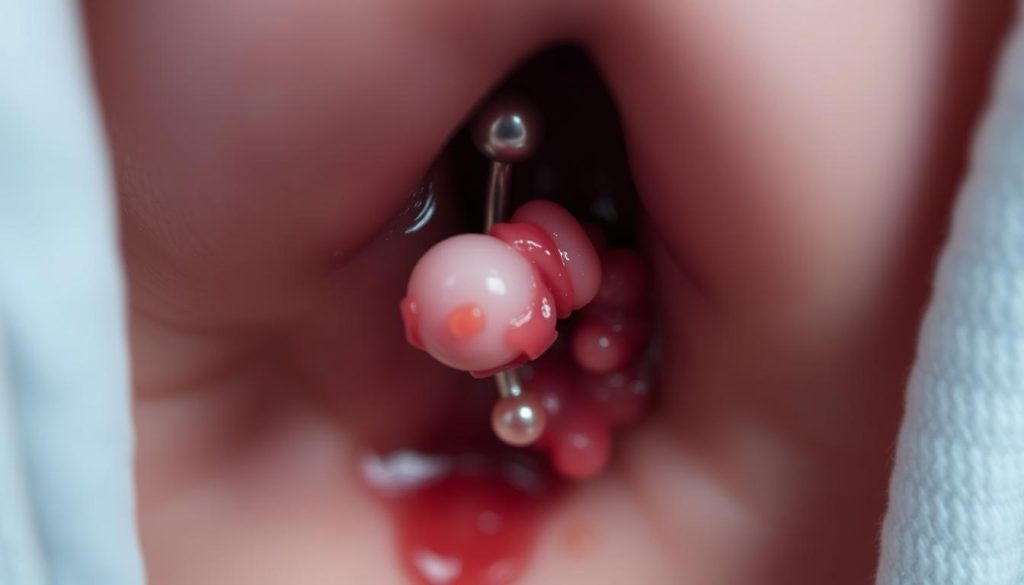
Navel piercing rejection can worry body art fans. Your body might try to push out the jewelry before healing is complete1. This often happens within weeks or months after getting pierced2.
Belly button piercing issues are common. Spotting signs early helps prevent lasting skin damage. Surface piercings like navels have higher rejection risks due to their location1.
Your genes and health affect how well you heal2. Piercers suggest close watching during early healing. Rejection can stem from body changes, jewelry quality, and immune responses1.
Key Takeaways
- Navel piercing rejection is most likely in the first few months
- Genetics can impact piercing healing rates
- Surface piercings have higher rejection risks
- Quality jewelry reduces rejection chances
- Early detection is crucial for preventing complications
Understanding Navel Piercing Rejection Signs and Symptoms
Navel piercing rejection occurs when your body tries to push out foreign objects. Spotting early signs can prevent damage and save your piercing investment3. About 23% of body piercings face some kind of problem4.
Early Warning Signs of Rejection
Watch for specific changes in your body’s response to spot navel piercing migration. Key early signs include:
- Jewelry appearing to move from its original position3
- Noticeable thinning of skin around the piercing2
- Increased size of entrance and exit holes2
Physical Changes to Watch For
Navel piercing healing issues can show up through various physical symptoms. Keep an eye out for these important signs:
| Symptom | Potential Indication |
|---|---|
| Visible jewelry through skin | Piercing becoming too shallow3 |
| Skin changes | Flakiness, redness, inflammation2 |
| Persistent discomfort | Potential rejection process3 |
Distinguishing Between Normal Healing and Rejection
Not all changes mean rejection. Normal healing involves some redness and mild discomfort2. Rejection becomes more likely when jewelry moves often.
Watch for skin becoming see-through or holes getting bigger than normal. These could be signs of rejection.
- Jewelry consistently moves
- Skin becomes increasingly transparent
- Holes expand beyond normal healing
Good aftercare and using metals like titanium can lower rejection risks42. Ask a pro for advice if you’re unsure about your piercing’s healing.
What Causes Navel Piercing Rejection and Prevention Methods
Knowing why navel piercings fail is key to successful healing. Navel piercings face unique challenges due to several factors5.
- Individual genetics5
- Skin surface characteristics
- Jewelry material and quality6
- Body changes and stress levels
For navel piercing care, choose top-quality materials like titanium, surgical steel, or 14-karat gold6. Avoid nickel alloys and brass. These can cause allergies and increase rejection risks6.
Good aftercare helps prevent rejection. Here are key strategies to follow:
- Choose a professional, experienced piercer
- Use recommended jewelry sizes (typically 14G, 7/16 inch)5
- Clean the piercing with sterile saline solution daily6
- Wear loose-fitting clothing during healing6
- Monitor piercing for early signs of migration
Navel piercings can take up to a year to heal fully6. Careful aftercare reduces rejection risk7. Stay alert and patient for best results.
Conclusion
Navel piercing rejection can be tough for body mod fans. Studies show 50% of millennials have piercings beyond their ears. Body piercing has gained huge popularity lately8.
Act fast if you think your navel piercing is rejecting. Pros say to remove the jewelry right away. This helps prevent more problems. Most people heal fine with proper care9.
Your health comes first when getting body mods. Ask a pro about rejection treatment and re-piercing options. Each body heals differently, so be patient.
Pay attention to how your body reacts. Keep talking to your piercer about any concerns. With good care, you can handle piercing issues safely.
FAQ
What is navel piercing rejection?
Navel piercing rejection happens when your body tries to push out the jewelry. Your immune system sees it as foreign and moves it out. This can cause scarring if not dealt with quickly.
What are the early signs of navel piercing rejection?
Early signs include slight jewelry movement and increased sensitivity. You might notice the jewelry sitting differently or feeling looser. The skin may thin, and more of the jewelry’s bar might show.
How can I prevent navel piercing rejection?
Choose an experienced piercer and use high-quality jewelry made from surgical stainless steel or titanium. Ensure proper placement and follow strict aftercare instructions. Avoid trauma to the piercing and keep the area clean.
How long does it take for a navel piercing to heal?
Navel piercings usually take 6-12 months to fully heal. Be extra careful during this time and follow proper aftercare. Healing time can vary based on individual factors and body response.
Can I re-pierce my navel after a rejection?
Yes, you can re-pierce your navel after the previous site has healed completely. This may take several months to a year. Consult a professional piercer for personalized advice on a new piercing.
What type of jewelry is best to prevent rejection?
Choose high-quality jewelry made from biocompatible materials like titanium or surgical stainless steel. The jewelry should fit your specific anatomy. A professional piercer can help you select the most appropriate jewelry.
When should I remove my navel piercing if I suspect rejection?
If you notice significant signs of rejection, consult a professional piercer or healthcare provider. They can assess whether removal is necessary to prevent further complications or scarring.
Can poor aftercare cause piercing rejection?
Yes, inadequate cleaning and not following aftercare instructions can increase rejection risk. Use saline solution and avoid harsh chemicals. Keep the area clean and protected during healing.
Source Links
- How to Tell (And What to do) If Your Body Is Rejecting A Piercing? – https://pierced.co/blogs/all/rejected-piercing-guide
- Piercing Rejection – https://www.healthline.com/health/piercing-rejection
- Signs Your Body’s Rejecting A Piercing & What To Do About It, According To Our Piercer – Glam – https://www.glam.com/1500751/signs-body-rejecting-piercing-what-to-do/
- Piercing Rejection: What It Is and How To Treat It – https://www.health.com/condition/skin-conditions/piercing-rejection
- Belly Button Piercing – https://www.webmd.com/beauty/belly-button-piercing
- What You Should Know Before Getting a Belly Button Piercing – https://www.healthline.com/health/belly-button-piercing
- Piercing rejection: Signs, prevention, and how to stop it – https://www.medicalnewstoday.com/articles/321770
- Body image and self-perception in women with navel piercings – https://pmc.ncbi.nlm.nih.gov/articles/PMC9462717/
- Body Piercing: Medical Concerns with Cutting-Edge Fashion – https://pmc.ncbi.nlm.nih.gov/articles/PMC1496593/

