
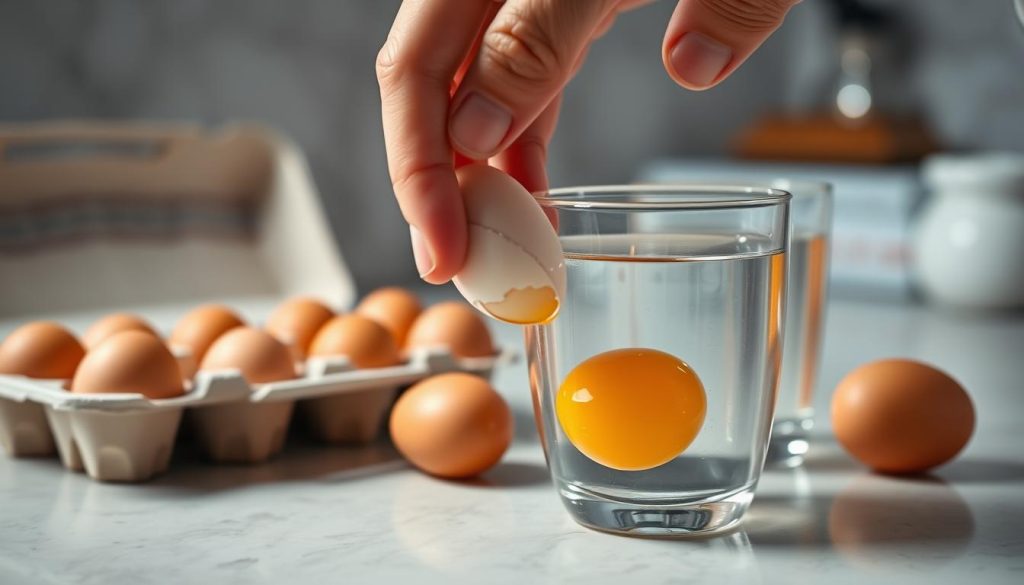
Identifying spoiled eggs is vital for food safety. It’s not just about the expiration date on the carton. Properly stored eggs can stay fresh for weeks beyond their printed date1.
The USDA states that eggs last three to five weeks when refrigerated1. Proper storage and knowing spoilage signs are key to maintaining egg freshness.
Simple tests can determine if an egg is still good. If you hear liquid swishing when shaking, it’s likely old1. A distinct smell is another clear sign of spoilage1.
Visual inspection can reveal issues like discoloration in the yolk or egg white1. These changes signal that eggs are no longer safe to eat.
Key Takeaways
- Eggs can remain fresh for weeks beyond the printed date
- Proper refrigeration is essential for egg preservation
- Multiple methods exist to check egg freshness
- Unusual sounds or smells indicate potential spoilage
- Visual changes can signal that eggs are no longer safe to eat
Understanding Egg Freshness and Storage
Proper egg storage is vital for food safety and quality. Careful attention to storage methods helps keep eggs fresh. Follow these guidelines to maintain egg freshness and safety.
Several factors determine how long eggs stay safe to eat. Eggs can be stored safely for four to five weeks from packing. Keep refrigerators at 40°F or lower to prevent bacteria growth.
Egg Storage Best Practices
- Store eggs in the coldest part of the refrigerator2
- Keep eggs on the middle or bottom shelf
- Avoid storing eggs in the refrigerator door
- Do not leave eggs at room temperature for more than 2 hours3
Understanding Egg Dates and Freshness
To detect bad eggs, pay attention to these key indicators:
- Float test: If an egg floats, it may be old and should be discarded2
- Check for discoloration in yolk or white
- Inspect for any unusual odors when cracked
| Egg Age | Storage Status | Safety Recommendation |
|---|---|---|
| 0-2 weeks | Peak Freshness | Optimal Quality |
| 2-4 weeks | Good Condition | Still Safe to Eat |
| 4-5 weeks | Use Caution | Perform Freshness Test |
A fresh egg should have a bright yellow or orange yolk. The yolk should appear rounded and firm. These guidelines will help you spot rotten eggs and ensure food safety.
Pro tip: Always trust your senses when checking egg freshness!
Checking if eggs are bad: Simple test methods
Egg quality checks are vital to spot expired or stale eggs. The float test is a reliable way to check egg freshness. Fill a bowl with cold water and gently place the egg inside4.
If the egg sinks and lays flat, it’s fresh and safe to eat5. Eggs that sink but stand upright are less fresh but still edible. Use these within a week4.
Fresh eggs should have no smell. A putrid or sulfuric odor means spoilage4. Look for discoloration in the egg white, like pink hues or iridescence4.
The egg float test adds certainty when checking egg quality5. Combining multiple testing methods gives the best results. Toss out eggs that float to the top of water4.
Properly refrigerated store-bought eggs can stay fresh for three to five weeks5. Trust your senses and put food safety first to avoid foodborne illnesses.
FAQ
How can I tell if eggs have gone bad?
Check egg freshness using the float test. Fresh eggs sink, while old eggs float. Crack the egg and smell it. Bad eggs have a strong sulfuric odor.
Inspect the egg for discoloration or unusual texture. Trust your senses and discard any questionable eggs to avoid foodborne illness.
How long do eggs typically stay fresh in the refrigerator?
Eggs can stay fresh for 3-5 weeks after purchase. Keep them at 40°F or below in the refrigerator. Store eggs in their original carton on an interior shelf.
What’s the difference between “sell-by,” “use-by,” and packing dates?
“Sell-by” dates tell retailers how long to display eggs. “Use-by” dates suggest peak quality. Packing dates show when eggs were placed in the carton.
Eggs are usually safe 3-5 weeks past the packing date if stored correctly.
How do I perform the egg float test?
Fill a bowl with cold water and gently place the egg inside. Fresh eggs sink and lay flat at the bottom. Slightly older eggs stand upright.
Bad eggs float to the top and should be thrown away immediately.
Can I still use eggs that are past their expiration date?
Eggs can be safe beyond their printed date if stored properly. Do a float test, smell check, and visual inspection. If the egg passes these tests, it’s likely still good.
Always prioritize food safety when deciding whether to use eggs.
What are signs of a spoiled egg?
Spoiled eggs have a strong, sulfuric odor. Look for discolored or cloudy egg whites. Pink or iridescent egg whites are also signs of spoilage.
A watery consistency indicates the egg has gone bad. Discard any eggs with these signs to avoid food poisoning.
How should I store eggs to maximize their freshness?
Keep eggs in their original carton on an interior refrigerator shelf. Maintain a consistent temperature around 40°F. Store eggs away from strong-smelling foods.
Always place eggs large end up. This helps maintain the air pocket and yolk position.
Source Links
- 5 Easy Ways To Tell If Your Eggs Are Still Good – https://www.southernliving.com/food/dairy/eggs/how-to-tell-if-an-egg-has-gone-bad?srsltid=AfmBOopB6zwiEo0RbSL9XB052OBnu3aNW0jftjyWa2lGas77Jx_vP-Ax
- How to Tell If Eggs Are Bad – https://www.eatingwell.com/article/7962465/how-to-tell-if-eggs-are-bad/
- How Can You Tell an Egg Has Gone Bad? – https://www.bonappetit.com/test-kitchen/how-to-tell-if-eggs-are-bad?srsltid=AfmBOooP4A8yFwldObwBWvsBcOOro9flw2nEpKx5i5HSakYBI_yLO-7a
- 4 Ways to Tell if Your Eggs Have Gone Bad – https://www.foodandwine.com/tell-if-eggs-are-bad-7370504
- 5 Easy Ways To Tell If Your Eggs Are Still Good – https://www.southernliving.com/food/dairy/eggs/how-to-tell-if-an-egg-has-gone-bad

