
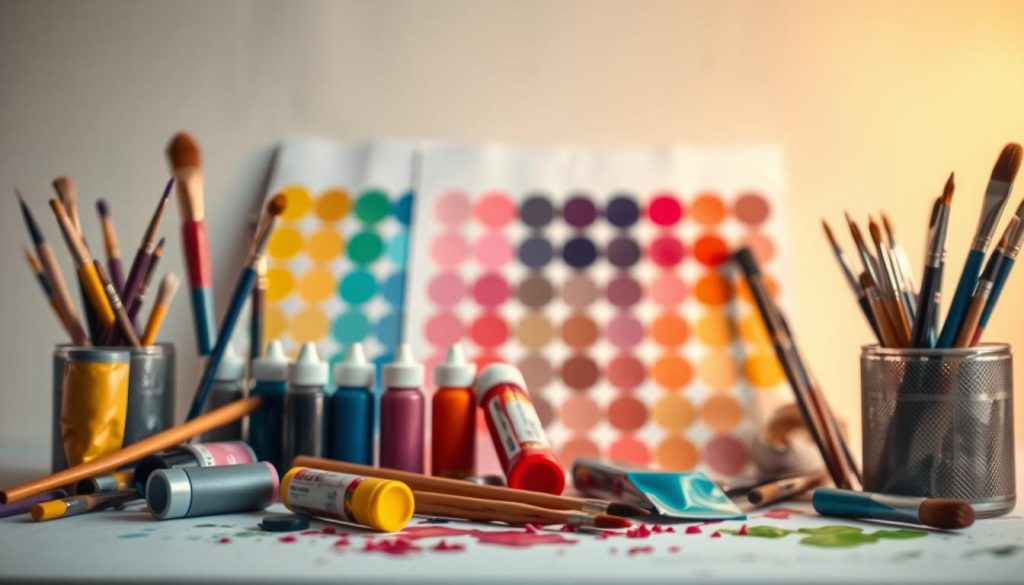
Color theory opens up a world of exciting pigment combinations. Artists and designers use it to create a wide range of visual effects1.
Color mixing is both a skill and an art form. It transforms basic pigments into vibrant, complex shades. This process unlocks endless creative possibilities for artists2.
The foundation of color theory consists of three primary pigment colors. These are red, blue, and yellow. They serve as building blocks for creating an entire spectrum of colors2.
Blending primary colors produces fascinating results. Red and blue make violet. Blue and yellow create green. Red and yellow combine to form orange2.
Key Takeaways
- Primary colors (red, blue, yellow) are essential for color mixing
- Blending colors creates new, exciting hues
- Understanding color theory enhances artistic expression
- Experimenting with pigment ratios yields unique results
- Color mixing is both a science and an art form
Understanding Color Theory Fundamentals
Color theory explores visual communication and artistic expression. Artists use color mixing to create captivating visual experiences. Sir Isaac Newton designed the first color wheel in 1666.
The color wheel is crucial for understanding chromatic interactions. It shows how colors relate and interact. Artists use it as a guide for creating palettes.
Primary, Secondary, and Tertiary Colors
Primary colors are red, blue, and yellow. These hues can’t be created by mixing other colors. When combined, primary colors produce secondary colors:
- Orange (red + yellow)
- Green (blue + yellow)
- Purple (red + blue)
Color Wheel and Color Relationships
The color wheel reveals interesting relationships between colors. Key color schemes include:
- Complementary colors: Opposite colors on the wheel
- Analogous colors: Colors next to each other
- Triadic colors: Three colors evenly spaced around the wheel
Warm vs Cool Colors: Understanding Temperature
Colors have emotional temperatures that affect artwork. Warm colors like reds and oranges evoke energy and brightness. Cool colors such as blues and greens suggest calm and serenity3.
Tinting and shading techniques create depth and nuance in art. Tints are made by adding white to a color. Shades result from adding black to a color3.
Mixing Colors: Essential Techniques and Applications
Color mixing transforms basic pigments into vibrant visual expressions. It’s crucial for creating harmonious color palettes. Artists blend primary colors to produce an endless spectrum of hues.
Tinting and shading techniques develop depth in artwork. Tinting lightens colors by adding white. Shading darkens hues by adding black.
These methods allow artists to create nuanced color variations with precision.
- Primary colors create foundational mixing opportunities
- Secondary colors emerge from primary color combinations
- Tertiary colors add complexity to color schemes
“Color is my daylong obsession, joy, and torment.” – Claude Monet
Professional artists suggest key strategies for color mixing:
- Use paints from the same manufacturer to prevent chemical reactions4
- Document your mixing ratios for consistent results
- Test color combinations before final application
| Mixing Technique | Color Impact |
|---|---|
| Complementary Mixing | Neutralizes colors, creates grays and browns5 |
| Analogous Blending | Produces harmonious, cohesive palettes5 |
| Monochromatic Approach | Generates unified color schemes with subtle variations |
Mastering color harmony turns simple pigments into compelling visual stories. These techniques help artists create captivating and communicative artwork.
Conclusion
Color mixing is an artistic adventure that opens up endless creative possibilities. It requires patience, practice, and a willingness to try new things. Artists who track their mixing ratios and test colors gain a deeper understanding of how colors interact6.
Your artistic journey will grow richer as you explore color relationships. From primary to complex tertiary shades, each blending experience teaches valuable lessons6. Experts suggest using palette knives for thorough color mixing. These tools create smooth blends without damaging your brushes6.
Don’t be afraid to make mistakes as you learn. Your color mixing skills will improve with each stroke. Your unique palette will show your artistic growth over time.
The world of color is always exciting, no matter your skill level. It offers endless chances for discovery and personal expression. Keep exploring and creating!
FAQ
What are primary colors, and why are they important in color mixing?
Primary colors are red, blue, and yellow. They can’t be made by mixing other colors. These hues are vital for creating all other colors in art and design.
Primary colors form the base of color theory. They’re essential for mixing secondary and tertiary colors.
How do I create secondary colors?
Secondary colors come from mixing two primary colors. Orange is red plus yellow. Green is blue plus yellow. Purple is blue plus red.
Equal parts of primary colors make vibrant secondary hues. This expands your color palette and boosts creative options.
What is the color wheel, and how does it help with color mixing?
The color wheel shows relationships between colors. It helps artists understand color harmony and complementary colors.
With this tool, you can spot which colors work well together. It helps create balanced and appealing compositions.
What’s the difference between warm and cool colors?
Warm colors include reds, oranges, and yellows. They evoke energy, passion, and excitement.
Cool colors like blues, greens, and purples create calmness and depth. Understanding color temperature helps artists create specific moods in artwork.
How do I create tints and shades of a color?
To make a tint, add white to a color. This creates a lighter, more pastel hue.
For a shade, add black to darken and mute the color. These methods add depth and dimension to your art.
What are some tips for achieving consistent color mixing?
Start with small amounts of paint. Mix colors gradually using a palette knife or brush.
Always mix in good lighting. Clean your tools between mixings to avoid contamination.
Practice and patience are key to mastering color mixing skills.
How can I create color harmony in my artwork?
Use color schemes like complementary, analogous, or triadic. Consider the emotional impact of colors and how they interact.
Try different combinations to find what suits your project best. Experiment to discover unique color harmonies.
What are tertiary colors, and how are they created?
Tertiary colors come from mixing a primary color with an adjacent secondary color. Examples include yellow-orange, red-orange, and blue-purple.
These hues offer more complex color options. They provide nuanced choices for artists and designers.
Source Links
- Mixing Colors 101 – https://club.drawtogether.studio/p/what-is-color-and-how-to-mix-it
- 3 Ways to Mix Colors – wikiHow – https://www.wikihow.com/Mix-Colors
- The bold, bright truth about color theory – https://99designs.com/blog/tips/the-7-step-guide-to-understanding-color-theory/
- Our Color Mixing Guide: Tips and Techniques | Learn More – https://www.trekell.com/blogs/experience/how-to-mix-color?srsltid=AfmBOopPdTg8X-phuf5WhXCjQCeytsKOziupduDKfTJvJUugWfeWFtCe
- Essential Color Mixing Techniques to Know for Color Theory and Application – https://library.fiveable.me/lists/essential-color-mixing-techniques
- Our Color Mixing Guide: Tips and Techniques | Learn More – https://www.trekell.com/blogs/experience/how-to-mix-color?srsltid=AfmBOopyu4hKRAcIZ-GK4Nr7sMJl-2v0QUhJYku9voea8oFWVgVuCmEB

