
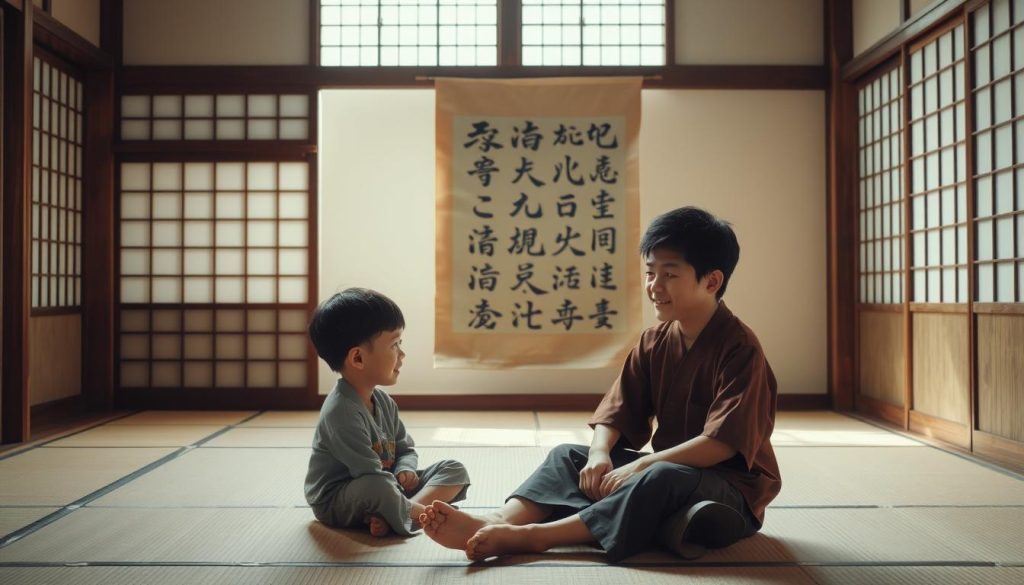
Japanese has a unique way of addressing brothers. It’s more complex than a simple translation. The term 兄弟 (kyoudai) shows the depth of family bonds in Japan1.
Words for brother change based on age and respect. This reflects the importance of age in Japanese families2.
Japanese uses “ani” (兄) for older brothers. “Otouto” (弟) means younger brother. These words show the respect in Japanese communication1.
血縁関係 (blood relations) in Japanese are complex. Different words are used when talking to your brother directly. They change when referring to someone else’s sibling3.
Key Takeaways
- Japanese has multiple terms for “brother” based on age and relationship
- Age hierarchy is crucial in sibling terminology
- Honorifics play a significant role in addressing siblings
- The term “kyoudai” represents siblings in a general sense
- Language reflects deep cultural respect for family relationships
Honorific and Casual Forms of Addressing Brothers
Japanese language offers a rich approach to addressing brothers. It reflects deep familial bonds and brotherly love within families2. The terms vary based on age, relationship, and context3.
Japanese sibling address shows respect for family hierarchy and emotional ties4. Different terms express various levels of affection and formality. This makes each interaction unique and meaningful.
Formal and Respectful Brother Terms
In formal settings, Japanese speakers use highly respectful terms. These words emphasize familial reverence:
- Oniisama (お兄様) – An extremely formal term for an older brother2
- Ani ue – A historical, highly honorific term now considered outdated2
- Giri no ani – Term for brother-in-law2
Casual and Affectionate Brother Terms
Informal contexts allow for warmer expressions of affection:
- Niisan (兄さん) – Common polite term for older brother2
- Oniichan (お兄ちゃん) – Affectionate term often used by children2
- Aniki (兄貴) – Slang term expressing close brotherhood3
These terms help navigate Japanese familial communication. They show the language’s deep respect for family relationships. The words also highlight the importance of emotional connections in Japanese culture.
“Brother” in Japanese: Cultural Context and Usage
Japanese family dynamics show a rich linguistic landscape. It reflects deep cultural values of 家族愛 (family love) and respect. These terms for siblings reveal intricate social hierarchies1.
Understanding these words offers insight into Japanese social connections5. The concept of きずな (bonds) is strong in Japanese families. Younger siblings use respectful terms like oniisan for older brothers.
This practice reinforces family hierarchy and social order. It reflects the traditional Confucian approach to family relationships5.
Speaking to Your Own Brother
Japanese speakers use specific terms within their families. 兄 (ani) means older brother, while 弟 (otōto) means younger brother1. These words show the complex 同胞 (brotherhood) in Japanese language traditions.
Every word carries cultural significance5. The choice of terms depends on age and context.
Referring to Someone Else’s Brother
Japanese communication becomes more nuanced outside immediate family. People use polite terms like お兄さん (oniisan) or 弟さん (otōtosan) for others’ brothers. These choices show respect for external family structures Japanese family vocabulary.
This reflects the cultural focus on social harmony. It also shows consideration for others15.
Family Hierarchy in Japanese Culture
Brotherhood language in Japan is a complex social system. Older siblings are expected to lead by example. Terms like ani carry expectations of guidance and responsibility1.
This language framework mirrors deep-rooted cultural values. It prioritizes family unity and mutual respect5.
FAQ
What are the different ways to say “brother” in Japanese?
Japanese has several terms for “brother” based on context and relationship. Common ones include oniisan (older brother), otouto (younger brother), and kyoudai (siblings). These words show the importance of age and family structure in Japan.
How do formal and casual brother terms differ in Japanese?
Formal terms like oniisama are used in respectful settings. Casual terms such as niisan and oniichan show closeness. The choice depends on the relationship and setting.
How do younger siblings address their older brothers in Japanese?
Younger siblings use respectful terms for older brothers. This practice reflects Japanese cultural values of respecting elders. It stems from traditional Confucian teachings.
What’s the proper way to refer to someone else’s brother in Japanese?
When talking about another person’s brother, use polite language. This shows respect for the family you’re discussing. It’s an important part of Japanese social etiquette.
Why are sibling terms so important in Japanese language and culture?
The many terms for brothers show deep family bonds (家族関係) in Japanese society. These words reflect the emphasis on family relationships. They also highlight the importance of social harmony.
What’s the difference between kyoudai and other brother terms?
Kyoudai means “siblings” or “brothers” in general. Other terms like oniisan and otouto specify age relationships. Kyoudai can refer to both biological and non-biological brotherly relationships.
Are there different levels of formality when using brother terms?
Japanese has many levels of formality for brother terms. They range from very formal (oniisama) to casual (oniichan). The choice depends on the relationship and social context.
Source Links
- 兄 vs 弟 – Older Brother vs Younger Brother in Japanese: Family Positions – Talkpal – https://talkpal.ai/vocabulary/兄-vs-弟-older-brother-vs-younger-brother-in-japanese-family-positions/
- How To Say Brother In Japanese (7+ Different Ways) – https://teamjapanese.com/brother-in-japanese/
- Japanese Sibling Terminology – TV Tropes – https://tvtropes.org/pmwiki/pmwiki.php/UsefulNotes/JapaneseSiblingTerminology
- 41 Important Japanese Honorifics and How to Use Them | FluentU Japanese Blog – https://www.fluentu.com/blog/japanese/japanese-honorifics/
- Learn How to Talk About Your Family in Japanese – https://www.japanesepod101.com/blog/2019/12/06/japanese-family-words/

