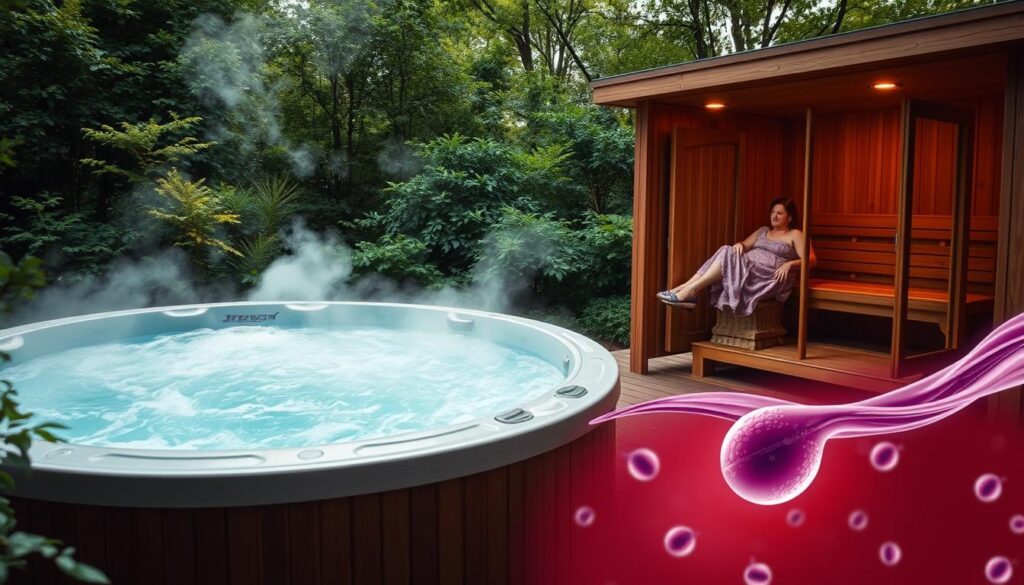
Heat exposure can significantly impact male fertility. Your testicles need a specific temperature for healthy sperm production1. Excessive heat from hot tubs or saunas can disrupt this delicate balance1.
Heat stress can damage sperm production in several ways. It can lower sperm count, reduce motility, and increase abnormal sperm formation1. High temperatures may also harm sperm DNA through oxidative stress1.
There’s hope for those affected by short-term heat exposure. These effects are usually reversible if the heat source is removed1. However, long-term heat exposure can cause lasting damage to the testicular environment1.
Key Takeaways
- Testicles require specific temperature ranges for optimal sperm production
- Heat exposure can negatively impact male fertility
- Short-term heat stress is generally reversible
- Chronic heat exposure may cause long-lasting fertility issues
- Protecting testicular temperature is crucial for reproductive health
Understanding Heat Exposure and Its Sources
Heat exposure greatly affects human health. Your body reacts to high temperatures in various ways. These reactions range from mild discomfort to severe heat illness2.
Knowing how heat impacts you is vital. This knowledge helps protect your health during extreme heat events.
Defining Heat Exposure
Heat exposure happens when your body faces challenging temperatures. The heat index shows how temperatures affect human health3. Extreme heat can stress your body’s systems.
Common Heat Sources
- Hot tubs and saunas
- Prolonged sun exposure
- Heated car seats
- Workplace environments with high temperatures
Body’s Response to Heat
Your body uses strategies to handle temperature challenges. High temperatures trigger several key processes:
- Increased blood flow to skin surface
- Sweating to reduce body temperature
- Potential risk of heat exhaustion
| Heat Source | Average Temperature | Potential Health Risk |
|---|---|---|
| Hot Tubs | 97-104°F | Heat Stress |
| Saunas | 180-195°F | Heat Exhaustion |
Understanding heat exposure is key to maintaining your health during extreme temperature conditions.
Long-term heat exposure can cause serious health issues. About 489,000 heat-related deaths occur worldwide each year2. This fact shows why managing temperature risks is crucial.
Knowledge and preparation are your best defenses against heat-related health challenges.
The Impact of Heat on Sperm Production
Heat stress affects male reproductive health in crucial ways. Testicular temperature plays a key role in sperm production. Maintaining optimal fertility depends on understanding these factors.
The Effects of Elevated Temperatures
Heat exposure can harm sperm quality and semen parameters. Studies show that increased scrotal temperature can drastically reduce sperm output4.
High temperatures can impair sperm production. This leads to decreased sperm count and motility5.
Optimal Temperature Ranges for Sperm Health
Testicles need a specific temperature range for healthy sperm. The ideal scrotal temperature is 3.5 to 7°F cooler than body temperature.
Temperatures above this range can cause reproductive problems4. Precise temperature control is vital for normal sperm production.
- Normal sperm production requires precise temperature control
- High temperatures can cause immediate and long-term fertility issues
- Environmental factors play a crucial role in maintaining reproductive health
Short-term vs. Long-term Exposure
Short-term heat exposure can temporarily reduce sperm quality. Recovery may occur within weeks6.
Long-term or chronic heat stress may cause lasting damage to reproductive abilities4. Managing environmental temperature risks is key to protecting reproductive health.
Protecting your reproductive health requires understanding and managing environmental temperature risks.
Limit exposure to excessive heat sources like hot tubs and saunas. Avoid prolonged hot baths to maintain optimal sperm health5.
Stay hydrated and keep a cool environment. This supports your reproductive function. Strategic temperature management is crucial for sperm health.
Tips for Minimizing Heat Exposure
Your sperm health is sensitive to temperature changes. It’s important to manage heat exposure wisely. By using smart strategies, you can protect your fertility and avoid heat-related issues7.
Clothing choices play a big role in sperm health. Wear loose, breathable boxer shorts for better air flow. Avoid tight underwear and keep laptops off your lap.
During hot weather, be careful with activities that raise body heat. Skip long hot tub sessions and intense workouts8.
Try cool showers or swimming instead of hot tubs. If you work without air conditioning, take cool-down breaks often. This helps prevent heat cramps.
The California Department of Public Health suggests staying cool and wearing light clothes8.
Regular sperm health checks are crucial. Talk to your doctor for personalized advice. Gradual exposure to activities and a healthy lifestyle can boost your fertility7.
FAQ
How does heat exposure affect sperm production?
Heat exposure can harm male fertility by disrupting optimal sperm production temperatures. High temperatures can decrease sperm motility and count while increasing abnormal sperm production. Common heat sources include hot tubs, saunas, and laptops on your lap.
What are the main sources of heat that can affect male fertility?
Heat sources that impact male fertility include hot tubs, saunas, and tight-fitting underwear. Prolonged sitting, laptop use on your lap, and heated car seats can also raise scrotal temperatures. These environments can potentially affect your reproductive capabilities.
Are the effects of heat exposure on sperm permanent?
Short-term heat exposure effects are usually reversible. Sperm parameters can return to normal within weeks or months after stopping heat exposure. However, chronic exposure may cause lasting fertility issues, especially in men over 30.
How can I protect my reproductive health from heat exposure?
To minimize heat’s impact, limit hot tub and sauna use. Use laptops on a desk and wear loose-fitting, breathable underwear like boxer shorts.
Take regular breaks if you have a sedentary job. Consider using standing desks to reduce heat exposure. If trying to conceive, reduce heat exposure for at least 64-72 days before attempting.
How quickly can heat exposure affect sperm production?
Just 30 minutes of weekly hot tub exposure above 98.4°F can decrease sperm motility by 22%. Temperature changes can affect sperm production almost immediately. However, the full effects may take weeks to become noticeable.
Is there a way to monitor the impact of heat on my fertility?
Regular sperm health checks can help monitor lifestyle changes’ impact on your fertility. These tests provide insights into sperm count, motility, and overall reproductive health. Some clinics offer guidance on minimizing heat-related risks to fertility.
Are there any cooling devices that can help protect sperm production?
Some studies suggest potential benefits of scrotal cooling devices, but more research is needed. These devices aim to maintain optimal scrotal temperatures. Simple strategies like wearing loose clothing can be just as beneficial.
Source Links
- Impacts of Sauna and Hot Conditions on Male Sperm Parameters and Fertility! – https://dreminozbek.com/en/impacts-of-sauna-and-hot-conditions-on-male-sperm-parameters-and-fertility/
- Heat and health – https://www.who.int/news-room/fact-sheets/detail/climate-change-heat-and-health
- Heat Waves and Climate Change – https://www.c2es.org/content/heat-waves-and-climate-change/
- Occupational heat exposure and male fertility: a review – PubMed – https://pubmed.ncbi.nlm.nih.gov/9756281/
- Can Summer Heat Affect Male Fertility? – https://www.repromedfertility.com/blog/can-summer-heat-affect-male-fertility-37246/
- Chronic exposure to warm temperature causes low sperm abundance and quality in Drosophila melanogaster – Scientific Reports – https://www.nature.com/articles/s41598-023-39360-7
- 7 Tips to Avoid Heat Exhaustion and Heat Stroke. – https://www.medstarhealth.org/blog/avoid-heat-related-illnesses
- Beat the Heat: Understanding and Preventing Heat Stress – League of Minnesota Cities – http://www.lmc.org/news-publications/publications/city-spot/beat-the-heat-understanding-and-preventing-heat-stress/