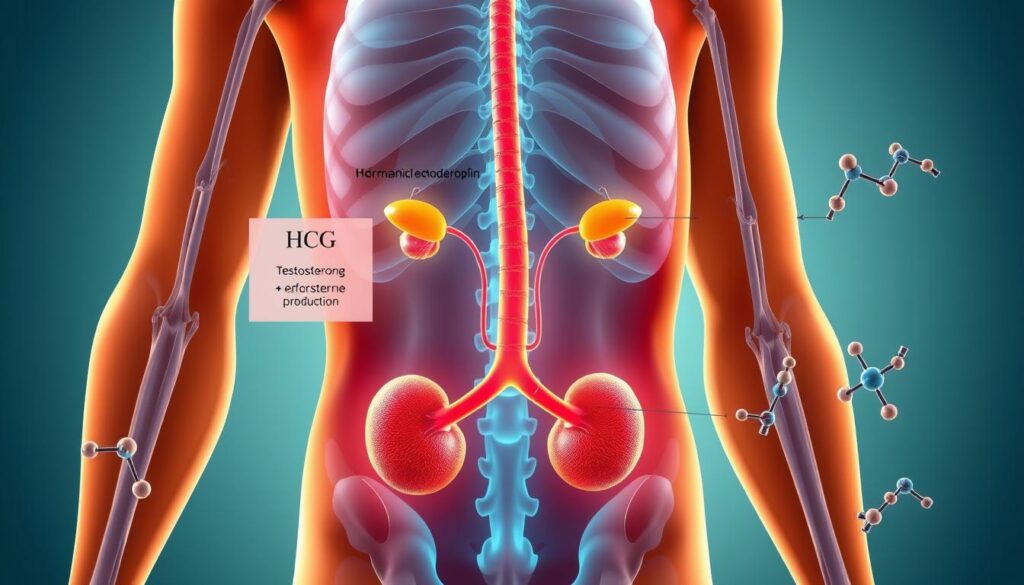
Struggling with low testosterone? HCG therapy might be your answer. It’s a powerful solution for male hormone optimization. Low testosterone can cause decreased energy and sexual performance1.
HCG therapy shows promise in boosting testosterone levels. Studies reveal significant improvements in overall hormonal balance2. Patients saw their testosterone levels jump from 362 ng/dL to 519.8 ng/dL.
This represents a whopping 49.9% increase2. HCG naturally boosts your body’s testosterone production. It tells your testicles to make more testosterone.
This helps prevent testicular shrinkage and maintains fertility1. Most patients receive about 2000 IU weekly. The therapy typically lasts around 8 months2.
Key Takeaways
- HCG therapy can improve testosterone levels by nearly 50%
- Helps maintain testicular function and prevent fertility issues
- Addresses symptoms like low libido and energy reduction
- Typically administered with a weekly dosage of 2000 IU
- Supports natural testosterone production mechanisms
Understanding HCG Therapy and Its Benefits
Testosterone replacement therapy (TRT) helps men with low testosterone levels. Human Chorionic Gonadotropin (HCG) is a powerful tool in androgen therapy. It offers unique benefits for boosting testosterone3.
What is HCG Therapy?
HCG is a hormone naturally produced during pregnancy. It plays a crucial role in testosterone supplementation3.
HCG works differently than traditional testosterone treatments. It mimics luteinizing hormone (LH), signaling the testes to produce testosterone3.
- Helps preserve natural testosterone production
- Maintains testicular function
- Supports fertility preservation
How HCG Influences Testosterone Levels
The benefits of HCG in testosterone therapy are substantial:
| Benefit | Impact |
|---|---|
| Fertility Preservation | Helps maintain reproductive capabilities4 |
| Testicular Health | Prevents testicular atrophy during treatment4 |
| Hormone Balance | Stimulates natural testosterone production4 |
Medical experts value HCG in testosterone replacement therapy. Over 90% of patients benefit from this approach4.
The American Urological Association supports HCG use. It helps maintain fertility and overall reproductive health4.
HCG can be a game-changer for men seeking comprehensive testosterone treatment that preserves natural bodily functions.
Your treatment plan depends on your health needs and goals. Consulting with a healthcare professional is crucial to determine if HCG therapy is right for you.
The Mechanism of HCG in the Body
HCG plays a crucial role in male hormone optimization. It mimics natural hormonal processes in your body. This therapy helps treat hypogonadism by working within your hormonal system.
https://www.youtube.com/watch?v=mJzl6NheRYk
HCG is a complex molecule with unique biological traits. It’s a heterodimer with two interacting subunits. These subunits work with your body’s endocrine system5.
HCG has specific properties that make it effective for andropause management. These include eight carbohydrate side chains and three distinct dimeric isoforms. Various hormones and growth factors regulate HCG5.
- Contains eight carbohydrate side chains
- Has three distinct dimeric isoforms
- Regulated by various hormones and growth factors5
Interaction with the Hypothalamus and Pituitary
HCG acts as a powerful stimulant for your body’s hormonal network. It mimics luteinizing hormone (LH) during testosterone replacement therapy. This helps restart testosterone production when your natural mechanisms slow down6.
“HCG helps restore your body’s natural hormonal balance by providing critical signals to your endocrine system.”
Stimulating Testicular Function
HCG’s main goal is to boost your testicular function. It targets Leydig cells to encourage testosterone production. This supports critical physiological processes in your body6.
| HCG Function | Biological Impact |
|---|---|
| Testosterone Production | Stimulates Leydig cells |
| Sperm Generation | Supports spermatogenesis |
| Testicular Health | Maintains blood-testis barrier |
Your individual results may vary depending on the current condition of your testicles and overall hormonal health.
What to Expect During HCG Therapy
HCG therapy offers a unique approach to testosterone supplementation. It requires careful planning and medical guidance. Understanding the treatment protocol helps you prepare for your hormone therapy journey.
Typical Treatment Protocol
HCG therapy typically involves self-administered subcutaneous injections. The treatment process includes several key components:
- Weekly injections of prescribed dosage7
- Regular medical monitoring
- Periodic laboratory testing
Research shows promising results in testosterone production. A small 2018 study found HCG can help preserve fertility in individuals with hypogonadism7.
Understanding Potential Side Effects
Testosterone supplementation can be beneficial, but potential side effects exist. It’s important to discuss these with your healthcare provider:
| Common Side Effects | Rare Side Effects |
|---|---|
| Injection site pain | Blood clots |
| Stomach discomfort | Severe allergic reactions |
| Mild skin changes | Hormonal imbalances |
Men may experience gynecomastia, pain at injection sites, and stomach issues7. Keep your healthcare provider informed about any changes during treatment.
Always consult a medical professional before starting any hormone therapy to understand the potential risks and benefits specific to your health profile.
Your HCG therapy journey requires careful monitoring. Regular check-ups ensure optimal results and minimize potential complications8.
Who Can Benefit from HCG Therapy?
HCG therapy’s suitability depends on several key factors. It’s vital for men with hypogonadism symptoms. Testosterone deficiency affects 38% of men over 45, making andropause management crucial.
Identifying Potential Candidates
HCG therapy might be ideal if you’re facing testosterone production issues. Testosterone boosting treatments like HCG can help with various symptoms. These include decreased muscle mass, low sex drive, and chronic fatigue9.
Men with testosterone levels above 300 ng/dL may benefit from this approach. Traditional replacement therapy might not be suitable for them10.
Fertility and Treatment Considerations
HCG therapy offers unique benefits for men worried about fertility. It stimulates natural testosterone production and maintains sperm count during treatment9. Some studies show men can regain spermatogenesis to 22 million per mL with proper protocols11.
A comprehensive evaluation is necessary before starting. This includes hormone level assessments and medical history review. These steps help determine the most effective approach for your needs.
Next Steps in Treatment
If HCG therapy interests you, consult a specialized healthcare provider. They’ll conduct baseline tests, assess symptoms, and create a personalized treatment plan. Regular follow-ups and lab monitoring are essential for tracking progress10.
FAQ
What is HCG therapy and how does it help with testosterone production?
HCG therapy stimulates testosterone production by mimicking luteinizing hormone. It tells your testicles to make more testosterone. This helps maintain fertility, testicular size, and hormonal balance.
Unlike traditional testosterone replacement, HCG preserves your body’s natural production. It keeps your testosterone-making mechanisms working properly.
Who is a good candidate for HCG therapy?
You might benefit from HCG therapy if your testosterone is above 300 ng/dL. Look for symptoms like low sex drive, reduced stamina, depression, or loss of body hair.
HCG is great for men who want to keep their fertility during hormone treatment. It also helps avoid testicular shrinkage.
How is HCG therapy administered?
HCG therapy uses self-administered shots under the skin. The average treatment is about 2000 IU weekly. Lab tests are done every three months.
Treatment usually lasts about six months. During this time, your doctor will watch your testosterone levels and symptoms closely.
What are the potential side effects of HCG therapy?
HCG treatment may cause headaches, irritability, restlessness, fatigue, and depression. Some people shouldn’t use HCG due to health risks.
These include those with heart disease, kidney problems, asthma, or migraines. Always talk to your doctor about the risks and benefits.
How does HCG prevent testicular shrinkage during testosterone replacement?
Regular testosterone therapy can reduce hormone production in your brain. This can lead to smaller testicles. HCG stops this by keeping your Leydig cells active.
It acts like luteinizing hormone, maintaining testicular function. This keeps your testicles working and prevents them from shrinking.
Can HCG therapy help with fertility?
Yes, HCG therapy can boost fertility. It supports sperm production and maintains the blood-testis barrier. One clinic reported 21 successful pregnancies in patients using HCG.
If you’re worried about fertility during hormone treatment, consider HCG. Discuss this option with your doctor.
What should I expect before starting HCG therapy?
Before HCG therapy, you’ll need a thorough medical check-up. This includes looking at your symptoms, medical history, and hormone levels.
Your doctor will consider your age, testicular size, and overall health. Regular follow-ups and tests will help track your progress.
Source Links
- Low Testosterone And Human Chorionic Gonadotropin (HCG) Specialist – https://www.michaelrotmanurology.com/services/low-testosterone-and-human-chorionic-gonadotropin-hcg
- Human Chorionic Gonadotropin monotherapy for the treatment of hypogonadal symptoms in men with total testosterone > 300 ng/dL – https://pmc.ncbi.nlm.nih.gov/articles/PMC6844348/
- Understanding Men’s Hormone Therapy: Do You Need HCG with TRT? | HTX Urology – https://www.htxurology.com/understanding-mens-hormone-therapy-do-you-need-hcg-with-trt/
- The Benefits of Using HCG with TRT – The Men’s Health Clinic – https://themenshealthclinic.co.uk/the-benefits-of-using-hcg-with-trt/
- hCG: Biological Functions and Clinical Applications – https://pmc.ncbi.nlm.nih.gov/articles/PMC5666719/
- Human Chorionic Gonadotropin: Hormone, Purpose & Levels – https://my.clevelandclinic.org/health/articles/22489-human-chorionic-gonadotropin
- Your Guide to Human Chorionic Gonadotropin (hCG) Injections for Men – https://www.healthline.com/health/mens-health/hcg
- HCG Injection (Human Chorionic Gonadotropin): Uses & Side Effects – https://my.clevelandclinic.org/health/drugs/18559-human-chorionic-gonadotropin-hcg-injection
- Testosterone and Hcg Therapy – Functions and Benefits – Core Medical Group – https://coremedicalgrp.com/testosterone-and-hcg-therapy-functions-and-benefits/
- HCG for Men on Testosterone Replacement Therapy (TRT) | Full Potential HRT Clinic – https://www.fullpotentialmen.com/hcg-for-men-on-testosterone-replacement-therapy/
- Indications for the use of human chorionic gonadotropic hormone for the management of infertility in hypogonadal men – https://pmc.ncbi.nlm.nih.gov/articles/PMC6087849/