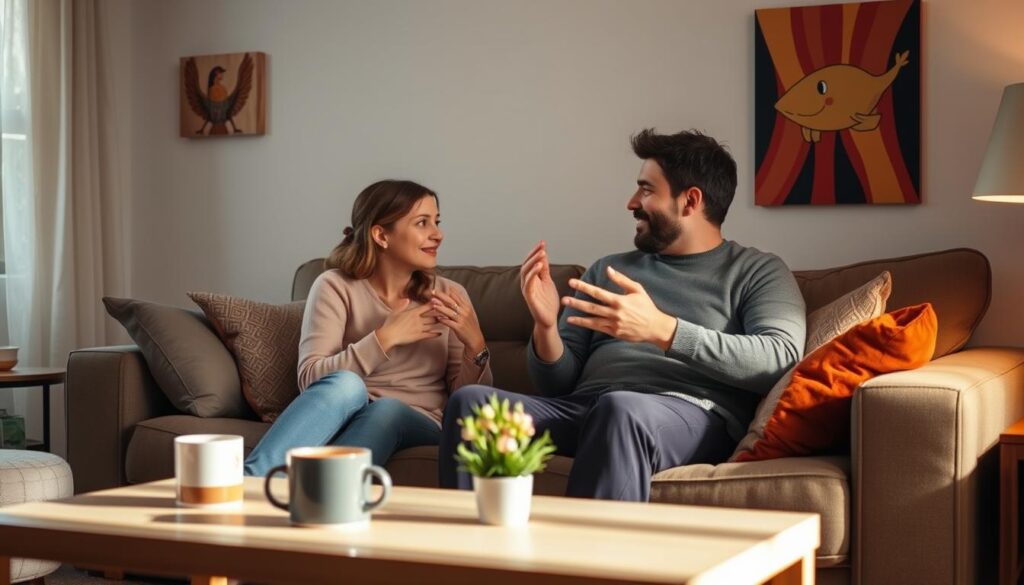
Sexual orientation shapes intimate connections in diverse ways. Asexual relationships offer a unique approach to emotional bonding. They challenge traditional views of intimacy1.
Understanding the spectrum of sexual attraction fosters empathy in relationships. It helps people navigate their connections with greater respect1. Sexual attraction isn’t a one-size-fits-all experience.
Some people experience romantic connections without sexual desire. They create deep platonic relationships that break conventional models1. Aromantic individuals can form meaningful emotional bonds outside traditional romantic scripts1.
Asexuality showcases the complexity of human connection. People can experience various types of attraction beyond sexual desire. These include emotional, intellectual, and aesthetic connections1.
This understanding opens up new relationship possibilities. It prioritizes emotional intimacy and mutual respect. These relationships can be just as fulfilling as traditional ones.
Key Takeaways
- Sexual orientation is a complex and personal experience
- Emotional connections can exist independently of sexual attraction
- Relationships come in diverse and meaningful forms
- Communication is crucial in understanding partner’s orientation
- Respect and empathy are fundamental in intimate relationships
Understanding Sexual Orientation and Its Dimensions
Sexual orientation is a complex part of human identity. It goes beyond simple categories. Your journey to understand sexuality is personal and unique.
The spectrum of sexual attraction is rich and diverse. Many people explore different aspects of attraction beyond traditional ideas.
Sexual orientation includes various layers of connection. These include physical attraction, emotional intimacy, romantic connections, and potential for non-sexual relationships.
- Physical attraction
- Emotional intimacy
- Romantic connections
- Potential for non-sexual relationships
Exploring the Asexuality Spectrum
Asexuality is a unique aspect of sexual orientation. People who are asexual feel little or no sexual attraction. About 1% of people identify as asexual2.
The asexuality spectrum includes different experiences. These can vary from person to person.
- Ace (no sexual attraction)
- Gray-asexual (limited sexual attraction)
- Demisexual (attraction after emotional connection)
Diverse Experiences of Attraction
Sexual orientation can be fluid and complex. Asexual people might still feel romantic attraction. This can lead to meaningful relationships.
Labels help people understand themselves. However, they don’t define a person’s entire experience3.
“Sexual orientation is a journey of self-discovery and understanding.”
Studies show that many asexual people feel left out of relationship discussions. Over 70% feel underrepresented in mainstream conversations2.
Respecting diverse sexual orientations creates more inclusive spaces. It helps everyone feel understood and accepted.
The Role of Sexual Orientation in Intimate Relationships
Intimate relationships across different sexual orientations need compassion and open communication. Partners may have different sexual experiences and needs. Mutual respect is key to navigating these complexities.
About 1% of people identify as asexual, showing a unique view on intimate connections4. These individuals prove that relationships without sex can be deeply fulfilling. Asexual bonds highlight the many ways to create meaningful connections.
Connecting with Partners of Different Orientations
Emotional connections are vital in all relationships, regardless of sexual orientation. Asexual relationships show diverse ways to bond beyond physical intimacy5. These bonds focus on emotional understanding and non-sexual affection.
- Communicate openly about individual needs
- Respect personal boundaries
- Explore non-sexual forms of affection
- Prioritize emotional understanding
Navigating Communication and Expectations
Partners with different orientations must find ways to understand each other. Some asexual people may engage in physical intimacy for their partner’s sake6. This shows the importance of compromise in relationships.
“Intimacy is about connection, not just physical interaction.”
| Sexual Orientation | Intimacy Approach | Communication Strategy |
|---|---|---|
| Asexual | Emotional connection | Explicit boundary setting |
| Allosexual | Physical and emotional | Mutual understanding |
Strong relationships need ongoing talks and empathy. Partners should try to understand each other’s unique views on intimacy. This approach helps build lasting connections between people of different orientations.
Sexual Orientation and Health Perspectives
Sexual health goes beyond physical wellness. It includes mental, emotional, and social well-being across different sexual orientations. Understanding unique challenges helps create inclusive healthcare environments.
About one percent of people worldwide identify as asexual. They face distinct mental health challenges related to their orientation7. Asexual relationships often need nuanced support from healthcare professionals.
Mental Health Considerations
Asexual individuals often face unique psychological experiences. They may feel misunderstood by society. Some struggle with pressure to conform to sexual norms.
Navigating platonic relationships with emotional depth can be challenging. Therapy can help asexual people cope with discrimination and mental health issues8.
- Feeling misunderstood by society
- Experiencing pressure to conform to sexual norms
- Navigating platonic relationships with emotional depth
Safe Practices and Healthcare
Healthcare providers must create welcoming spaces for diverse sexual orientations. They should challenge personal biases and develop comprehensive, consensual care approaches7.
| Sexual Orientation | Mental Health Considerations | Recommended Support |
|---|---|---|
| Asexual | Potential isolation | Specialized counseling |
| Gray Asexual | Identity exploration | Community support groups |
| Demisexual | Relationship dynamics | Relationship counseling |
Sexual health is not just about physical interactions, but about understanding and respecting individual experiences.
Asexuality is a valid orientation that can coexist with various life experiences. Seeking understanding and professional support helps individuals navigate their unique emotional connections78.
Celebrating Diversity in Sexual Experiences
The asexuality spectrum demands open-mindedness and respect for diverse intimate connections. Asexual partners show that intimacy without sex can be profound. Relationships thrive when we recognize the wide range of sexual attraction910.
Different orientations reveal unique ways to express love and connection. Some on the asexual spectrum build relationships through emotional bonds and shared experiences11.
Intimacy without sex can involve deep emotional understanding and mutual respect. It’s about communication and connection beyond physical interactions.
Learning from Different Orientations
True acceptance means recognizing all sexual orientations as valid. Asexual individuals show that romance goes beyond physical interactions9.
By listening and learning, we create inclusive spaces for all. This approach celebrates individual experiences and relationship dynamics10.
Building Inclusive Spaces for Intimacy
Creating welcoming environments requires understanding and empathy. Sexual experiences are personal and varied across the asexuality spectrum11.
Open-mindedness helps break down misconceptions about relationships. It builds stronger, more supportive bonds that honor individual identities and preferences.
FAQ
What is asexuality?
Asexuality is a sexual orientation without sexual attraction or desire. About 1% of people identify as asexual. It exists on a spectrum from no attraction (ace) to limited attraction (gray-asexual or demisexual).
Can asexual people have successful relationships with allosexual partners?
Yes, asexual-allosexual relationships can thrive with open communication and mutual respect. Understanding each other’s needs is crucial. Setting clear boundaries and finding non-sexual ways to express intimacy are key.
How do asexual individuals experience romantic attraction?
Sexual and romantic attractions are separate experiences. Asexual people can still feel romantic attraction. They may identify as heteroromantic, homoromantic, biromantic, or aromantic. They can form deep emotional bonds without sexual attraction.
What types of intimacy can exist in an asexual relationship?
Asexual relationships can include emotional connections and non-sexual physical affection. Shared activities and deep communication are also forms of intimacy. Some asexuals may be comfortable with certain physical intimacies.
How can partners navigate different sexual needs in an asexual-allosexual relationship?
Honest communication and mutual understanding are essential. Partners can explore compromise solutions and set agreed-upon boundaries. Discussing alternative ways to meet sexual needs can help. Finding mutually comfortable approaches to intimacy is important.
What mental health challenges might asexual individuals face?
Asexual people may feel misunderstood or pressured by society’s expectations. They might struggle to find acceptance and understanding. Seeking support through therapy or support groups can help address these challenges.
How important is consent in asexual relationships?
Consent is crucial in all relationships, including asexual-allosexual partnerships. Both partners should feel free to communicate their boundaries. Respecting each other’s comfort levels and personal autonomy is vital.
Can asexual people experience physical pleasure?
Asexuality is about attraction, not physical response. Some asexuals may enjoy physical intimacy or engage in sexual activities. Others may not. Each person’s experience is unique and valid.
Source Links
- Asexuality, Attraction, and Romantic Orientation – https://lgbtq.unc.edu/resources/exploring-identities/asexuality-attraction-and-romantic-orientation/
- Asexuality: Exploring the Asexual Spectrum – https://www.modernintimacy.com/asexuality-exploring-the-asexual-spectrum/
- Understanding Sexual Orientation – Diverse & Resilient – https://www.diverseandresilient.org/resources/youth-resource-list/understanding-sexual-orientation/
- How Asexuals Navigate Romantic Relationships – Neuroscience News – https://neurosciencenews.com/asexual-romance-relationships-21784/
- Sexuality, Sexual Behavior, and Relationships of Asexual Individuals: Differences Between Aromantic and Romantic Orientation – Archives of Sexual Behavior – https://link.springer.com/article/10.1007/s10508-021-02187-2
- Understanding the Role of Sex in Relationships | Blog | Monk Prayogshala – https://www.monkprayogshala.in/blog/2020/6/29/understanding-the-role-of-sex-in-relationships
- Asexuality and the Health Professional – https://www.psychologytoday.com/intl/blog/the-invisible-orientation/201501/asexuality-and-the-health-professional
- Understanding Asexuality and Sexual Health: A Doctor’s Perspective. | Sexual Health | Blogs | Proactive For Her – https://proactiveforher.com/blogs/sexual-health/understanding-asexuality-and-sexual-health-a-doctors-perspective/
- Celebrate International Asexuality Day with These 6 Books – https://peachykeenreviews.com/2024/04/06/celebrate-international-asexuality-day-with-these-6-books/
- Include Aromantic and Asexual Folks at Pride – https://medium.com/a-sign-on-the-door/include-aromantic-and-asexual-folks-at-pride-c2067056f705
- ASEXUAL PERSPECTIVES: 47 ASEXUAL STORIES: LOVE, LIFE and SEX, ACElebration of ASEXUAL DIVERSITY – https://quirkybooks-net.sellfy.store/p/Gehn/